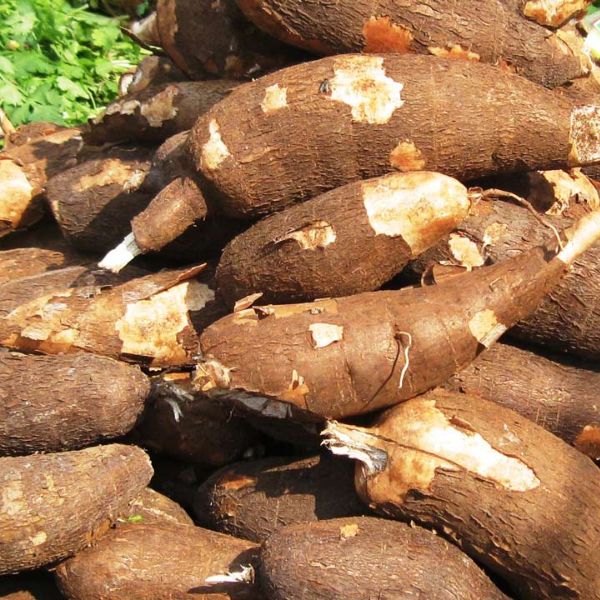
An agricultural entrepreneur, Joshua Apeh, has described cassava as a strategic economic resource capable of transforming Nigeria’s agricultural sector if greater attention is given to processing, industrialisation and value addition.
Apeh, who is the Executive Director of Green Harvest Stuff, made the statement during a Farmers Awareness and Mobilisation Programme held in Otukpo, Benue State.
He said Benue’s fertile agricultural land provides a strong foundation for large-scale cassava production capable of serving both domestic demand and international markets.
According to him, cassava should be viewed beyond a food crop and developed as an industrial raw material with economic potential similar to crude oil.
“Cassava is our crude oil. Just as crude oil transformed the fortunes of nations, cassava can transform the fortunes of our people,” he said.
Cassava Has Industrial Potential
Apeh said cassava could support several industries, including renewable energy, through products such as bioethanol.
He explained that increased investment in cassava processing could help Nigeria reduce dependence on imported fuel, create employment opportunities and strengthen rural economies.
He urged government authorities to place greater emphasis on farmers, agricultural land and the development of complete value chains around major crops.
According to him, producing cassava alone is not enough unless farmers and businesses can process, package and market finished products.
Value Addition Remains Nigeria’s Missing Link
The Green Harvest executive director said Nigeria’s challenge is not only agricultural production but also the ability to convert raw materials into high-value products.
He pointed to countries such as Thailand as examples of nations that have benefited significantly from developing cassava processing industries.
“The difference is not simply production. The difference is value addition, and that is the gap Green Harvest has risen to bridge,” Apeh said.
He encouraged farmers and entrepreneurs to embrace modern agricultural practices and explore opportunities in processing, packaging and export.
Call for National Cassava Industrialisation Strategy
Apeh called on the Federal Government to study successful agricultural models and consider expanding initiatives like the Green Harvest approach across Nigeria’s six geopolitical zones.
He said a stronger cassava value chain could contribute to: Food security, renewable energy development, youth employment, farmer empowerment, industrial growth, rural economic development
He added that Nigeria has the land, labour force and agricultural resources required to become a major player in global cassava production.
Appeal to Benue Farmers
The agricultural advocate encouraged the people of Benue and the Idoma community in particular to reconnect with their agricultural heritage and maximise the opportunities available in cassava farming.
He said cassava could become a pathway to wealth creation if farmers moved from traditional production methods to commercial farming and processing.
“The time has come to turn our cassava into wealth. The time has come for Green Harvest, our farmers and our people,” he said.
Nigeria’s agricultural sector has increasingly focused on reducing dependence on crude oil by expanding non-oil economic opportunities.
Cassava has been identified as a strategic crop because: It grows in many Nigerian regions, It supports millions of smallholder farmers, It has strong industrial applications, It can support food and energy security.
Benue State, often called the “Food Basket of the Nation,” has significant agricultural potential due to its fertile land and farming population.