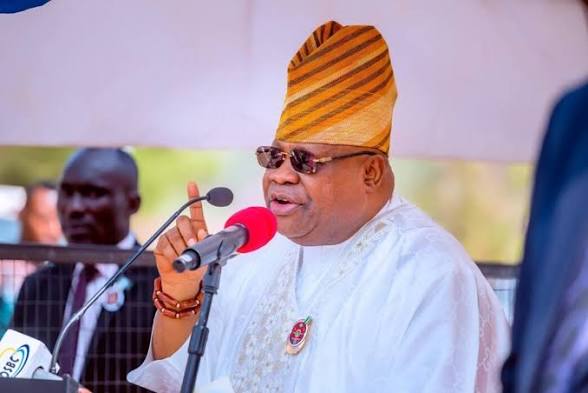
The re-election of Osun State Governor Ademola Adeleke has been described as a significant boost for Nigeria’s democratic system and a setback for claims that the country is inevitably moving towards a one-party state.
Seye Oladejo, a former All Progressives Congress (APC) spokesman in Lagos State, made the assessment in a statement on Monday.
Oladejo said the outcome of the Osun governorship election demonstrated that Nigeria’s electorate could still produce unexpected results and determine political outcomes through the ballot box.
Osun Result Shows Democracy Remains Competitive
According to Oladejo, Adeleke’s victory should be viewed beyond the fortunes of an individual candidate or political party.
He said the result demonstrated that voters retained the ability to make independent choices, despite the growing political strength of the ruling APC.
“Democracy is not measured by how often the ruling party wins elections. It is measured by whether the people retain the freedom to choose who governs them — and whether that choice is respected,” he said.
Oladejo argued that the movement of politicians between political parties and defections into the APC had fuelled concerns about the future of opposition politics in Nigeria.
However, he said the Osun election provided what he described as a “useful reality check” against assumptions that the ruling party would inevitably dominate every electoral contest.
No Political Party Is Invincible
The former APC spokesman said the result challenged the perception that the ruling party’s growing political influence automatically translated into electoral control across the country.
He noted that competitive democracy allows political parties to win in some areas and lose in others.
“There is nothing in democracy called the ‘invincibility of the ruling party,’” Oladejo said.
He added that political fortunes could change because of candidates, voter preferences, alliances, prevailing circumstances and government performance.
Oladejo therefore advised political parties, including the APC, not to become complacent ahead of future elections.
He said every election should be treated as a fresh opportunity to convince voters rather than as an automatic victory for any political organisation.
Oladejo Praises Respect for Election Outcome
Oladejo also said President Bola Tinubu’s democratic credentials should be judged partly by how his administration responds when electoral results do not favour the ruling party.
He said the President’s reported acceptance of Adeleke’s victory and congratulatory gesture deserved recognition as an example of democratic maturity.
“Democracy is not only about celebrating when your candidate wins. It is also about accepting the verdict of the people when your candidate loses,” he said.
According to him, political leaders should place democratic principles above narrow partisan interests and ensure that voters can freely choose their representatives.
Adeleke Faces Responsibility in Second Term
Despite celebrating the democratic significance of the result, Oladejo said Adeleke’s re-election also placed greater responsibility on the governor to deliver tangible improvements for Osun residents.
He urged the governor to focus on infrastructure, education, healthcare, security, employment and economic opportunities during his second term.
“An electoral victory is not the destination. It is permission to govern,” he said.
Osun Election May Shape 2027 Debate
Oladejo said the outcome of the Osun election could have implications for political calculations ahead of the 2027 general elections.
He argued that the result showed that Nigeria’s political space remained competitive and that voters could not be permanently associated with any political party.
“The deeper lesson is that the ballot remains bigger than the party, the voter remains bigger than the politician, and democracy remains bigger than whoever happens to be in power,” he said.
Oladejo maintained that Adeleke’s re-election should therefore be seen not only as an Osun political development but also as a reminder that electoral mandates must be earned.