


After 34 years in the Nigerian Customs Service and decades in Christian ministry, the CAC cleric retires from active pastoral administration, leaving behind a legacy of service, discipline and generational impact.
For Pastor Sunday Gabriel Oladokun, the journey from the streets of Durojaiye in Ibadan, Oyo State, to the pulpit was one he never envisaged when he began his Christian journey in 1967.
A career in the Nigerian Customs Service, business engagements and family responsibilities appeared to define the direction of his life. Becoming a pastor was not part of his original ambition. Indeed, public speaking was once a challenge for him, as he reportedly struggled to control his emotions whenever he was asked to make announcements in church.
But life, as his story demonstrates, does not always follow the path people envisage.
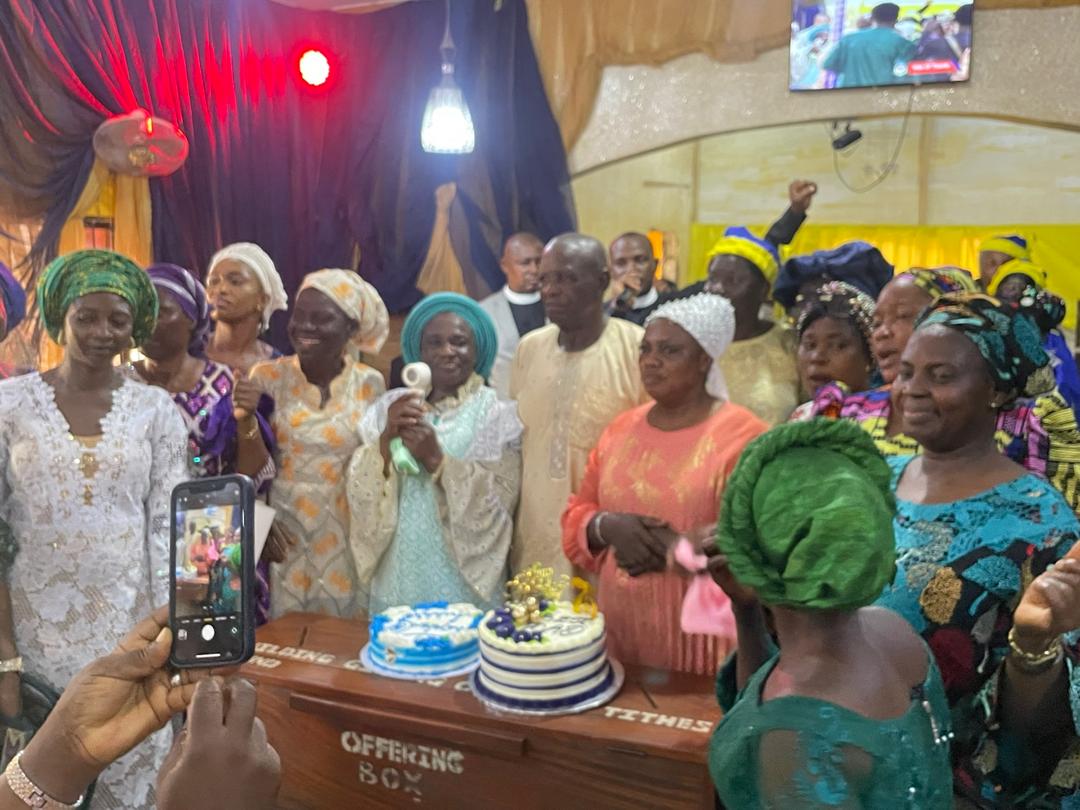
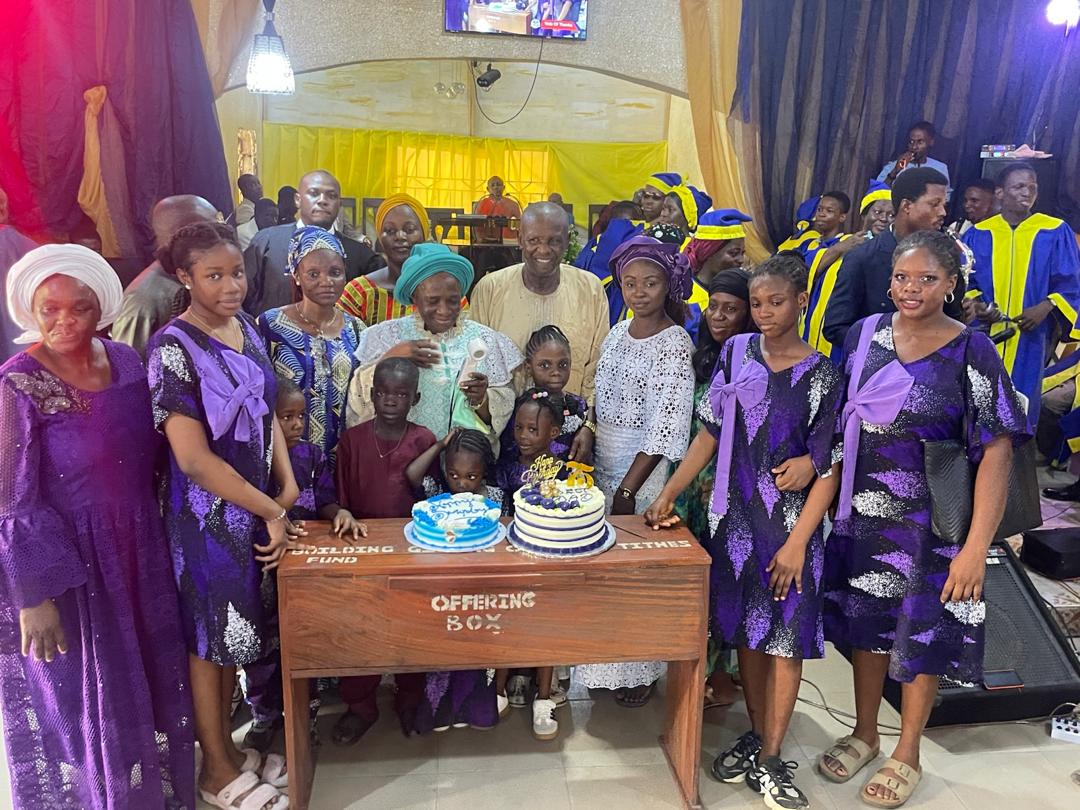
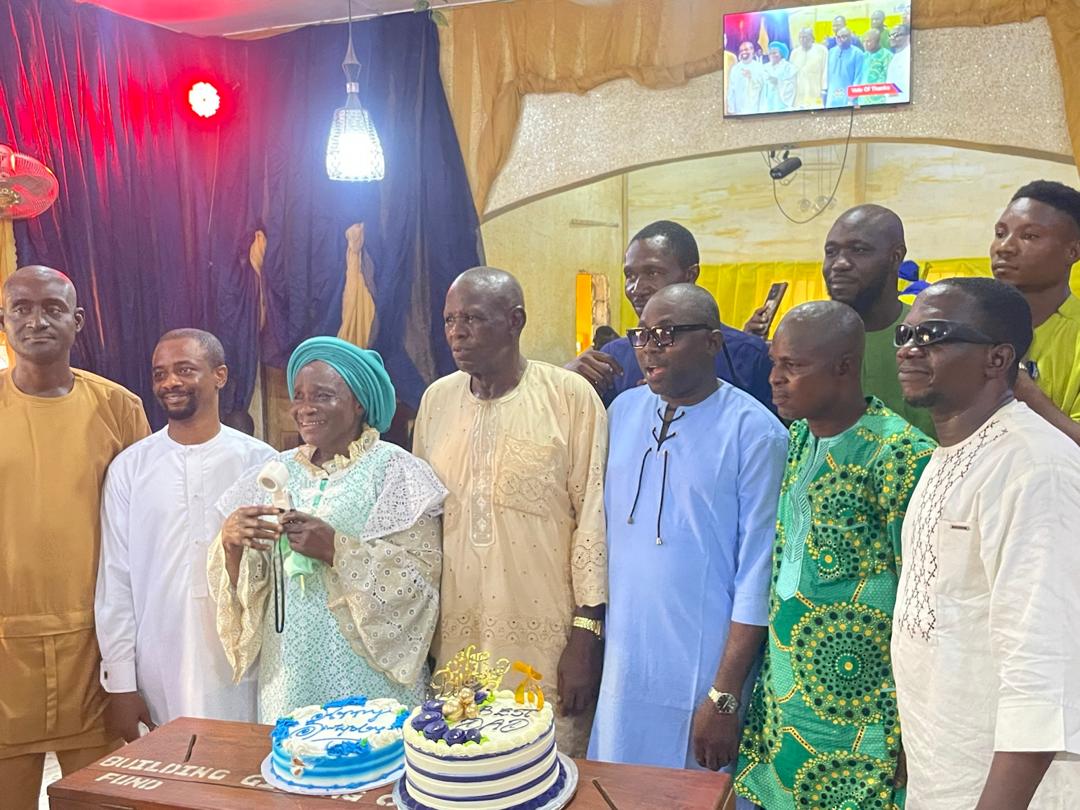
At 75, Oladokun is celebrating a life marked by professional service, personal transformation and commitment to Christian ministry. On Sunday, November 1, 2026, he formally marked his retirement from active pastoral administrative responsibilities at Christ Apostolic Church, Mountain of Blessing, Iba, Lagos, in a ceremony attended by church members, ministers, family members and friends.
The occasion was not simply a birthday celebration or a farewell to administrative responsibilities. It was an opportunity to reflect on a journey that has taken him through hardship, public service, business, pastoral leadership and fatherhood.
Born in Durojaiye, Akinyele Local Government Area of Ibadan, Oladokun spent his early years in the ancient city before relocating to Port Harcourt, Rivers State.
However, the move did not immediately translate into the opportunities he had hoped for. Recalling that period, he spoke of the difficulties he encountered after relocating, particularly the challenge of securing employment in the years following the Nigerian Civil War.
The hardship was so severe that he became disconnected from his family for an extended period. At one point, his parents did not know his whereabouts for an entire year.
When he eventually wrote home, his family was reportedly shocked to discover that he was still alive, having feared the worst.
He returned to Ibadan in 1971 and remained there until 1972 before joining the Nigerian Customs Service in 1973.
His career in the service lasted 34 years, ending with his retirement in 2007. The experience exposed him to different people, places and institutions, while helping him develop the discipline and administrative experience that would later prove useful in ministry.
He also ventured into business, building relationships and exploring opportunities outside public service.
Yet, while his professional life was taking shape, his involvement in Christian activities was gradually laying the foundation for another assignment.
From reluctant speaker to pastor
Oladokun’s relationship with the Christ Apostolic Church began in 1967. However, he did not initially see himself becoming a minister.
As a young Christian, he was uncomfortable speaking before a congregation. He recalled that making announcements in church could leave him emotional, sometimes struggling to hold back tears.
A pastor friend, who is now based in London, encouraged him through those difficult beginnings.
His eventual entry into pastoral ministry came in 2003, following the wedding of his first daughter in Nigeria. The pastor expected to officiate the ceremony reportedly recommended him for pastoral ordination and encouraged him to accept the calling.
Although he initially declined, the encouragement of some colleagues eventually persuaded him to reconsider.
That decision marked a significant turning point, taking him from a career in public service and business into pastoral leadership.
Over the years, he served in various capacities within the church, contributing to its administration, development and spiritual growth. The ministry expanded during his years of service, with branches established in different locations.
For Oladokun, however, ministry was not simply about establishing churches. It was about teaching the Word of God, raising believers, supporting families and helping people overcome difficult circumstances.
Reflecting on the challenges of pastoral leadership, he identified human attitudes and the difficulty of achieving genuine spiritual transformation as some of the major concerns confronting ministers.
He argued that people could receive repeated teaching and spiritual guidance without necessarily changing their behaviour.
His response, however, has been to continue teaching the Scriptures, insisting that consistent exposure to God’s Word can gradually bring about transformation.
He also recalled instances in which the church provided financial assistance to unemployed people and supported individuals facing accommodation difficulties.
Although some beneficiaries eventually left the church after receiving assistance, he said such experiences should not discourage ministers from helping others.
For him, service should be driven by commitment to God rather than the expectation of appreciation or reward.
Son recalls father’s strict upbringing
Beyond the pulpit, Oladokun’s influence is also evident in his family, although his demanding career in the Customs Service initially limited the time he spent with his children.
His son, Pastor Seun Oladokun, said the frequent transfers associated with his father’s job meant that the family did not have many opportunities to build a close relationship with him during their childhood.
According to Seun, it was after his father’s retirement from the public service that they began to enjoy having him around more frequently.
He, however, recalled that his father was a strict disciplinarian whose approach to raising his children left lasting impressions on them.
One particular seat in the family sitting room became so associated with discipline that the children nicknamed it the “judgement seat”.
Whenever any of the children committed an offence, their father would sit in the chair, while their mother would sit beside him and report the children’s misdemeanours.
There was also a particular belt that signalled the arrival of punishment.
Seun recalled that once his father brought out the belt and called a child’s name, the child knew that trouble had come.
Looking back, he said the discipline helped shape the children into responsible adults.
“When I was little, I knew him as a soldier, but later I knew him as a friend,” he said.
The relationship, according to him, evolved as the children grew older and began to understand their father’s responsibilities and values.
He identified hard work and consistency as two major lessons his father instilled in the family.
Oladokun, he said, believes strongly in consistency and remains committed to maintaining contact with his children.
Even at his age, he sometimes calls as early as 6.30am simply to ask how they are doing and whether everything is fine.
Seun said such calls had become a familiar part of their family life, adding that missing one of his father’s calls could make them wonder whether something had happened.
How his father inspired him into ministry
Seun also disclosed that his father’s commitment to Christian ministry influenced his own decision to become a pastor.
Although he initially preferred working behind the scenes and ensuring that activities were properly organised, his father’s example gradually inspired him to embrace pastoral work.
He was initially a pastor in the Redeemed Christian Church of God before his father encouraged him to return to the family church as he approached retirement.
According to Seun, his father told him that he would soon be retiring and that he needed to return home.
There was also a personal appeal from his grandmother, who, before her death, had told him, “Do not leave my son, make sure you stay with him.”
He said the appeal strengthened his resolve to remain close to his father and support the ministry.
Asked what aspect of his father’s leadership should be preserved, Seun identified his teaching ministry.
“He is a teacher. He can teach,” he said, expressing gratitude that he, too, had become a teacher of God’s Word.
His account highlights one of the most important dimensions of Oladokun’s legacy: the ability to pass on spiritual values and responsibilities to another generation.
The tributes at the retirement ceremony also reflected the respect Oladokun commands among fellow ministers.
Pastor Moses Omonijo, the Zonal Superintendent of Amukoko Zone, described him as a dependable person who is always willing to assist others.
“Pastor Oladokun is our helper. He is filled with the power of God. The Spirit of God is working with him. He helps people. He doesn’t have a hidden place in his heart to keep malice. I met him at Amukoko Zone. He is a good father,” Omonijo said.
He prayed for the celebrant to enjoy many more years, expressing the hope that their next gatherings would be to celebrate him at 80, 90 and even 120 years.
The tribute reflected the qualities that have also featured prominently in Oladokun’s account of his own ministry: generosity, forgiveness, assistance to people in need and commitment to spiritual growth.
Retirement, but not withdrawal from ministry
At 75, Oladokun’s retirement from active pastoral administration is in keeping with the Christ Apostolic Church’s administrative retirement arrangement for ministers who attain that age.
He explained that administrative responsibilities often involve attending meetings outside one’s immediate location, including meetings in Ibadan, which can require considerable travelling and time away from home.
To ensure continuity, he has appointed a younger person to represent him at such meetings.
However, he made it clear that he has no intention of abandoning ministry.
He remains involved in evangelism, Sunday School teaching, church meetings and other spiritual activities. He also continues to represent the district where necessary.
He attributed his ability to remain active at 75 to God’s grace and good health.
At the retirement ceremony, he delivered a sermon titled, “Are You God’s Person?”, drawing his message from Psalm 100.
In challenging the congregation to examine their relationship with God, he declared, “Anyone that cannot be corrected, guided is not God’s person.”
He urged Christians to embrace correction, humility and spiritual discipline, insisting that their conduct should reflect their commitment to God.
The message was consistent with the principles he said had guided his own spiritual development.
Asked about his greatest achievement, Oladokun did not point to his 34 years in the Customs Service, his business interests or the growth of the church.
Instead, he identified the transformation Christ had brought into his life as his greatest accomplishment.
He spoke about repentance, personal discipline, prayer and the importance of drawing closer to God, particularly during difficult moments.
A family and legacy of service
Oladokun is blessed with a wife and six children:; Mrs Remi Oke, Mrs Mojisola Ayodeji, Pastor Seun Oladokun, Ademola Oladokun, Olusegun Oladokun and Tobiloba Oladokun, who have embraced values of faith, leadership, service and enterprise. Some of his children are also involved in Christian ministry.
At the retirement celebration, Seun introduced his father to the congregation, while his daughter, Mojisola Ayodeji read his biography, recounting his life and accomplishments.
Their participation provided a fitting illustration of the generational impact of his life and ministry.
The ceremony featured musical ministration by the church choir, testimonies and tributes from ministers and church members.
Pastor Olayoole offered prayers for the celebrant and his wife, while family members, church members and friends presented gifts. Donations were also made to the couple and the church.
Seun delivered the vote of thanks, while Elder Awoniyi offered the closing prayer and benediction.
For a man who once struggled with making announcements before a congregation, the sight of his son participating prominently in his retirement celebration as a fellow pastor was perhaps one of the most symbolic moments of the occasion.
From the young man who endured hardship in Port Harcourt to the customs officer who served for 34 years, and from the reluctant church speaker to a pastor who has spent decades teaching the Scriptures, Oladokun’s life has been defined by unexpected transitions.
His retirement from administrative responsibilities may mark the end of one phase of leadership, but his influence continues through his family, fellow ministers and the people whose lives he has touched.
At 75, his story is not merely about longevity or the positions he has occupied. It is about the values he has transmitted, the people he has helped and the younger generation he has inspired to continue the work.
For Oladokun, the administrative assignment may be over, but the call to serve God remains.