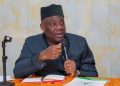
The Ondo State Government has announced plans to prevent underage and academically unqualified students from registering for the 2027 West African Senior School Certificate Examination (WASSCE), warning schools and examination centres against facilitating irregular registrations.
The policy is part of the state’s efforts to improve educational standards, tackle examination malpractice and restore public confidence in the conduct of secondary school examinations.
Commissioner for Education, Science and Technology, Professor Igbekele Ajibefun, announced the decision during separate engagements with officials of the West African Examinations Council (WAEC) and proprietors of private secondary schools.
According to a statement issued by the ministry’s spokesperson, Mrs Bisi Lawani, in Akure on Friday, the government intends to work closely with examination authorities and school administrators to ensure that only eligible candidates are registered.
Ajibefun said the state would no longer tolerate the practice of enrolling academically unprepared students through so-called miracle centres or allowing candidates to move between schools to bypass established examination requirements.
He explained that the policy would also address the registration of underage students who had not met the necessary eligibility conditions for public examinations.
The commissioner called on WAEC to support the government’s efforts to improve educational standards and protect the credibility of the examination process.
He added that the ministry would intensify public awareness campaigns to educate parents, guardians, school proprietors and other stakeholders about the new requirements.
Responding, the Ondo State WAEC Coordinator, Mr Mathias Avong, pledged the examination body’s cooperation with the state government.
Avong said closer collaboration between WAEC and the education ministry would strengthen examination administration and help reduce malpractice.
At a separate meeting with private school proprietors, Ajibefun restated the government’s opposition to miracle centres and warned against practices that undermine genuine academic preparation.
He disclosed that the ministry would issue official circulars and expand sensitisation activities to ensure that parents and school administrators understood the policy before the commencement of the 2027 examination registration process.
The commissioner also directed private secondary school proprietors to begin registering their institutions on the Digital National Education Management Information System (DNEMIS).
He explained that registration on the platform was a requirement for schools seeking to register candidates for WAEC examinations.
The President of the National Association of Private School Proprietors (NAPPS), Mr Sadiq Williams, welcomed the government’s education reforms and commended the commissioner for introducing technology-driven initiatives into the sector.
Although acknowledging that the transition to digital administrative processes could present initial challenges, Williams assured the government that private school operators were prepared to cooperate.
The state government said the engagements formed part of its broader efforts to strengthen accountability, improve education administration and protect the integrity of public examinations.