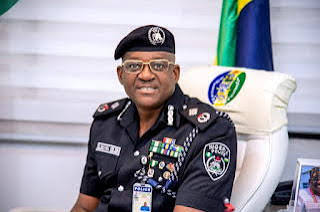
Former Force Public Relations Officer of the Nigeria Police Force, Deputy Commissioner of Police (DCP) Olumuyiwa Adejobi, has warned that the growing misuse of social media and artificial intelligence to circulate fabricated information could undermine national security, public confidence and peaceful coexistence in Nigeria.
Adejobi, who currently serves as Deputy Commissioner of Police in charge of Operations at the Delta State Police Command, made the observation in a statement released in Lagos on Saturday.
In the statement, titled The Palongo Dance of Social Media Palava, he called on Nigerians to exercise greater caution when consuming and sharing information online, particularly as AI technology makes it increasingly possible to produce convincing but misleading images, videos and audio recordings.
He warned that digitally manipulated content could falsely portray individuals as making statements or participating in events that never happened, potentially triggering public outrage, hostility and unnecessary tension.
According to him, the consequences of deliberately spreading fabricated information extend beyond individual reputations and could affect public order, institutional credibility and national unity.
The former police spokesperson also raised concerns about the growing influence of social media monetisation, arguing that financial rewards and the pursuit of online popularity were encouraging some content creators to prioritise sensationalism over accuracy.
He observed that certain influencers increasingly relied on provocative headlines, unverified accusations and controversial publications to attract engagement without adequately considering the possible consequences.
Adejobi maintained that the freedom to express opinions should not be confused with the right to manufacture falsehoods, impersonate others or deliberately circulate information capable of inciting violence.
He therefore urged Nigerians to establish the credibility of information before accepting, forwarding or publishing it, describing fact-checking as an essential responsibility in the digital age.
He also commended Inspector-General of Police Olatunji Disu for recently cautioning Nigerians against misinformation and irresponsible communication, particularly in matters relating to public safety.
Adejobi acknowledged previous public enlightenment efforts by former Minister of Information and National Orientation Lai Mohammed and the incumbent minister, Mohammed Idris, on the dangers of fake news and disinformation.
He called for sustained public education, stronger institutional cooperation, responsible communication and appropriate regulatory measures to address the growing problem.
However, he stressed that efforts to control digital misinformation must respect constitutional freedoms, noting that legitimate criticism, political disagreement and public accountability should not be treated in the same way as deliberate fabrication, impersonation or incitement.
He advocated a coordinated response involving government agencies, security institutions, media organisations, technology companies, professional associations, traditional rulers, religious leaders, civil society organisations and ordinary citizens.
Drawing from his own experience, the former Force PRO said he had personally suffered the emotional and reputational consequences of false narratives and online manipulation.
He observed that misleading information could spread rapidly across digital platforms, while correcting the damage to affected individuals and institutions could take considerably longer.
Adejobi also urged Nigerians to promote digital literacy, ethical journalism, responsible content creation and constructive online engagement.
He said social media should contribute to public enlightenment, innovation, economic opportunities and national development rather than become a channel for hostility, division and misinformation.
Using the Yoruba expression ‘Palongo’, which his grandmother used to describe an irregular and disorderly dance, Adejobi challenged Nigerians to abandon reckless online behaviour and embrace truthfulness, civility, patriotism and responsible communication.
He maintained that protecting Nigeria’s collective future should take precedence over personal grievances, political affiliations and the pursuit of social media popularity.