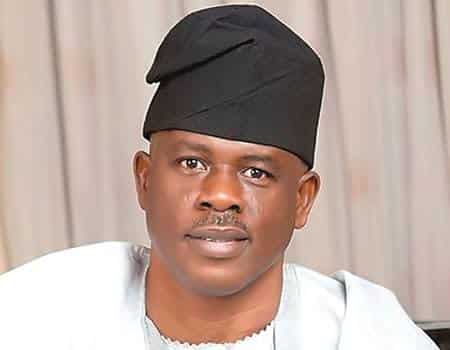
Let me first of all establish a context that Senator Musiliu Obanikoro, the ebullient, popular and charismatic Lagos politician is not on the ballot for next year’s general elections.
He has however been given the task of making sure that President Bola Tinubu gets the needed votes in the state and Deputy Governor, Obafemi Hamzat is elected as the next governor of Lagos state. He’s Director General of both campaigns in the state.
Obanikoro is without a doubt on familiar turf having been a noted figure in the state politics for close to four decades. His name first cropped up during the late General Sani Abacha failed transition programme, when he was a protégé of the late Prince Ademola Adeniji-Adele and won the chairmanship of the Lagos Island local government. That was what indeed jump started his political career.
Obanikoro later joined the Alliance for Democracy (AD) after the botched Abacha regime gave way to General Abdulsalami Abubakar’s transition programme. The transition in 1999 gave birth to the current democratic dispensation and Obanikoro found himself in the cabinet of Governor Bola Ahmed Tinubu as Commissioner for Home Affairs. It was during this time that his organizational prowess and ability to galvanize the grassroots became noticeable and Tinubu gave him more latitude to operate and he became a key figure in Tinubu inner circle and kitchen cabinet.
It was therefore not a surprise when Obanikoro decided to contest for the Lagos Central Senatorial seat with the full backing of the then governor Tinubu. He contested against Senator Wahab Dosunmu, a popular Isale Eko politician, who many believed was a good governorship material. The election was a fierce contest but Obanikoro defeated the incumbent Dosunmu, who later conceded defeat in a press conference held in Victoria Island a few days after the election. This writer was at the parley and pointedly asked Dosunmu, in company of other People’s Democratic Party (PDP) bigwigs, if he truly accepted the outcome. He did not minced words that the result of the election was a pure reflection of the wishes of Lagos Central voters and that Obanikoro won.
Obanikoro went to Abuja to represent his constituency in the Senate but later fell out with Tinubu. He joined the PDP like others before him, which includes Senators Seye Ogunlewe, Wahab Dosunmu. The third senator, Tokunbo Afikuyomi stayed back in AD, he did not defect to the PDP. The ever rumbustious and ambitious politician that he is, he was obviously not comfortable being in Abuja. Senator Obanikoro had always wanted to be the governor of the State of Excellence and he felt it would be easy for him to consummate his ambition when Tinubu will not be on the ballot in 2007. It should however be noted that it was the same pragmatic Tinubu who first called him “Koro Ibo, Kosi Koro Kosibo. Koro de, Ibo yapa”, literally meaning that Obanikoro is a crowd puller, who always delivers when it matters.
Koro joined the opposition PDP and walked his way to the top hierarchy of the party in the state. When it was time for the 2007 general election, he picked the governorship ticket, which was obviously against the interest of leaders like Chief Olabode George, the then Deputy National Chairman of the party. George had wanted the wife of the slain Funsho Williams, Hilda, to be the governorship of the party. Many political observers thought it would be an uphill if not impossible task for Obanikoro, who was fighting the leadership of the PDP in the state, to get enough delegates at the primary. Perhaps, they underrated the capacity of Koro, his knowledge of the politics of the state, his ability to mobilise the grassroots and those on the fence to his corner of the ring. Koro won the primary to the chagrin of George and more than casual observers and lost to Raji Fashola of the AD at the general elections.
Even though Obanikoro failed to win the governorship election, his efforts and audacity to challenge Tinubu and his hegemonic control of the most important state in the country did not go unnoticed. Even his political enemies know that he does not run away from a fight and that he understood the language in the streets. He was to later serve as the Minister of State For Defence and Ambassador to Ghana in the PDP administration of President Goodluck Jonathan. And like all politicians with eyes on the future, Koro knew that all politics are local. He did his political arithmetic and decided to come back to the fold of the progressives led by President Bola Tinubu. He had of late made himself visible, consequential and an asset to the All Progressive Congress (APC), both in the state and at federal level.
It was presumably on the basis of this that he was made the Director General of both President Tinubu and Hamzat Campaigns. Koro easily filled the bill because of his experience, deep knowledge of the state politics and his acknowledgement that there are big challenges ahead. Koro was involved in selling the candidacy of Hamzat to leaders and APC members during the primary. The way and aggressive manner they went about it made it difficult for any other aspirant to make a meaningful impact or pose any challenge.
Hence, the APC leadership could not have made a better choice in picking Koro to lead the campaign. The task ahead is very clear to him and he’s quick to tell anyone that this time they are not going to take anything for granted. He’s mindful of the results of four years ago when the Labour Party defeated the APC in the state. To him, it is gratifying that the reforms introduced by the Tinubu administration are beginning to bear fruits and the people need to be reminded that it would have been worse if the reforms were not introduced to carve a pathway for a better future for the state and country.
Even so, Obanikoro should be bothered, but not less concerned about Tinubu’s second term than Hamzat election. In the last presidential election, it was a fight between APC and Labour Party, with the rising wave of the Obidient Movement. The outcome was largely a product of the wave and popularity of Peter Obi. There is a sharp difference this time around because of the platform under which Obi is running and the fragmentation of the opposition parties. Similarly, an even worse scenario will be playing out in the governorship election, where the Africa Democratic Party (ADC) and National Democratic Congress (NDC) would be sharing the opposition votes and thereby clearing the way for Hamzat to the Alausa Government House.
For sure, Obanikoro and his party APC still has a lot to do to convince the electorate why the mandate given to President Tinubu should be renewed and why Lagos that has increasingly become a one party state should vote for Hamzat. This is absolutely not the time to take voters for granted; this is the time for unity among the ranks and file of party members; all hands must be on deck to make sure that the programmes embedded in the party manifesto are spread out to the public.
But Koro Ibo is well positioned to lead this campaign. As a political reporter who has followed the trajectory of this unusual politician for years, both at a long distance and a short range, I have no doubt that the APC is on course to victory in next year’s election, both in Lagos and at the national level.
*Aruna, a journalist is based in Ikeja.