


There is something almost eerily familiar about Nyesom Wike’s Rainbow Coalition.
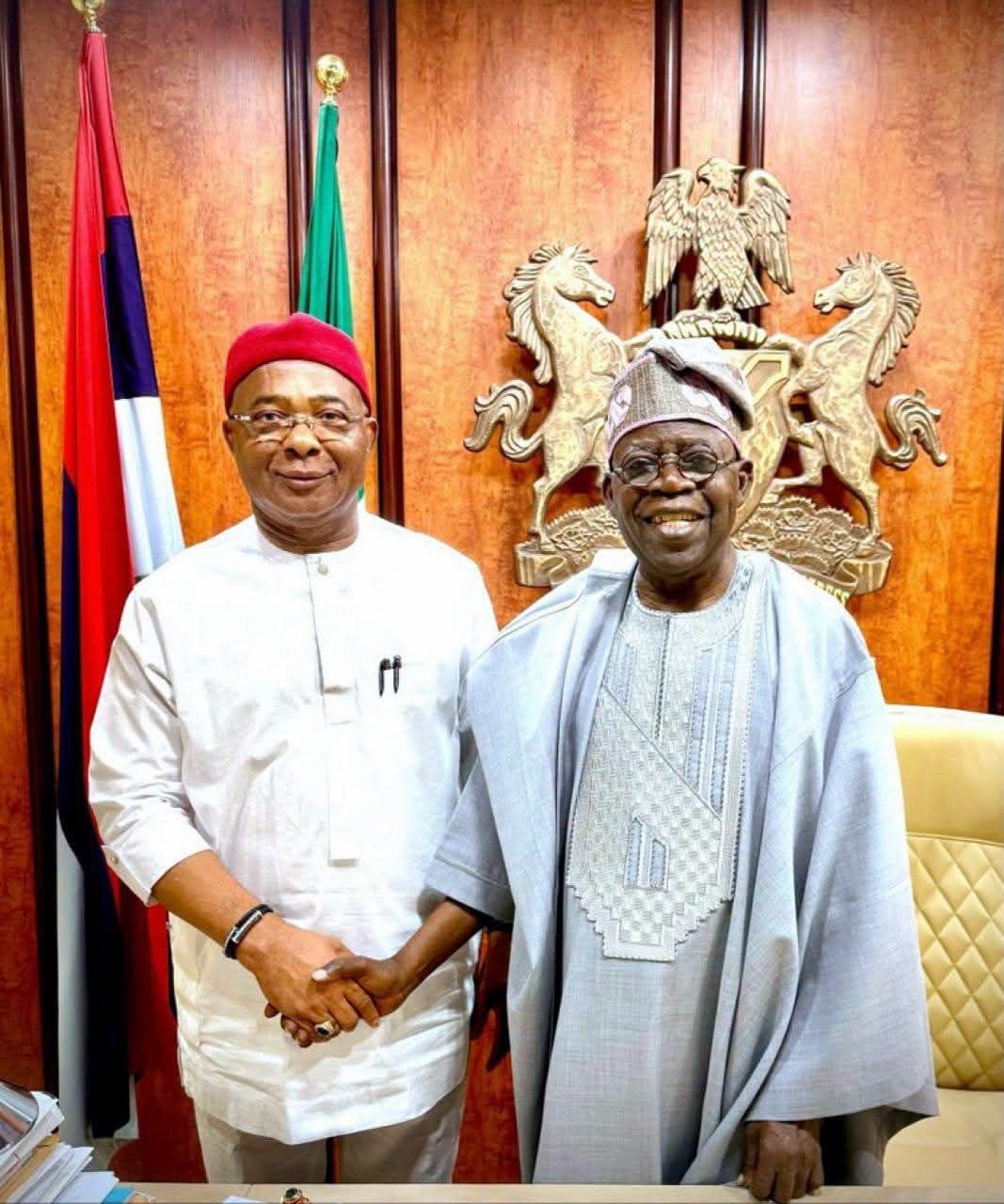
Hope Uzodimma and the Progressive Governors’ Forum have warned about the contradiction inherent in an arrangement that promises to return President Bola Tinubu while reserving the freedom to defeat APC governors, senators, House of Representatives members and other APC candidates.
Wike’s response has increasingly supplied ammunition to that concern.
His proposition is essentially that support for Tinubu need not translate into support for APC candidates down the ballot. Politicians denied APC tickets may seek alternative platforms, contest against APC candidates and still belong to the broader political arrangement supporting the President.
Then came the extraordinary declaration that, “life or death,” Wike would never support Hope Uzodimma to become Senate President.
At that point, the debate ceased to be merely theoretical.
But there is a fascinating piece of political history that makes Uzodimma’s objection to this arrangement particularly noteworthy.
Hope Uzodimma has seen this movie before.
In 2003, the Alliance for Democracy controlled all six South-West states. The party did not field a presidential candidate and supported PDP President Olusegun Obasanjo for re-election.
The idea appeared politically sophisticated: cooperate at the presidential level while preserving AD’s interests beneath it.
Then the votes were counted.
The PDP took five of the six AD-controlled South-West governorships.
Ogun fell.
Oyo fell.
Osun fell.
Ondo fell.
Ekiti fell.
Only Lagos survived.
And the governor who survived was Bola Ahmed Tinubu — today’s President of Nigeria.
There remains historical disagreement over precisely what assurances were exchanged between Obasanjo and AD/Afenifere leaders, so it would be wrong to present every popular account of a “deal” as established fact.
But there is no ambiguity about what happened electorally.
AD went into that election controlling six South-West states and emerged controlling one.
And here is the detail that makes today’s controversy almost poetic:
Hope Uzodimma himself was an Alliance for Democracy governorship candidate in that very 2003 election.
He had left the PDP in late 2002 and contested the Imo governorship on the AD ticket against PDP Governor Achike Udenwa. The historical record is particularly solid because Uzodimma subsequently challenged the result, producing the Court of Appeal case Uzodinma v. Udenwa. The court record expressly identifies him as the AD candidate in the April 2003 Imo governorship election.
So when Uzodimma warns against a political arrangement under which APC delivers presidential support while opposition platforms are simultaneously available to fight APC candidates down the ballot, he is not approaching the concept as a political novice encountering cross-party electoral arrangements for the first time.
He was there in 2003.
Tinubu was there too.
One was an AD governor fighting for survival in Lagos.
The other was an AD governorship candidate fighting the PDP in Imo.
Both witnessed what happened to the party whose presidential strategy had become detached from the electoral fortunes of its candidates underneath.
That makes Wike’s Rainbow Coalition an extraordinary proposition to place before these particular political actors.
Two veterans of 2003 are being asked to revisit the logic of 2003.
And this time one of them is President of Nigeria while the other chairs the Progressive Governors’ Forum.
The institutional question therefore becomes difficult to wave away as mere personal hostility toward Wike.
What exactly should an APC governor do when confronted with a coalition saying:
We will support your President, but we reserve the right to defeat your senators.
We will support your President, but we may support opposition candidates against your governors.
We will support your President, but APC aspirants who lose primaries may find alternative platforms and return to fight APC nominees.
And now, following Wike’s latest intervention:
We will support your President, but one potential future configuration of the Senate is important enough for me to declare that I will never support Hope Uzodimma as Senate President.
Whether Uzodimma actually intends to seek the Senate Presidency remains a separate question. Wike’s assertion does not establish Uzodimma’s motive.
But Wike has made something else clear: the composition of the next National Assembly matters to his political calculations.
And that is precisely where the governors’ concerns become more consequential.
A President does not govern with presidential votes alone.
He needs senators to confirm appointments and consider legislation. He needs the House of Representatives to pass budgets and enact laws. His party’s governors provide political organisation across the federation. State legislators and grassroots party structures complete that ecosystem.
You cannot systematically remove the bricks downstairs and insist that you are strengthening the building because you have promised to protect the penthouse.
That is the contradiction at the heart of the Rainbow proposition.
And 2003 supplies the cautionary tale.
History does not necessarily repeat itself. The political circumstances of 2027 are different from those of 2003, and the controversial conduct of the 2003 elections itself means the analogy should not be stretched beyond what the evidence supports.
But political history exists partly so that actors can recognise familiar risks.
The irony here is difficult to miss.
The APC President whom Wike proposes to support is the sole AD governor who survived the South-West political earthquake of 2003.
And the APC Governors’ Forum chairman challenging Wike’s strategy actually contested that same election as an AD governorship candidate.
Tinubu knows what happened.
Uzodimma knows what happened.
They did not read about it in a political-science textbook.
They participated in it.
So perhaps the most compelling response to the Rainbow Coalition is not complicated at all:
Mr President, we have seen this movie before.
The Chairman of the Progressive Governors’ Forum was in the cast.
And you, Mr President, were the only AD governor left standing when the credits rolled.
*Onyejiaka is a Knight of St John International.