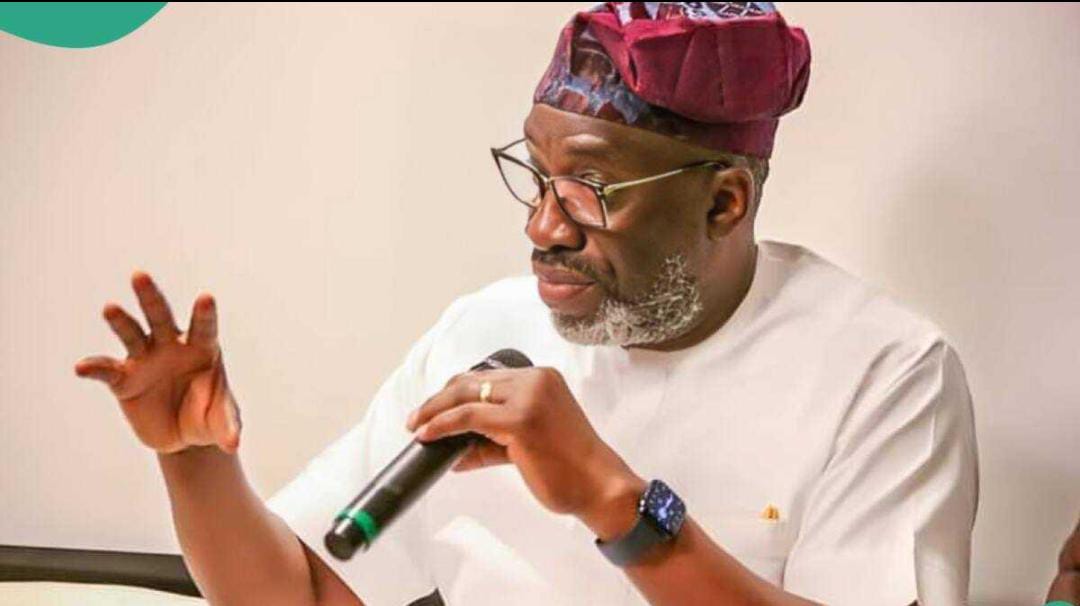
Political figure Segun Showunmi has attributed the North-Central geopolitical zone’s inability to produce an elected Nigerian president to political disunity, weak voter mobilisation and what he described as a poor understanding of the country’s power dynamics.
Showunmi, the National Convener of the Alternative Movement and a member of a presidential campaign media and communications team, made the remarks during a press briefing in Makurdi, Benue State.
He argued that the region needed stronger political cooperation, strategic negotiations and greater electoral participation to improve its influence in national politics.
Showunmi Blames North-Central’s Presidential Setback on Disunity
According to Showunmi, political divisions among leaders and communities have weakened the North-Central region’s ability to negotiate effectively for national leadership positions.
He maintained that the region had considerable political potential but had not consistently translated its population and voting strength into coordinated political influence.
The politician identified a lack of unity and an inadequate understanding of electoral calculations as major obstacles.
He said achieving the presidency in a democratic system required the ability to build alliances, mobilise voters and negotiate with political stakeholders across the country.
Showunmi contrasted electoral competition with military intervention, emphasising that political authority in a democracy is determined through constitutional processes.
His remarks focused on the importance of political organisation rather than relying solely on regional identity or expectations of power rotation.
Benue’s 3.05 Million Registered Voters Could Strengthen Regional Influence
Showunmi pointed to Benue State’s reported 3.05 million registered voters as an example of the electoral resources available to the North-Central region.
He argued that a high level of voter participation could strengthen the state’s position in national political negotiations.
According to him, the ability to mobilise millions of voters would make Benue an important consideration for political parties and presidential candidates seeking broad electoral support.
However, registered voter figures do not automatically translate into votes cast or support for a particular political candidate.
Actual electoral influence depends on turnout, voter preferences, party competition and the distribution of votes across constituencies.
Showunmi encouraged political leaders and residents to reduce internal disagreements and pursue common development objectives.
Showunmi Urges Benue Leaders to Prioritise Unity Amid Security Challenges
The Alternative Movement convener also addressed the security and humanitarian challenges affecting Benue State.
He said the state’s security situation had attracted attention from international organisations and foreign governments.
According to Showunmi, Benue should use that attention to demonstrate its commitment to peaceful engagement, responsible leadership and development.
He warned that political and communal disagreements could complicate efforts to address insecurity and improve living conditions.
The politician urged residents and leaders to avoid actions capable of deepening internal divisions.
He maintained that cooperation among communities and institutions was essential to achieving lasting stability.
Showunmi Defends Tinubu’s Economic Reforms Despite Public Hardship
Turning to the national economy, Showunmi defended the economic reforms introduced under President Bola Tinubu’s administration.
He argued that the measures were intended to address longstanding weaknesses in government finances and improve revenue generation.
Showunmi acknowledged that Nigerians had experienced economic difficulties following the reforms but maintained that increased revenue available to the three tiers of government could support development and economic activity.
He suggested that improved public finances could strengthen the ability of federal, state and local authorities to fund projects and services.
His assessment reflects his stated position on the reforms. The extent to which increased government revenue translates into improved living standards depends on spending decisions, inflation, public service delivery and broader economic conditions.
State Police Could Improve Security Response, Showunmi Says
Showunmi also expressed support for the proposed establishment of state police, describing decentralised policing as a possible way to strengthen local security.
He argued that state-level police organisations could recruit officers familiar with the communities they serve.
Such local knowledge, he said, could improve intelligence gathering, strengthen community engagement and support quicker responses to security threats.
However, he stressed that the proposal would require an appropriate legal framework and effective coordination with national security institutions.
The debate over state police remains an important constitutional and governance issue in Nigeria, involving questions of accountability, funding, operational independence and safeguards against political misuse.
Showunmi Highlights Military Recruitment and International Security Cooperation
The politician also commented on the Federal Government’s response to insecurity.
He said the Tinubu administration had taken steps to expand military formations, improve recruitment opportunities and strengthen coordination among security agencies.
Showunmi further cited Nigeria’s security relationships with the United States, United Kingdom, France, Turkey and Germany as part of efforts to improve national security capabilities.
He maintained that tackling insurgency and other security threats required sustained intelligence gathering, adequate personnel and cooperation among relevant institutions.
The effectiveness of these measures, however, would need to be assessed through independently verified security outcomes and operational data.
North-Central Presidential Debate Raises Questions About Political Representation
Showunmi’s remarks have renewed attention to the political representation of Nigeria’s North-Central geopolitical zone.
The region comprises Benue, Kogi, Kwara, Nasarawa, Niger and Plateau states, while the Federal Capital Territory is commonly included in geopolitical discussions about the zone.
Although North-Central politicians have occupied prominent national positions, the region has not produced an elected president under Nigeria’s current Fourth Republic.
Showunmi argued that greater political cooperation and strategic engagement could improve the region’s future prospects.
His comments also reflected wider debates about regional inclusion, democratic participation and the distribution of political influence in Nigeria.
The politician concluded by urging Benue residents to address internal disagreements and work towards peaceful coexistence, improved security and sustainable development.