By Owaikhena Osikhekha
It is rather unfortunate that some desperate opposition figures are dishing out misinformation and disinformation about the Lagos – Calabar Coastal in a bid to score cheap political points. The more than 700 kilometre highway stretches from Victoria Island in Lagos to. Calabar, the Cross River state capital , is a legacy project that will outlive the Bola Tinubu Administration.
It is a national pride which must be preserved no matter the outcome of the 2027 presidential election. The unpatriotic calls by some opposition figures for the discontinuation of this laudable project is sending wrong signals to international investors who have shown interest in this laudable project.
Some politicians have argued that the coastal highway is not a national priority, while others said the government should have concentrated on fixing old roads instead of embarking on new road projects. But the truth is that the project has not in any way stopped the Federal Government
from rehabilitating existing roads.The Minister of Works, Engr Dave Umahi criss- crosses the country every week inspecting ongoing rehabilitation works on existing roads . According to the Minister, the administration of President Bola Tinubu only started two new road projects; the Lagos – Calabar Coastal Highway and the Sokoto Badagry Superhighway . The President is paying attention to hundreds of road projects he inherited from the previous administrations.
The idea for a major coastal federal road in Nigeria was first conceptualized in 1955 by the then Federal Commissioner of Finance, late Chief Festus Okotie-Eboh. It remained just a concept until the fourth republic when former President Olusegun Obasanjo started the Warri- Calabar portion of it which is now known as the East-West road. . A project that was first muted in 1955 cannot be said not to be a national priority. In fact, President Tinubu should be commended for having the boldness to embark on the Lagos- Calabar Coastal Highway project designed to connect nine states of Lagos, Ogun, Ondo, Edo, Delta Bayelsa Rivers, Akwa Ibom and Cross River .
The highway project, represents a crucial step in Nigeria’s efforts to enhance connectivity, facilitate economic growth and improve the quality of life for Nigerians .
This project is more than just a road; it is a symbol of hope, unity, and prosperity. It will connect communities in nine states, foster trade and commerce, boost tourism and create new opportunities for generations to come
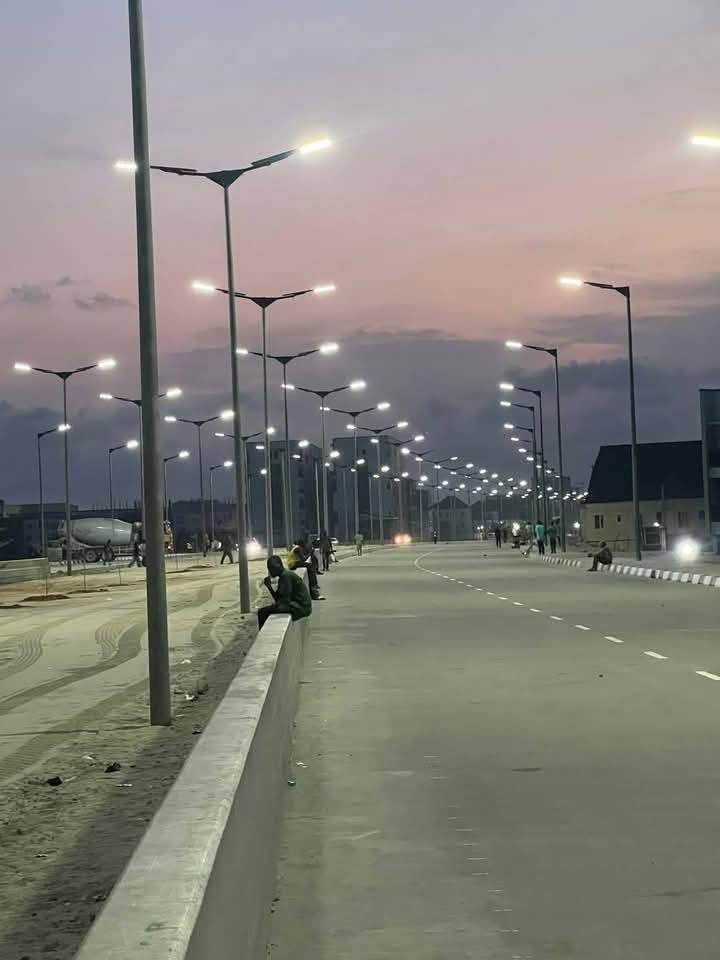
President Bola Tinubu on May 31, 2025 inaugurated the completed 47 kilometers of the road . The section has since been open for public use. Residents of Abraham Adesanya, Ogombo , Sangotedo and environs are excited that it has cut their travel time to Victoria Island by at least 30 minutes and boosted economic activities along the Lekki – Epe corridor.
The opened section of the road is already boosting businesses at the Lekki Deep Port and the Lekki Free Trade Zone which houses companies like the Dangote Refinery..
The construction has now moved past Epe, with active simultaneous works ongoing across Ogun, Ondo, Akwa Ibom and Cross River state sections of the road.
Some critics don’t even know the contractual details of the project and it appears they are not ready to know.
The Lagos-Calabar Coastal Highway project, , was awarded to Hitech Construction Company Limited on an Engineering, Procurement, Construction, and Financing (EPC+F) arrangement, where the bulk of the risk falls on the contractor.
The Federal Government and Hitech Construction Company Nigeria Limited have already signed the EPC+F agreement for the Lagos-Calabar Coastal Highway which enables the construction firm to source seventy per cent of the funds required to complete the superhighway, which will be tolled upon completion
It will, through tolling, recoup its investment on the seven hundred and fifty -kilometre road. The government is only providing thirty per cent of the total cost of the bold and gigantic project. The project is already attracting foreign investors who are bringing the much needed foreign exchange into Nigeria which is good for the nation’s economy.
The Federal Government and Hitech Construction Nigeria Company Limited should be commended for this innovative way of financing legacy projects aimed at expanding Nigeria’s economy.
This courageous and gigantic project holds the potential for unlocking the hidden productivity of the country’s coastal regions and hinterlands, improving the transportation infrastructure, reducing travel time, lowering transportation costs, and enhancing market access for businesses of all sizes. This, in turn, will spur investment, stimulate trade, and catalyze economic diversification.
, and foster inclusive development and reduce income disparities.
The road, when completed, has the potential to increase Nigeria’s GDP and trigger industrialisation, create trade, enhance the transportation of goods and services, and safety of road users.The road is going to be the biggest super highway in Africa in terms of the structure and solidity as well as utility value
The highway also has some environmental benefits. The design includes shoreline protection measures which will help safeguard coastal communities from ocean surges and erosion.
The Lagos – Calabar Coastal Highway is a strategic investment in Nigeria’s future, with numerous economic, social and environmental benefits. So, any presidential candidate who doesn’t want to incur the wrath of voters in the South West and South South regions should not talk about scrapping it..
*Owaikhena Osikhekha is a Public Affairs Analyst based in Lagos