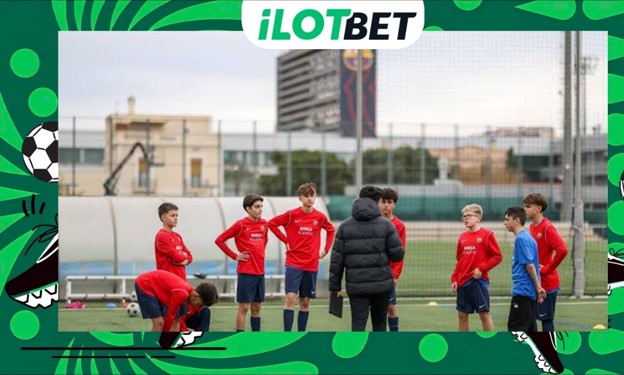
There are few sights in football more revealing than a teenager stepping onto a great stadium pitch and looking entirely at home. The shirt may be oversized, the opponent intimidating and the occasion unforgiving, yet the player behaves as though he has been there before.
At Barcelona and Ajax, that feeling is rarely an accident. It is the product of an education that begins years before the first-team debut, when the most important lessons are not simply how to pass, shoot or tackle, but how to understand football itself.
La Masia and Ajax’s De Toekomst have become shorthand for elite youth development because their greatest achievement is not producing one exceptional generation. It is repeatedly producing players capable of fitting into a particular idea of the game.
Barcelona have given the world Lionel Messi, Xavi Hernández, Andrés Iniesta, Sergio Busquets, Carles Puyol, Gerard Piqué, Pep Guardiola and Victor Valdés, among many others. Ajax’s roll call stretches from Johan Cruyff and Marco van Basten to Dennis Bergkamp, Frank and Ronald de Boer, Clarence Seedorf, Edwin van der Sar, Wesley Sneijder, Frenkie de Jong and Matthijs de Ligt. The names change; the conveyor belt keeps moving.
That consistency is the first clue. The secret is not that Barcelona and Ajax possess some supernatural ability to identify every future superstar. They do not. Nor does every boy who enters La Masia or De Toekomst become a professional footballer. The difference is that both institutions have spent decades building environments in which a talented player is taught a recognisable football language, and then given enough time and responsibility to learn how to speak it.
At Barcelona, that language is rooted in possession, positioning, movement and decision-making. The club’s own academy describes its methodology as proactive, collective and creative, with the same broad playing model running from its youth teams towards the senior side. The point is important, a young midfielder is not merely learning to pass accurately; he is learning why a pass should be played, where the next player should be and what space might appear after the ball moves.
That is why the famous Barcelona academy graduates often appear to share qualities even when their physical profiles could hardly be more different. Messi was diminutive and extraordinary in his dribbling; Busquets was never an athlete in the conventional sense; Iniesta seemed to glide rather than run; Xavi controlled matches through positioning and passing. Their common denominator was not body shape. It was football intelligence.
La Masia’s environment has historically reinforced that intelligence by making the ball the centre of education. Training sessions have used small-sided games, rondos and possession exercises to encourage players to receive under pressure, scan their surroundings, move intelligently and make decisions quickly. A former Barcelona coach described the continuity across the age groups as unmistakable: different exercises may be required for different ages, but the underlying idea remains the same.
Ajax has followed a remarkably similar principle, although through its own Dutch football tradition. The club’s youth academy says its emphasis in recent years has increasingly been on the development of the individual, using individual training and guidance before asking the player to perform within the team. Its stated ambition is to develop players capable of making the difference at Champions League level.
That individual emphasis matters because development is rarely linear. A 15-year-old who looks physically ordinary may become exceptional at 20, while the biggest, fastest child in an under-13 match may never develop the technique or decision-making required at senior level. Ajax’s tradition has long placed considerable value on technical quality and creativity rather than simply selecting the strongest adolescent. The club’s philosophy is designed to allow young players to make decisions, take risks and develop their own personality on the pitch.
There is another crucial difference between these academies and many youth systems. The pathway does not end with good performances against other teenagers. Ajax has historically used Jong Ajax, its reserve side, to expose young players to senior football. The team has competed in the Dutch second tier, meaning promising teenagers can encounter physically stronger and more experienced opponents before they are expected to survive at the highest level.
This is where the academy becomes more than a training centre. It becomes a bridge. A talented 18-year-old does not suddenly have to learn what professional football feels like after being protected from it for years. He has already encountered difficult decisions, physical battles, hostile atmospheres and the consequences of mistakes. By the time the first-team manager calls, the jump is still enormous, but it is no longer completely unfamiliar.
The same philosophy can be seen in the people doing the teaching. At Ajax, the connection between the academy and the club’s wider football culture has historically been unusually strong. Former players and coaches have repeatedly returned to the club, carrying its ideas into another generation. Johan Cruyff’s influence is the clearest example. His football philosophy shaped Ajax and later transformed Barcelona, creating a remarkable bridge between two institutions that are often discussed separately but share an intellectual ancestry.
Cruyff understood something that modern football’s transfer market can sometimes obscure. Buying a finished player is not the same as creating one. A transfer can solve a problem immediately, but an academy can create a player who already understands the club’s football before he has played a senior minute. That has enormous sporting value.
It also has financial value. Ajax have repeatedly sold academy graduates for substantial sums while continuing to produce replacements. Frenkie de Jong and Matthijs de Ligt left in 2019 after starring in the side that reached the Champions League semi-finals, yet Ajax’s development system did not collapse. The club’s ability to replenish its squad is part of its competitive model. In 2015, research from the International Centre for Sports Studies found Ajax had more players trained at the club active in Europe’s major leagues than any other club, with Barcelona also among the leading producers.
Barcelona’s academy has demonstrated the same regenerative quality in different circumstances. The extraordinary generation of Messi, Xavi, Iniesta and Busquets cannot realistically be reproduced on demand; even Barcelona’s own coaches have acknowledged that having so many stars emerge simultaneously was exceptional. Yet the academy continues to produce first-team players. Gavi, Alejandro Balde, Fermín López, Pau Cubarsí and Lamine Yamal have provided a new generation of evidence that La Masia is not merely a museum of past greatness.
The 2026 World Cup offered another striking reminder. Nine players developed through Barcelona’s youth system were involved in the final, eight representing Spain and Messi representing Argentina. Whatever the result, the statistic illustrated how far the academy’s influence can travel beyond Barcelona itself.
But perhaps the most important lesson is that neither academy is simply manufacturing footballers. They are manufacturing footballers for a particular environment. That distinction explains why the system can appear almost magical from outside. The player is not being asked to become brilliant in isolation; he is being prepared for a football ecosystem whose principles he has known since childhood.
That does not guarantee success. Some academy graduates will plateau, some will be released and some will flourish elsewhere. Football remains too unpredictable for any institution to eliminate failure. What La Masia and Ajax have done instead is improve the conditions in which talent can become ability, ability can become understanding and understanding can become elite performance.
Their greatest advantage, then, may not be the number of wonderkids they discover. It is the culture they build around them. The academy teaches the player, the player reinforces the philosophy, the first team provides the destination and former graduates return to pass the knowledge on. It becomes a cycle rather than a production line.
And that is why the names keep coming. Cruyff was followed by Van Basten, Bergkamp and Seedorf; Ajax later produced Sneijder, De Jong and De Ligt. Barcelona’s golden generation of Xavi, Iniesta, Messi and Busquets was followed by Gavi, Cubarsí and Yamal. The faces change, but the education remains recognisable.
In an era when clubs can spend hundreds of millions searching for the next superstar, La Masia and De Toekomst offer a rather different proposition: sometimes the most valuable signing is the child who has been learning your football for the past decade.
The real genius of these academies is not that they know exactly which youngster will become a legend. It is that they have built an environment capable of giving the next one a chance.