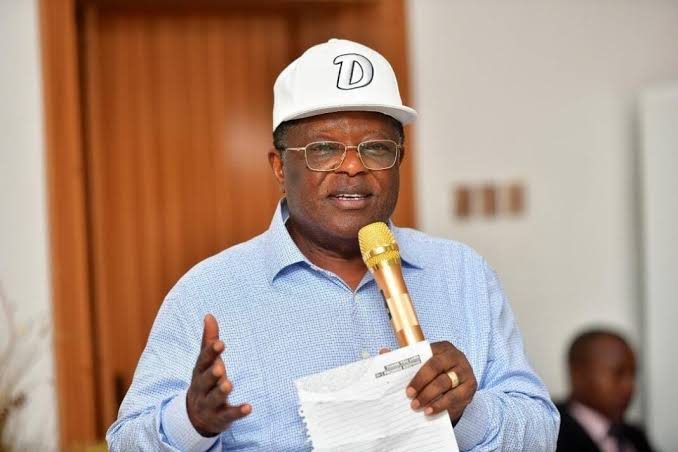
The Minister of Works, David Umahi, has called for a change in the management of the Benin section of the Benin-Asaba Expressway, saying the current concessionaire lacks the technical capacity to complete the project.
Umahi made the statement during a stakeholders’ meeting in Benin with the Benin-Asaba Expressway Concession Company (BAECC), where he expressed concern over the condition of the highway and the difficulties faced by motorists.
The minister urged the concessionaire to allow the Federal Government to bring in a more capable contractor to complete the project and restore normal traffic movement along the route.
According to Umahi, the poor state of the road and delays in execution showed that BAECC did not possess the required manpower, technical expertise and operational strength to deliver the project according to agreed standards.
He said the government’s decision was driven by the need to protect road users and prevent further hardship caused by the prolonged condition of the highway.
“By the concession agreement, we played into the hands of the concessionaire,” Umahi said, adding that the government needed cooperation from the company to resolve the situation.
The minister requested that BAECC formally communicate its willingness to end the concession arrangement through the Ministry of Works, allowing the government to engage another contractor.
He also directed the removal of obstacles along the highway to ensure smoother movement of vehicles.
Umahi said the ministry would work with the Independent Engineer assigned to the project to assess the level of work completed and determine the value of genuine construction carried out.
He explained that the government had not completely prevented BAECC from working but believed allowing the company to continue under the current conditions could worsen the challenges surrounding the project.
The minister proposed that after completion by a new contractor, BAECC could potentially be allowed to participate in future toll operations through a right-of-first-refusal arrangement to recover its investment.
The Director of Highway Planning at the Ministry of Works and Technical Lead for the Highway Development and Management Initiative (HDMI), Ebere Izunobi, blamed some of the project’s setbacks on alleged failure by the concessionaire to follow technical instructions from supervising authorities.
Izunobi also alleged that unsuitable materials and inadequate technical personnel contributed to the poor quality of work delivered on the road.
A member of the Senate Committee on Works, Allwell Onyesoh, criticised the concession arrangement, saying the situation highlighted the need for stronger evaluation of companies handling major infrastructure projects.
He said not every private company had the technical and financial capability required for projects of such scale.
However, the Chief Executive Officer of BAECC, Samuel Daramola, appealed to the ministry to allow the company to continue with the project.
Daramola said the company had secured funding, improved its equipment and strengthened its technical team, insisting that it remained capable of completing the road.
He urged stakeholders to give the company additional opportunity to deliver the project.
BAECC’s Head of Legal and Compliance, Peterson Fabian, also appealed for more time for consultations among stakeholders to find a workable solution.
Meanwhile, Edo State Governor Monday Okpebholo described the condition of the Benin-Asaba road as disappointing, considering the resources and time already committed to the project.
The governor urged the Federal Government to take decisive steps to resolve the challenges and provide relief for motorists and residents affected by the poor condition of the road.
The Benin-Asaba corridor is one of Nigeria’s important transport routes, connecting: Edo State, Delta State, South-South region, South-East region
The highway supports commercial activities, interstate movement and transportation of goods.
The project is part of efforts by the Federal Government to improve road infrastructure through public-private partnerships