



A United States (U.S.) lawmaker from Georgia, Phil Gingrey, is under fire for complaining about his compensation at a closed-door meeting.
Gingrey, a Republican, reportedly said: “Man, Congress is a dead-end job. You’re surrounded by fat-cat lobbyists making twice as much as you, you hear nothing but complaints from your constituents and you take home a measly $174,000 a year”.
He complained about it in a closed-door meeting Wednesday, and his comments have spread like wildfire.
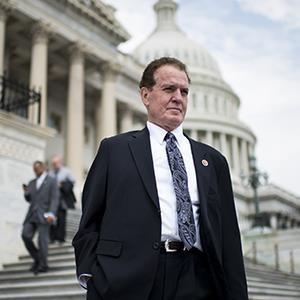
Gingrey observed that poorly paid Congressional aides have a future on K Street — a street in Washington D.C. known for the lobbying companies headquartered there.
Aides “may be 33 years old now and not making a lot of money,” Gingrey said, according to two aides who relayed his comments to The National Review. “But in a few years, they can just go to K Street and make $500,000 a year. Meanwhile I’m stuck here making $174,000 a year.”
Members of Congress have made $174,000 annually since 2009.
The median household income in Gingrey’s home state of Georgia is $49,736 a year.
Gingrey’s comments were first reported by The National Review, a conservative news publication. His words “incensed some of the GOP aides in the room”.
Gingrey made the comments during a discussion about an Obamacare rule requiring congressional staffers to buy their health insurance in the exchange markets.
The Office of Personnel Management has said that the government can continue to contribute money to the health care premiums of Congress and their aides, but critics have deplored what they see as special treatment.
In the closed-door session, lawmakers discussed reversing the ruling.
Some were uncomfortable doing so.
Rep. Joe Barton of Texas said the change would cost him $12,000.
“That’s a burden. And it’s a burden on our staff, too,” he said, according to National Review Online.
And that’s when Gingrey spoke out.
When National Review asked him later about his comments, he said he couldn’t remember exactly what he said.
He said his point was that “it is completely unfair for members of Congress and Hill staffers to get this special treatment that the general public are not getting.”
He added this: “I was engaged in a dialogue with some members of our conference who truly believe that Congress should get special treatment. And some also believe that staff members should get special treatment. I happen not to believe that.”