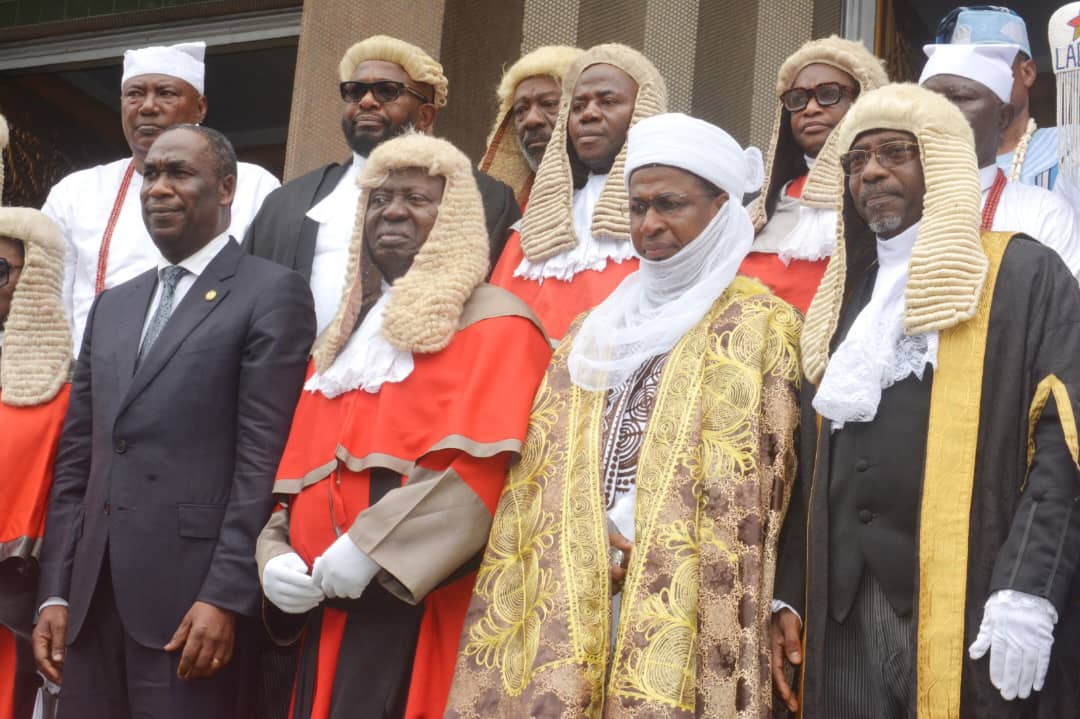
The solemn sound of hymns filled the Christ Church Cathedral, Marina, on Monday morning as judges, draped in flowing robes and wigs, filed into the ancient sanctuary. Their procession was a reminder of centuries-old traditions anchoring the judiciary as one of democracy’s strongest pillars. Across the city at the Lagos Central Mosque, Islamic clerics led fervent prayers, their chants echoing the same solemnity: a plea for wisdom, fairness, and strength as the Lagos State judiciary stepped into the 2025/2026 legal year.
The atmosphere was one of reflection and renewal. Robed judges sat side by side with magistrates, senior lawyers, government officials, and clerics, all united by the theme of justice. For Governor Babajide Sanwo-Olu, represented at the cathedral by his wife, Dr. Claudiana Ibijoke Sanwo-Olu, the occasion was more than ceremonial. It was a reminder of the judiciary’s indispensable role in safeguarding democracy.
“The judiciary is a vital pillar of democracy,” he declared, urging judicial officers to remain courageous, independent, and God-fearing in the discharge of their duties. “As we step into this new legal year, I encourage you to embrace it with renewed strength, wisdom and humility to act justly, love mercy and walk humbly with God. By doing so, you ensure that justice is not only served but seen to be served, thereby strengthening public trust in our courts.”
The governor praised Chief Judge Kazeem Alogba for steering the judiciary “safely and successfully” through the past year and saluted judges, magistrates, and lawyers for their resilience. But Sanwo-Olu went beyond commendation; he rolled out tangible reforms already set in motion. These include the historic launch of Nigeria’s first practice directions on non-custodial sentencing, the new commercial court at Tapa on Lagos Island to boost ease of doing business, residential apartments for magistrates in Ketu, and a Deputy Sheriff Warehouse in Majidu to safeguard litigated properties.
“From digitisation of processes to case management reforms and the strengthening of alternative dispute resolution, Lagos continues to lead by example,” he added, positioning the state judiciary as a model for others across the federation.
At the mosque, Deputy Governor Dr. Obafemi Hamzat used the occasion to caution against the distortions of social media, lamenting how unverified commentary is shaping public discourse on governance and justice. “Everybody has suddenly become an expert. Somebody with a Twitter feed and 200,000 followers now pontificates as an economist or a legal mind. That is dangerous,” he warned.
Chief Judge Alogba, standing tall as the head of the judiciary, was unequivocal in his charge to fellow officers. “Fear God, and you will serve without fear or favor,” he said, promising Lagosians that the bench would remain uncompromised in the pursuit of impartial justice.
The religious homilies resonated deeply. At the cathedral, Bishop James Odedeji of the Lagos West Anglican Diocese, preaching on the theme “Righteousness and Justice as Pillars for National Prosperity and Integrity,” stressed that no nation can thrive when injustice and inequality reign. “The oppressed must be protected, and societal trust must grow through integrity,” he charged, warning leaders against abandoning fairness and accountability.
Similarly, Professor Saheed Timehin, in his lecture, reminded judges that justice is not merely a legal process but a divine responsibility. “The judiciary is the conscience of the legal system and the last hope of the common man. To sit on the bench is to shoulder responsibility not just to man but to God. Every judgment and every ruling has eternal consequences,” he said, warning against compromises driven by fear, favor, or bribery.
The services ended with intercessory prayers for Lagos State, its judiciary, and Nigeria. But beyond the prayers and solemn rituals, the day symbolized continuity — the passing of one legal year into another, carried by the enduring traditions of wigs, robes, hymns, and Qur’anic recitations.
For many present, the blend of ceremony and reform underscored both the weight of the judiciary’s calling and the promise of renewal. As one senior advocate whispered while leaving the cathedral: “This is not just about opening a legal year. It is about recommitting ourselves to truth, justice, and service to humanity.”
And so, with robes, prayers, pledges, and reform promises, Lagos stepped boldly into a new judicial year — a year in which the courts once again stand as both the conscience of the state and the last refuge of the common man.