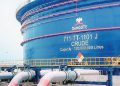
The Tinubu Media Support Group (TMSG) has said the tax incentives approved by President Bola Tinubu for Shell’s Bonga Southwest Deepwater Project could pave the way for an estimated $20 billion investment in Nigeria’s oil and gas industry.
The group made this known in a statement signed by its Chairman, Emeka Nwankpa, and Secretary, Dapo Okubanjo, in Abuja.
According to TMSG, the incentives reflect the Federal Government’s efforts to create a more attractive business environment for large-scale international investment in Nigeria’s energy sector.
At the centre of the arrangement is a production-based tax credit intended to help accelerate the Final Investment Decision (FID) on the long-delayed Bonga Southwest project.
The group said the development followed discussions between Tinubu and a delegation from Shell led by its Global Chief Executive Officer, Wael Sawan, during a meeting in January.
It added that negotiations involving the Federal Government, the Nigerian National Petroleum Company Limited (NNPCL), the Nigeria Revenue Service and Shell had now been concluded.
The discussions were reportedly coordinated by the President’s Special Adviser on Energy, Olu Verheijen.
TMSG said the conclusion of the negotiations had removed what it described as the final major obstacle to Shell’s investment decision on the deepwater project.
When fully developed, the Bonga Southwest project is expected to attract approximately $20 billion in investment, according to the group.
The project is also projected to produce about 150,000 barrels of crude oil per day, alongside approximately 140 million cubic feet of natural gas daily.
TMSG said the investment could generate thousands of direct and indirect employment opportunities across Nigeria’s oil and gas value chain.
The group further argued that increased crude oil and gas production would strengthen government revenue and support the growth of the country’s energy industry.
Beyond the Shell project, TMSG said the tax incentive framework would also be available to other new deepwater developments seeking to invest in Nigeria.
The group noted that Nigeria had struggled to attract major new deepwater investments since 2008, making the latest policy move significant for the sector.
According to TMSG, the incentives form part of the broader economic reforms being implemented by the Tinubu administration to restore investor confidence and stimulate private-sector growth.
The group said the policy could boost production, create jobs and contribute to the Federal Government’s ambition of building a $1 trillion Nigerian economy by 2030.
The development comes as Nigeria continues efforts to attract fresh capital into its oil and gas industry while using fiscal reforms and investment incentives to unlock previously delayed projects.