



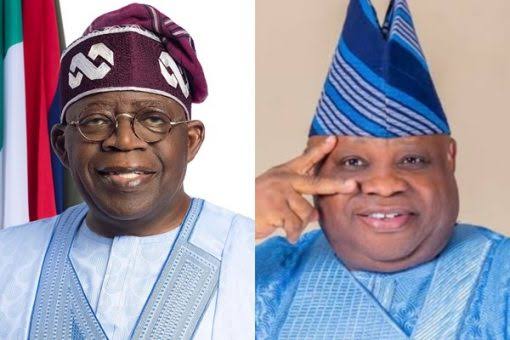
The directive issued today by President Bola Ahmed Tinubu instructing the Economic and Financial Crimes Commission (EFCC) to return to court and seek the discharge of the order freezing the accounts of the Osun State Government deserves commendation.
At a time when public confidence in the impartiality of state institutions is often tested, the President’s determination that no action of the Federal Government should create the impression of influencing the forthcoming Osun State governorship election reflects an important appreciation of the constitutional imperative that elections must not only be free and fair but must also be seen to be so.
While this intervention deserves commendation, constitutional governance requires that even the most laudable objectives be pursued through constitutionally appropriate means.
The EFCC is a statutory body whose investigative and prosecutorial functions are exercised pursuant to law, while the order freezing the Osun State Government’s accounts remains a judicial order made by a court of competent jurisdiction.
The law equally provides the mechanism for such an order to be reviewed, varied or discharged upon a proper application. By directing the Commission to return to court rather than seek any extra-judicial resolution, the President has ensured that the matter remains where the Constitution requires it to be resolved: before the judiciary.

Our constitutional order rests upon the separation of powers and the independence of institutions.
These principles are strengthened when every arm of government performs its constitutional responsibilities while respecting the authority of the others. The President’s concern for protecting the credibility of the Osun governorship election should therefore continue to be reflected in unwavering respect for the operational independence of investigative agencies and the constitutional authority of the courts.
The President’s decision should also serve as clear guidance to every institution and stakeholder that will play a role in the forthcoming governorship election.
The Nigeria Police Force, the Armed Forces, the Nigeria Security and Civil Defence Corps and other security agencies, the Independent National Electoral Commission, election observers, members of the National Youth Service Corps who will serve as ad hoc electoral officials, transport and logistics providers, universities whose senior academics may serve as Returning Officers, political parties and their candidates, the media, and indeed the judiciary, should all draw inspiration from this unequivocal commitment to protecting the democratic process.
President Tinubu’s intervention is consistent with the democratic credentials that have defined much of his public life and should be regarded as a reminder that the integrity of elections is a shared constitutional responsibility. Let every institution be guided accordingly.
Our elections must reflect the freely expressed will of the Nigerian people. Free and fair elections are not negotiable. Every public institution, politician, and citizen bears a duty to protect that principle.
History will ultimately judge not merely the outcome of elections but whether those entrusted with public authority discharged their responsibilities with fidelity to democracy and the rule of law.
*Tokunbo Afikuyomi, Esq.
Principal Partner
Liberty Semper Fidelis LP
Abuja.