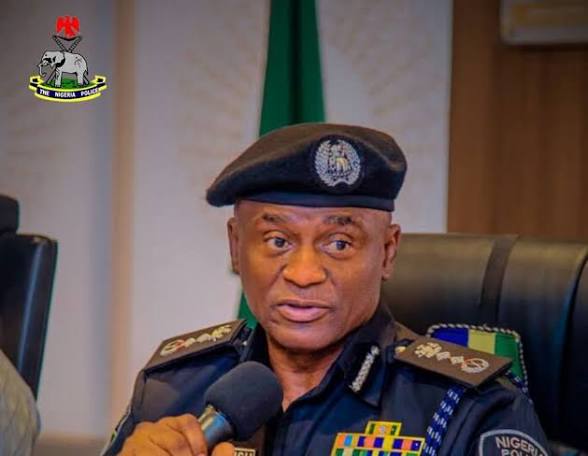
The Inspector-General of Police, Olatunji Disu, has clarified that the proposed establishment of state police in Nigeria will not result in the dissolution of the Nigeria Police Force (NPF).
Disu gave the assurance on Monday while addressing police personnel in Dutse, Jigawa State, amid growing national debate over ongoing policing reforms.
He said the clarification was necessary to ease concerns and anxiety among officers and men of the force regarding the potential implications of the new policing structure.
According to him, the proposed reform has generated widespread discussion within security circles and among Nigerians, prompting the need for clear communication from police leadership.
“I am aware that many officers have concerns about what this development means for the future of the Nigeria Police Force and their careers,” he said.
“There is no cause for panic. The creation of state police does not mean the abolition of the Nigeria Police Force.”
The IGP further assured personnel that the reform would not affect their employment status, ranks, pensions, or accrued benefits, adding that their welfare remains fully protected.
Disu explained that the objective of the reform is to strengthen Nigeria’s policing architecture by introducing state-level policing structures that can respond more effectively to local security challenges, while maintaining a strong federal police system for national and transnational threats.
He noted that under the proposed arrangement, the Nigeria Police Force would be restructured into what would be known as the Federal Police Service, without losing its core operational capacity.
“Our zonal and state commands will continue to exist, alongside specialised units such as the Police Mobile Force, Counter-Terrorism Unit, SWAT, Anti-Bomb Squad, VCRU, INTERPOL, Cybercrime Unit and others,” he said.
“These formations will remain essential in tackling terrorism, organised crime, cyber threats, and interstate criminal activities.”
Disu emphasised that the reform is designed to expand policing capacity rather than weaken it, stressing that no officer will be forced out of the federal system.
He disclosed that personnel transitions into state police structures, where applicable, would be voluntary through a Voluntary Transfer Programme (VTP).
“The principle guiding this programme is choice, fairness, and transparency,” he said.
Officers who wish to remain in the federal system will be allowed to continue their careers, while those interested in state policing will have the opportunity to transition when the framework is fully operational.
The police chief assured that issues relating to welfare, career progression, pensions, and professional rights would be safeguarded throughout the reform process.
He urged officers to remain calm and avoid being misled by rumours or misinformation surrounding the restructuring exercise.
“You must remain professional, focused, and committed to duty. Whatever shape the future policing structure takes, integrity and discipline will remain essential,” he said.
Speaking at the event, Commissioner of Police in Jigawa State, Haruna Yahaya (represented by Abdullahi Wase), commended the IGP for engaging personnel directly, describing the visit as a demonstration of effective leadership and concern for officers’ welfare.
He noted that Jigawa State remains one of the most peaceful states in the country, attributing the stability to strong collaboration among security agencies, traditional institutions, and residents.
The Commissioner assured continued loyalty and commitment from police personnel toward implementing the force’s reform agenda.
The IGP’s visit coincided with the 8th Executive Committee Meeting of the Northern Traditional Rulers Council (NTRC), themed “Peace, Unity and Development of the North.”