From Bode Durojaiye, Oyo.
“It is indeed disheartening to note how some Judges allow their reputation to be soiled, due to materialistic desire. What is more, some Judges work only twice a week before terminal review. Why should that happen? It is a great disservice to the rule of law”.
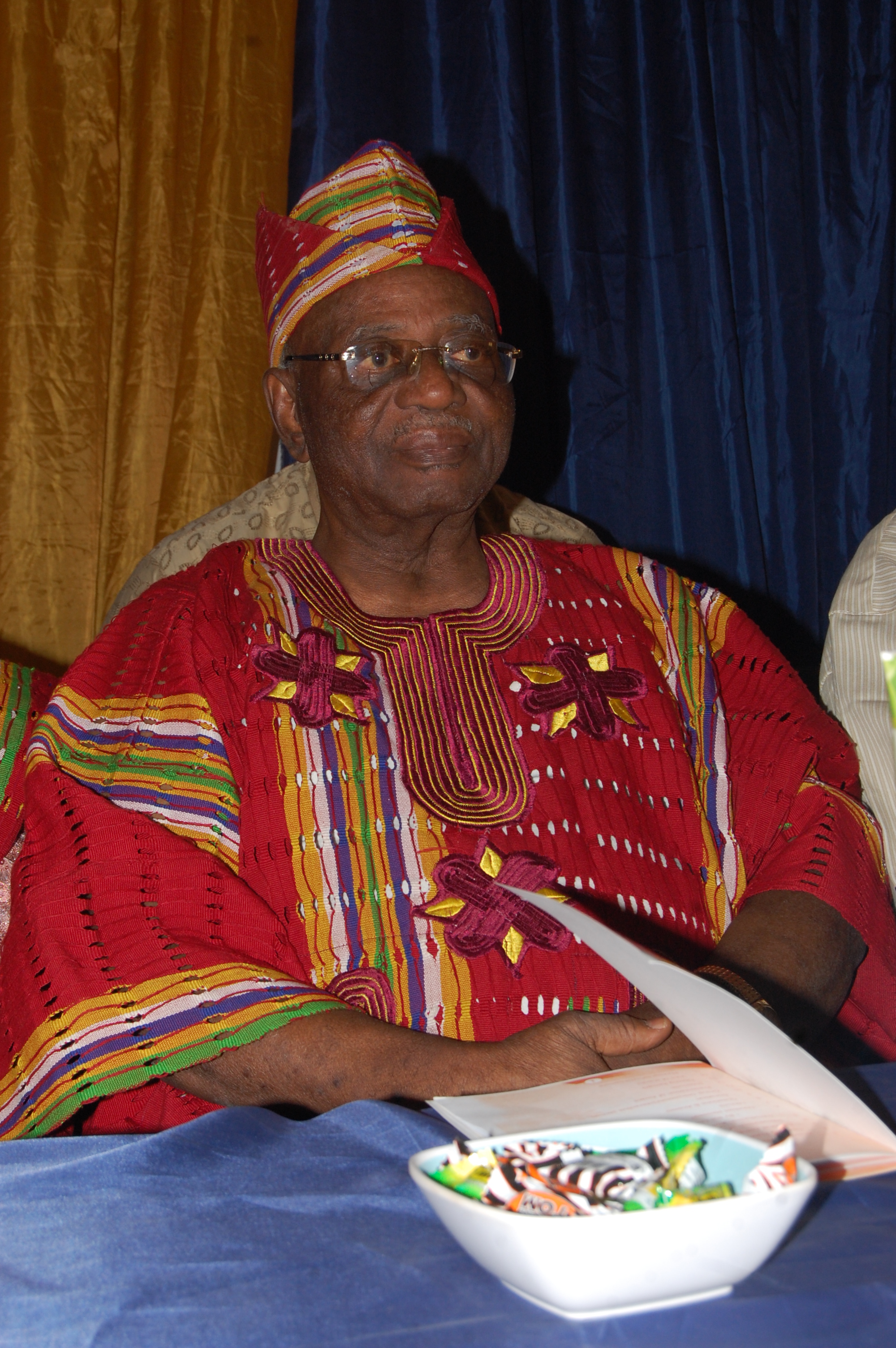
The crowd was held spell bound when former Chief Judge of old Ondo State, Justice Sydney Adeyemo Afonja, threw the bombshell in Oyo town, Oyo State.
It was during an event to honour the firebrand jurist by the
Youth Alliance Movement of Nigeria (YAMN).
A lecture entitled ‘Re-inventing Nigeria for the challenges of the 21st Century’ was also delivered at the event by a World Bank consultant and don at the Ladoke Akintola University of Technology (LAUTECH), Ogbomoso, Professor Julius Ipadeola Olaifa.
Encomiums were showered on Justice Afonja by all the personalities present at the well-attended ceremony.
Many of them described him as a workaholic jurist who dispensed justice, effectively and efficiently, anywhere he worked before his retirement.
He was not only active on the Bench, the 75-year-old prince, born to the royal family of Agunloye/Alawolodu in Oyo town, is also a spiritual giant.
Born in Oyo, he grew up in Akure and obtained a Bachelor’s Degree in Economics and Master’s Degree in law.
At the peak of his legal career, he became the Chief Judge of old Ondo State, before the creation of Ekiti State.
Before then, he was Deputy Director of Public Prosecution in the Defunct Western Region and Pioneer Director of Public Prosecution and Solicitor-General in the old Ondo State Ministry of Justice.
During this period, Justice Afonja single-handedly
established the Ministry of Justice.
A one-time lecturer at the Nigerian Law School, Victoria
Island, Lagos, the legal icon was also Chairman, Armed Robbery Tribunal in old Ondo State, and Chairman, Conference of Chairmen of Armed Robbery Tribunals Nationwide between 1986 – 1994.
Afonja was appointed a member of the Court of Appeal
in 1989 but turned it down due to what he referred to as ‘family reason’.
He was Deputy Chancellor, Anglican Diocese of Ibadan, Chancellor, Anglican Diocese of Oyo, and member of the Standing Committee at the General Synod of Church of Nigeria, Anglican Communion.
The eminent Jurist has travelled to most parts of the world.
While lamenting about the decay in present-day judiciary, Justice Afonja said: “Quite a number of the Judges are not really committed to and attach utmost importance to integrity”.
He stated that when he was the Chief Judge of Ondo
State, dereliction of duty among Judges or Magistrates was not only disallowed, cases were not permitted to be prolonged unnecessarily in courts.
” I must confess, I am disturbed to hear of cases pending in courts for as long as six months, or one year or more, while the DPP too finds it difficult to analyse the facts and evidences with applicable laws, thereby denying the accused persons or suspects the much-needed justice. It is really unfortunate”.
While expressing strong indignation at the criminal justice
administration in the country, the eminent Jurist blamed
Ministries of Justice for long delay of case files of those
awaiting trials.
To this end, Afonja suggested that retired Judges, Chief Magistrates and senior lawyers should be contracted to write legal advices on pending cases in courts.
“That is the only way out for now. Imagine a suspect being remanded in prison for years while the trial Judge is awaiting legal advice on the offences allegedly committed? Besides the fact that it infringes on the fundamental rights of the suspects yet to be presumed guilty, no law gives room for punishing suspects unjustly without proper trial”.
Describing the rate of corruption in the country as endemic, the legal icon hinted that unlike now that attractive remunerations are given to Judges, he retired as Chief Judge of old Ondo State on a salary of N58,000 per annum.
On his lifestyle, retired Justice Afonja who informed that he was brought up by his parents who were teachers and strict disciplinarians said: “When I was young, my father showed me some verses in the Bible, which taught about honesty as the only guiding principle that could bring a person up. That permeated me throughout my struggle in life. I have self satisfaction and no ambition ever tickles my fancy”.
On life after retirement, the eminent Jurist said apart
from his law firm, he also writes books on security matters and traffic regulations, which are very useful to security agencies and the Federal Road Safety Corps (FRSC).
In his lecture, Olaifa urged the National Orientation Agency (NOA) to, as a matter of priority, re-appraise its political education programme so as to ensure that every citizen cultivates those attributes and values that ensure the ills of society are kept at bay through personal and moral vigilance.
Olaifa stated that such steps would not only allow holistic
reformation of every citizen’s mental model which dictates a unique and progressive ways of perceiving past, present and future leaders, but create a modicun of trust that will establish symbiotic relationship between the individual rights and the community interests.
“Socio-economic problems keep on multiplying at a terrific rate. People simply are sad and hungry. Schools keep on producing graduates yearly without attendant job opportunities. Cases of robbery, kidnapping and other heinous crimes have become our national anthem. There is tremendous increase in the cases of sickness, insanity,
hopelessness and insanity. Sanctity is no longer accorded human life’’.
He lamented that in all facets of the country, “there is much speed but less development, more haste but worse speed
and there are inestimable resources but more misery. There is much money but less satisfactory living among the citizenry befitting human beings. There is much religion but less godliness and morality, while there is much armoury and less security’’.
Olaifa, former dean, Faculty of Agricultural Sciences, LAUTECH, noted that the country is in dire need of leadership that is pragmatic, fearless, sincere and large-hearted to be able to understand the demands of national development and in particular clear-cut action policy for youths.
In his welcome address, Oyo State Chairman of the youth movement, Mr. Olatunji Olalekan, said the programme was part of its contributions towards transforming the country for the good of all and sundry.