To avert panic selling and check extra ordinary price volatility in the capital market, the Securities and Exchange Commission (SEC) on Friday, approved market wide index circuit breakers.
A council member of the Nigerian Stock Exchange (NSE), who pleaded anonymity, said in Lagos that the approval was granted in August.
Circuit breakers are measures used by stock exchanges during large sell-offs to avert panic selling.
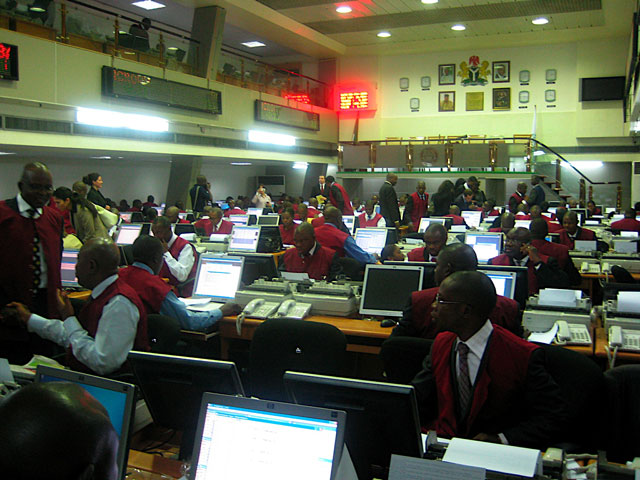
The only circuit breaker on the NSE currently is the 10 per cent daily price limit (up or down) on all listed equities.
The source said that the NSE rule was tagged: Rule on Trading Halt Due to Extra Ordinary Market Volatility (Index Circuit Breakers).
According to the source, the new rule would act as an intervention to check mate price movement that could lead to the fall in NSE All-Share by more than five per cent in a day.
He said that the index circuit breaker, when introduced, would enable the NSE to halt trading on all securities for 30 minutes whenever there was severe price volatility.
The source said that “after an index has fallen a certain percentage, the exchange might activate trading halts or restrictions on program trading for 30 minutes’’.
He said that the new rule was necessitated by the recent downturn in the equities market when the All-Share Index dropped by 3.88 per cent on June 13.
The source said that theNSE needed to be proactive to ensure market stability because of the improvement in market technology that ensured online real time daily transactions.
He said that index circuit breakers were operating in other markets, noting that Nigerian should not be left out to avoid unnecessary recession.
“On the New York Stock Exchange (NYSE) for example, circuit breakers were put in place after `Black Monday’ when the Dow Jones Industrial Average (DJIA) dropped almost 1,000 points in 20 minutes, then snapped back on extraordinary volume.
“Currently, at the start of each quarter, the NYSE sets three circuit breaker levels at levels of 10 per cent, 20 per cent and 30 per cent of the average closing price of the DJIA for the month preceding the start of the quarter,’’ he said.