One of the Rwanda genocide’s most wanted remaining suspects, accused of ordering the death of 2,000 people hiding in a church, denied on Friday any involvement though said he was “sorry” for the 1994 killings.
On the run for two decades, Fulgence Kayishema was arrested on Wednesday under a false name on a grape farm in South Africa where, according to a prosecutor, fellow refugees gave him up.
Entering court for a first hearing with a bible and book emblazoned with “Jesus first,” the 62-year-old was asked by a journalist if he had anything to say to victims.
“What I can say? We are sorry to hear what was happening,” he responded, coming up from holding cells at Cape Town Magistrates’ Court.
“It was a war at that time. I didn’t have any role.”
He was a fugitive from justice since 2001, when the International Criminal Tribunal for Rwanda (ICTR) indicted him for genocide over his alleged role in the destruction of the Nyange Catholic Church in Kibuye Prefecture.
An estimated 800,000 ethnic Tutsis and Hutu moderates were killed during Rwanda’s genocide, orchestrated by an extremist Hutu regime and meticulously executed by local officials and ordinary citizens in the rigidly hierarchical society.
At the Nyange church, Hutu militia lobbed grenades then doused it with fuel to set it ablaze.
When that failed, they knocked down the church with bulldozers and most of those sheltering inside died.
According to a charge sheet seen by Reuters, Kayishema faces five charges in South Africa, including two of fraud.
The fraud counts relate to applications he made for asylum and refugee status in South Africa, where the National Prosecuting Authority (NPA) alleges he gave his nationality as Burundian and used a false name.
Serge Brammertz, chief prosecutor of the International Residual Mechanism for Criminal Tribunals (IRMCT), the successor to the ICTR, told the BBC broadcaster that Kayishema fled Rwanda after the genocide and was hiding among refugees.
“First, he went to the DRC (Democratic Republic of Congo) for a number of months, then he went to a refugee camp in Tanzania. From there, he moved to Mozambique.
Then two years later to eSwatini and then in the late 90s he ended up in South Africa,” Brammertz said.
The prosecution persuaded a small number of former Rwandan soldiers with false identities living in South Africa as refugees to provide information on Kayishema’s whereabouts, he added.
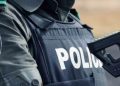
Kayishema briefly appeared in court on Friday accompanied by masked police officers with automatic weapons and bullet-proof vests.
The NPA said the case was postponed to June 2 to allow it time for further investigation.
“While he was being arrested, more information came, which could mean us adding more charges,” NPA provincial spokesperson Eric Ntabazalila told journalists.
Ntabazalila said prosecutors would oppose bail should he seek it.
Kayishema will be held at Cape Town’s Pollsmoor Prison ahead of extradition to Rwanda.
THE VICTIMS
Once the mass murder of their people began, Safari Jean Bosco and his mother, sister, and brothers sought refuge in a Catholic church along with over 2,000 others packed into the building. Some prayed as hungry mothers strained to breastfeed.
By April 12, 1994, six days after the genocide against Tutsis by an extremist Hutu regime began, militia surrounded the church.
Soon afterward Bosco saw local police inspector, Fulgence Kayishema, in a meeting with the parish priest and others.
“We thought the meeting… was addressing how to maintain our security,” Bosco told Reuters.
“It later came to our knowledge that they had cruel intentions to exterminate us.”
Hutu militia lobbed grenades at the Nyange Catholic Church in Kibuye Prefecture, then doused it with fuel to set it ablaze.
When that failed, they knocked down the church with bulldozers and most of those sheltering inside died.
On Wednesday, after 21 years on the run from his genocide indictment over the church massacre by the international Rwanda war crimes tribunal, Kayishema was arrested in South Africa, giving the survivors a long-denied sense of satisfaction.
“The arrest of Kayishema was eagerly awaited. May justice prevail,” said Bosco, now 67, who survived the bulldozing by hiding under some of the bodies of the 2,000 victims.
He had been Kayishema’s neighbour before the 1994 genocide, and spoke to Reuters by his front door while gazing pensively at Kayishema’s old plot of land.
Another neighbour, Aloys Rwamasirabo, lost five of his nine children at the church.
The rest were killed elsewhere by Hutu militia.
“We just thank God and the government that he was caught,” said Rwamasirabo, who helped build a memorial at the site of the church.
“We want him (Kayishema) to come and see how the place looks now despite what he has done to it.”
Tribunal prosecutors said Kayishema helped plan the church slaughter, obtained materials to help carry out the killings and supervised the dumping of corpses into mass graves.
Neither Kayishema, who appeared briefly in a South African court on Friday and was remanded in custody, nor his lawyers have commented on his arrest and the charges against him.
The parish priest, a Hutu, was convicted as an accomplice by the Rwanda tribunal in 2007 and is serving a life prison term.
Kayishema’s arrest means there are now only three fugitives indicted by the tribunal whose whereabouts remain unknown, though Rwanda considers that a greater number of genocide perpetrators have yet to be caught.
“His arrest ensures that he will finally face justice for his alleged crimes,” said Serge Brammertz, prosecutor of the International Residual Mechanism for Criminal Tribunals, which took over from the Rwanda tribunal when it was wound up in 2008.