Tunisia’s president on Wednesday called for changes to the Constitution to give the presidency more power, escalating a dispute between the two highest offices in the country.
The Constitution, adopted in 2014 after the uprising of 2011 that ousted autocrat Zine Ben-Ali, significantly erodes the previously extensive power of the presidency and gives the prime minister and parliament a much bigger role.
But President Beji Essebsi and Prime Minister Youssef Chahed have been at loggerheads.
Essebsi, a former parliamentary speaker under Ben-Ali, had been the dominant figure in the North African country since his election in 2014, in spite of constitutional limits.
But he has lost influence since Chahed took office as prime minister in 2016.
Since then, tensions have been building up between the two men and escalated in 2018 when Essebsi called on Chahed to resign.
But,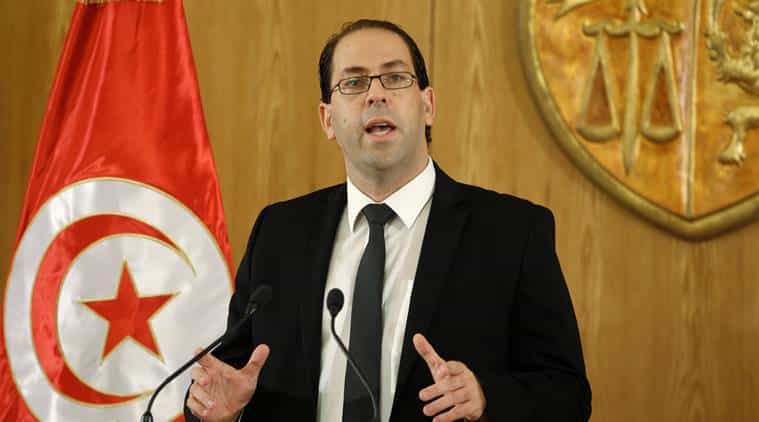
Now, with a parliamentary election due in October and a presidential vote starting in November, Essebsi is calling for an overhaul of the nation’s ruling charter.
The parliamentary race is expected to be closely fought by Ennahda, the more secular Tahya Tounes party of Chahed and the Nidaa Tounes party led by Hafedh Essebsi, the president’s son.
No one has yet declared their candidacy for the presidency.
“The president has no major functions and executive power is in the hands of the prime minister,” Essebsi said in a speech broadcast on state television to mark Independence Day.
“It would be better to think about amending some chapters of the constitution. The president controls defence and foreign policy – both in reality relatively minor policy areas,’’ he said.
Jouhar Mubarak, a law professor, said Essebsi would be unable to push through an amendment any time soon as this would require approval by a constitutional court which still needs to be set up.
Ali Larayedh, an Ennahda official, also said the time was not right to amend the constitution before the elections, state news agency TAP said.
The president’s son has accused Chahed of failing to tackle high inflation, unemployment and other problems.
The North African state has been hailed as the Arab Spring’s only democratic success, because protests toppled Ben-Ali without triggering the violent upheaval seen in Syria and Libya.
But since 2011, nine cabinets have failed to resolve Tunisia’s economic problems, which include high inflation and unemployment, and impatience is rising among lenders such as the International Monetary Fund.