


Dear Ray,
At 78, you have acquired the rare privilege of looking back at a profession that has changed almost beyond recognition, while still remaining recognisably yourself. The typewriters have disappeared, the newsroom has gone digital, deadlines now travel at the speed of light, yet the essential question remains the same: what does a journalist do when truth becomes inconvenient to those in power? Your answer, over the decades, has been remarkably consistent.
I remember the stories surrounding the NITEL fire in Lagos in 1983. Your writings had drawn attention to the alarming pattern of fires in public institutions and the suspicion that some of them might have been connected to attempts to conceal wrongdoing. When the NITEL building was engulfed, the authorities turned their attention to the journalist. You found yourself facing the extraordinary accusation that a man could be responsible for arson and murder through what he had written. Whether one looks at the episode as journalism, coincidence or one of those strange encounters between foresight and events, it remains one of the unforgettable chapters of your career.
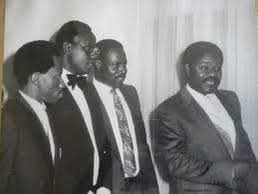
Then came Newswatch, and with it a larger canvas. You, Dele Giwa, Dan Agbese and Yakubu Mohammed created something that became much bigger than a magazine. You helped establish a tradition of investigative reporting, lively analysis and fearless commentary that gave Nigerian journalism a new confidence. The price was heavy. Dele’s assassination, the harassment of the editorial team, detention and the eventual proscription of the magazine tested everyone who stood within its orbit. You remained there, doing the work.
Yet it would be a disservice to remember you only through the battles. There is another Ray Ekpu: the writer who enjoys language and knows exactly what to do with it. Your columns have carried the unmistakable signature of a wordsmith. You can stretch an argument, puncture an absurdity and deliver a broadside with a sentence that leaves its mark. But the literary flourish has never displaced the editor’s discipline. You know that good journalism is not simply beautiful writing. It is informed judgment, accuracy, proportion and the courage to stand by a considered position.
That is why your influence has travelled beyond the pages you have edited or the columns you have written. Many who came into journalism after your generation inherited a profession in which the boundaries had already been pushed by people like you. You were part of that difficult generation that discovered, often the hard way, that the journalist’s independence is easiest to defend when it is most inconvenient to defend it.
There is no need to turn you into a saint at 78. You would probably object to the exercise yourself. You have your disagreements, your sharp edges and your unmistakable opinions. But those are precisely what make the tribute worthwhile. The important thing is that through the arguments and the controversies, you have remained attached to certain enduring ideas: justice, accountable government, professional journalism and the belief that Nigeria deserves better than what it too often receives.
So, Ray, this is not a birthday citation. It is simply one colleague saluting another who has travelled a very long road and has given the profession something that cannot be measured by awards or titles. You gave it your intellect, your courage, your humour and, on many occasions, your personal comfort.
At 78, may you enjoy the luxury that journalism rarely gives its practitioners: the opportunity to look back without regret, to laugh at some of the battles, to remember those who travelled with you, and to take satisfaction in knowing that your contribution mattered.
Happy birthday, Oga Ray.
Keep the wit. Keep the mischief. Keep the broadside when the occasion demands it. Most of all, keep the Ray that generations of journalists have come to respect.
With warm regards,
Lanre Ogundipe
Former President, Nigeria, and Africa Union of Journalists
Public Affairs Analyst, Abuja