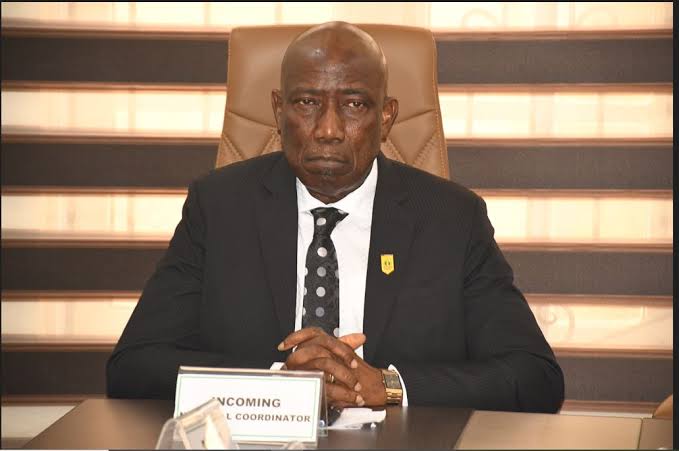
Retired Deputy Inspector General (DIG) Johnson Kokumo, the Director-General of the National Centre for the Control of Small Arms and Light Weapons (NCCSALW), has highlighted poor armoury management and the diversion of state-owned weapons as key factors driving insecurity in West Africa.
Speaking on Friday in Abuja at the graduation ceremony for the Capacity Development Programme on Arms Physical Security and Stockpile Management, Kokumo stressed the urgent need to address these issues. The programme was a collaborative effort between the NCCSALW, the HALO Trust, and supported by the Kingdom of the Netherlands.
Kokumo explained that investigations and institutional assessments had uncovered several contributing factors to the proliferation of small arms in Nigeria and the broader West African region, including porous borders, illicit local weapon production, and the leakage of arms from government-controlled stockpiles.
“The most concerning source of proliferation remains haemorrhages from illicit stockpiles of arms-bearing agencies of government,” Kokumo said, noting that arms intended for national security were increasingly falling into the hands of criminal networks due to inadequate controls and accountability gaps.
He called for strengthening armoury management systems and enhancing the capacity of personnel involved in arms control. He emphasized that the NCCSALW had ramped up training initiatives to improve record-keeping, storage standards, and weapons tracking across security institutions.
Kokumo also commended HALO Trust for its technical expertise in arms and ammunition management, describing the organization’s global experience as “invaluable.” He further expressed gratitude to the Kingdom of the Netherlands for its ongoing support for arms control and disarmament initiatives in Africa, underlining the importance of such partnerships in strengthening the regional security architecture.
He urged the newly graduated participants to apply the knowledge and skills they had gained in their respective organizations, stressing that effective arms management was crucial to national security and public safety.
“You are returning as agents of change,” Kokumo said. “Nigeria is counting on you to enforce accountability and professionalism in arms management.”
The NCCSALW’s Director-General reaffirmed the Centre’s commitment to continuous capacity building and strengthening institutional frameworks to curb small arms and light weapons proliferation across the region.
In his remarks, the Ambassador of the Kingdom of the Netherlands, Ben Van Novich, reiterated his country’s commitment to enhancing arms control and security cooperation in Nigeria. Represented by Mrs. Dene Traore, the First Secretary (Policy Affairs), the ambassador noted that the training was aimed at improving professionalism and accountability within weapons and ammunition management systems.
Traore added that this initiative, supported by the NCCSALW, was vital for enhancing security structures, building trust between communities and security agencies, and preventing arms from falling into the hands of criminals across Nigeria and West Africa.
Richard Goss, the Country Director of HALO Trust, reaffirmed the organization’s commitment to improving arms physical security and stockpile management. He stressed that such efforts were key to reducing violence and enhancing regional stability. Goss commended the participants for their discipline and professionalism and encouraged them to implement the skills acquired during the training. He also acknowledged the technical support of the University of Melbourne in strengthening the program.