Director-General, Securities and Exchange Commission (SEC), Ms Arunma Oteh, in Abuja on Tuesday said the insurance sector was central to the overall transformation of the country.
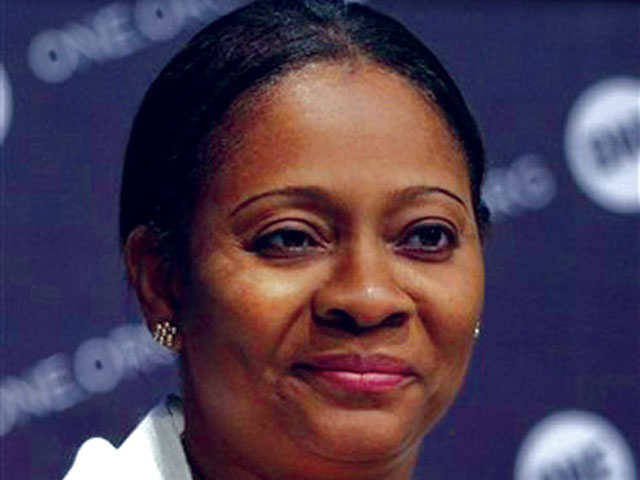
Oteh said this at the International Micro Insurance Conference organised by the National Insurance Commission (NAICOM) in collaboration with its development partners.
She said the potential of the insurance sector had so far not been fully maximised in Nigeria as it was being done in developed countries.
She said: “I feel very strongly about the importance of insurance to transforming not just the economy, but the entire country.
“And for us as managers of the capital market, some of the transformation that we are already seeing in the sector is already improving the economy.
“This is because the reforms put in place such as compulsory insurance means that premiums are rising, which also means that premiums are investable assets in the capital market.
“And those investable assets will enable us at the capital market to contribute to the transformation of the economy, the same way it is being done with pension assets.’’
Oteh noted that the largest investment firms around the world were the insurance companies.
“A good number of companies that are listed on the stock market are insurance companies and we want to make sure that they are healthy, and investors are enjoying good returns.
“But I think that the focus on micro insurance is very important because one of our challenges today is that not many of the 160 million people in Nigeria participate in the economy.
“I believe that micro insurance will provide an initiative of financial inclusion to the grassroots, which will help to bridge urban/grassroots gap.’’
Commissioner for Insurance, Mr Fola Daniel, said the conference was aimed at getting policy makers, insurance practitioners and micro finance operators, onboard so that they could
take micro insurance to the grassroots.
Daniel, who is also the Chief Executive Officer of NAICOM, said micro insurance was designed to protect low income earners in the country.
He said that the idea was for them to have easy access to insurance policies with low premium, “and in the case of any claim, compensations will be made in a matter of days’’.
The NAICOM boss noted that the micro insurance products would be in life, health, accidental death and disability products, property and agriculture.
He said “micro insurance is very profitable because if you can sell millions of premiums, it will translate into millions as profit even with the low premium margin.
“The risk associated with it is predictable and its cost is reduced through collaboration with other sectors like micro-finance banks, cooperative societies and the telecom sector as movers of this policy,’’ he said.
A representative of Micro Insurance Centre, Mr Michael McCord, who spoke on the potential of micro insurance in the country, said only 0.68 per cent of Nigerians, had insurance covers.
McCord said the figure was based on a landscape feasibility study on Africa’s insurance, saying “Nigeria is a hidden talent when it comes to insurance’’.
He said that South Africa was rated highest on the continent, with Ghana being the highest in West Africa.
McCord, however, said Nigeria could transform its insurance sector by lowering its premium rates and discarding conflicting regulatory bodies in the sector and by taking insurance to the rural areas.
He said “insurers need to invest in micro insurance expertise, market research, IT systems, improving sales skills and cheap distribution channels that will reach the uninsured market.
“There is need for NAICOM to advertise and educate the people more on the importance of insurance, while NHIS needs to be reviewed to make it more appealing to rural dwellers.
“NAICOM and Central Bank of Nigeria (CBN) need to coordinate to provide clarity about overlapping areas, especially in regulatory function,’’ McCord said.
The Director-General, Nigeria Insurers Association (NIA), Mr Thomas Olorundare, said the country’s transformation agenda would not be achieved without economic activities reaching the grassroots.
Olorundare said that to achieve this, insurance should become affordable in price and accessible to potential consumers through effective distributor bodies.
“Insurance culture must be created and developed among low income groups, as intensive capacity building and development of expertise on micro insurance remain vital,’’ Olorundare said.