About 72 per cent of global goods trade continues to take place under the core rules of the World Trade Organisation despite growing uncertainty over tariffs and international trade policies.
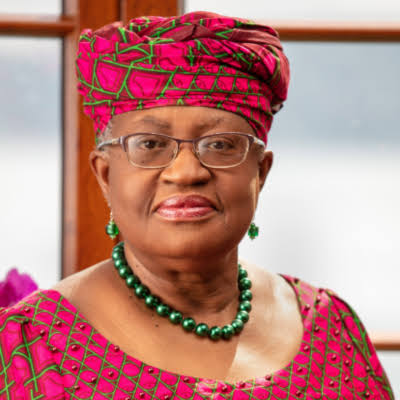
WTO Director-General Ngozi Okonjo-Iweala disclosed this while addressing participants at the seventh Africa Emerging Markets Forum in Abuja.
The event was jointly organised by the Central Bank of Nigeria, the Emerging Markets Forum and the Centre for the Study of the Economies of Africa.
WTO Rules Remain Central to Global Commerce
Okonjo-Iweala said most countries continued to conduct trade under the WTO’s rules-based system.
She explained that approximately 72 per cent of international goods trade was carried out under the organisation’s most-favoured-nation tariff arrangements.
Another 16 per cent, she said, took place within the wider WTO structure through preferential terms established under bilateral and regional trade agreements.
According to her, these agreements are largely built upon principles and rules developed through the WTO framework.
AI-Related Products Support Merchandise Trade
Okonjo-Iweala said global merchandise trade increased by 4.6 per cent as rising demand for artificial intelligence-related products helped offset the effects of tariff increases and trade policy uncertainty.
International services trade also expanded by 5.3 per cent during the period under review.
Within the services sector, digitally delivered trade recorded even stronger growth of nearly six per cent.
She said the figures demonstrated that global trade remained resilient despite strategic competition, geopolitical tensions and changes in national trade policies.
Trade Exceeds Pre-Pandemic Levels
The WTO chief said global goods trade volumes in 2025 were more than 12 per cent higher than the levels recorded in 2019, before the COVID-19 pandemic.
Services trade volumes rose even faster, reaching a level approximately 31 per cent above their 2019 performance.
The figures, she said, showed that international trade continued to expand despite repeated shocks to the global economy.
Strait of Hormuz Crisis Raises Costs
Okonjo-Iweala said countries had responded to the Strait of Hormuz crisis by adopting more measures to facilitate trade than to restrict it.
She said governments were removing some trade barriers, easing the movement of oil and gas products and searching for alternative routes for transporting energy products and fertiliser from the region.
However, she noted that these interventions had not fully offset the consequences of the strait’s closure.
The disruption had contributed to higher energy, fertiliser and food prices worldwide, with vulnerable African countries facing particularly severe pressure.
According to her, existing trade-facilitation measures helped prevent a more damaging outcome but were not sufficient to eliminate the economic effects of the crisis.
Countries Maintain Economic Interdependence
Okonjo-Iweala said strategic competition was increasingly affecting sensitive products and some bilateral relationships.
Nevertheless, she observed that most countries still appeared committed to maintaining international economic interdependence.
She said this cooperation was developing through different levels of integration, with some countries forming closer trade relationships while maintaining looser arrangements with others.
South-South Trade Expands
The WTO director-general identified trade among developing countries as evidence of the continuing importance of global economic integration.
She said South-South trade accounted for less than one-tenth of total global trade in 1995 but had since risen to approximately one-quarter.
Developing economies had also become increasingly active in negotiating regional trade arrangements.
Of the 384 regional trade agreements formally reported to the WTO, 49 per cent were concluded between developing countries.
Okonjo-Iweala added that the proportion of South-South agreements appeared even higher among eight additional arrangements that had not yet been formally notified to the organisation.
She said 22 economies that remained outside the WTO’s 166-member system were also working towards joining the global trade body.
The WTO chief maintained that, despite growing protectionism and geopolitical tensions, the organisation’s rules continued to provide the foundation for most international commerce.