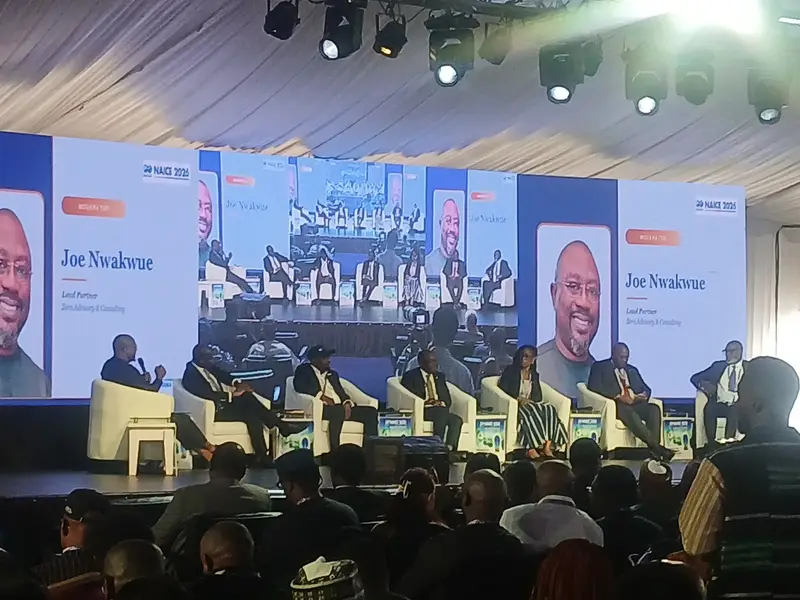
Senior executives in Nigeria’s oil and gas industry have identified consistent policies, competitive fiscal incentives and stronger domestic capacity as essential to attracting investment and increasing production.
Representatives of Chevron Nigeria, TotalEnergies, NNPC Engineering and Technical Company and Heirs Energies presented their views during a panel discussion in Lagos on Tuesday, August 4, 2026.
The session formed part of the Society of Petroleum Engineers’ Nigeria Annual International Conference and Exhibition, held at Eko Hotels and Suites from August 3 to 5.
Executives Examine Investment and Local Content
The panel was titled “Policy in Practice: Aligning Fiscal Strategy, Foreign Investment and Local Content for Sustainable Growth in Nigeria.”
Discussions focused on how fiscal reforms, foreign capital and Nigerian participation could be combined to support sustainable industry expansion.
Although the executives expressed optimism about recent policy changes, they said long-term progress would depend on technical skills, access to financing, collaboration and reliable implementation.
They argued that local content should produce Nigerian companies capable of executing complex projects competitively rather than merely meeting regulatory requirements.
Chevron Highlights Indigenous Capacity
Chevron Nigeria’s General Manager for Policy, Government and Public Affairs, Olusoga Oduselu, said effective policies created the environment required for engineering, technology and production to advance.
He said the company had supported Nigerian participation in the petroleum industry for decades through partnerships, training, financing and the award of project responsibilities to indigenous businesses.
Oduselu cited the Sonam development as an example of fabrication and integration work performed in Nigeria through collaboration with Nigerdock and Hyundai Heavy Industries.
Chevron identifies Sonam among its major Nigerian gas projects and says it remains committed to developing the capabilities of local suppliers and service companies.
The executive also referred to Chevron’s support for Nigerian companies involved in the Agbami deepwater development, including Marine Platforms.
He said some businesses that received early technical and financial assistance had grown into major contractors serving several operators across the sector.
TotalEnergies Outlines New Projects
TotalEnergies Deputy Managing Director for the Deepwater District, Victor Bamidele, said improved fiscal incentives had encouraged operators to reconsider investments that had remained inactive for several years.
He identified the Ubeta gas development as one of the projects reflecting renewed investor confidence and significant Nigerian participation.
TotalEnergies and NNPC Limited approved the final investment decision for Ubeta in June 2024. The company expects production to begin in 2027 and reach about 300 million cubic feet of gas daily at its plateau.
Gas from the Rivers State project is expected to be processed through existing infrastructure and supplied to the Nigeria LNG plant on Bonny Island.
Bamidele said the company was also approaching a final investment decision on the Ima project, with first oil being targeted for 2028.
Preowei and Exploration Plans Advance
The TotalEnergies executive said work was continuing on the Preowei development alongside the company’s renewed exploration programme.
He disclosed that one exploration well was planned for 2026, while two additional deepwater wells were expected to be drilled in 2027.
TotalEnergies has previously said the Preowei tie-back project is intended to develop an offshore discovery by using existing facilities in the OML 130 area.
The company described the approach as consistent with its preference for lower-cost developments that use established infrastructure.
Bamidele maintained that the profitability of major Nigerian projects would increasingly depend on the quality, efficiency and competitiveness of local contractors.
NETCO Seeks Partnerships Among Local Firms
NETCO Managing Director Salahuddeen Tahir described the industry’s current outlook as one of its most promising in recent years.
NETCO’s official corporate profile confirms that Tahir has led the NNPC subsidiary since September 2025.
Tahir linked the improved outlook partly to federal oil and gas policy directives that took effect on February 28, 2024.
The measures introduced investment incentives, revised local-content compliance requirements and sought to reduce contracting costs and approval timelines.
He urged indigenous engineering firms to invest in technology, personnel development and financial capacity.
Tahir said partnerships would also be necessary because individual Nigerian businesses might not independently possess all the resources required to execute the anticipated volume of projects.
Successful Delivery Could Attract More Capital
The NETCO chief argued that consistent project delivery by Nigerian contractors would improve investor confidence and create opportunities for further investment.
He identified skilled personnel, technology, financing and execution capacity as the main resources local firms must develop.
NETCO has also said it is expanding beyond engineering design into procurement, construction, installation, commissioning, operations and maintenance services.
Tahir maintained that collaboration among Nigerian companies would enable them to compete for larger and more technically demanding contracts.
Heirs Energies Reports Production Growth
Heirs Energies Managing Director and Chief Executive Officer Osa Igiehon said indigenous operators had become increasingly important to Nigeria’s oil and gas production.
He attributed the shift to asset acquisitions, improved pipeline security, regulatory reforms and greater participation by domestic companies.
Igiehon estimated that Nigerian operators now accounted for more than 60 per cent of national oil production, compared with between 20 and 30 per cent before the COVID-19 pandemic.
The percentage was presented as the executive’s industry assessment during the conference.
He said Heirs Energies had increased its oil production from about 25,000 barrels per day when it acquired OML 17 in 2021 to more than 55,000 barrels daily.
The company has separately reported production exceeding 50,000 barrels per day and gas output of approximately 120 million to 135 million standard cubic feet daily.
Company Credits Nigerian Workforce
According to Igiehon, the production gains were achieved with a fully Nigerian workforce and extensive use of indigenous contractors.
He said Heirs Energies also improved the proportion of crude successfully reaching its export terminal from about three per cent at acquisition to between 95 and 100 per cent.
The company has previously said 95 per cent of its contracting was awarded to indigenous firms while its OML 17 operations were managed entirely by Nigerian personnel.
Igiehon said the next phase of growth required larger Nigerian service companies with better financing, manufacturing facilities and the capacity to execute complex contracts.
Nigeria Pursues Three Million BPD Target
Nigeria’s combined crude oil and condensate production averaged approximately 1.74 million barrels per day in June 2026, according to the Nigerian Upstream Petroleum Regulatory Commission.
The regulator said crude output alone averaged 1.56 million barrels daily during the month, its highest level since April 2020.
Nigeria is targeting three million barrels of oil per day and 12 billion standard cubic feet of gas daily by 2030.
The NUPRC has described these targets as part of efforts to build a more competitive and resilient petroleum industry.
Industry leaders at the Lagos conference maintained that reaching those targets would require predictable regulation, infrastructure protection, access to capital and stronger partnerships between international investors and Nigerian businesses.
They also called for policies that encourage local companies to develop the technology, personnel and industrial capacity needed to participate throughout the energy value chain.