The National Centre for the Control of Small Arms and Light Weapons (NCCSALW) says it is intensifying efforts to strengthen armoury security across security agencies in Nigeria as part of measures to reduce the spread of illegal firearms.
The initiative is aimed at tackling the growing challenge of illicit arms proliferation, which continues to fuel insecurity in parts of the country.
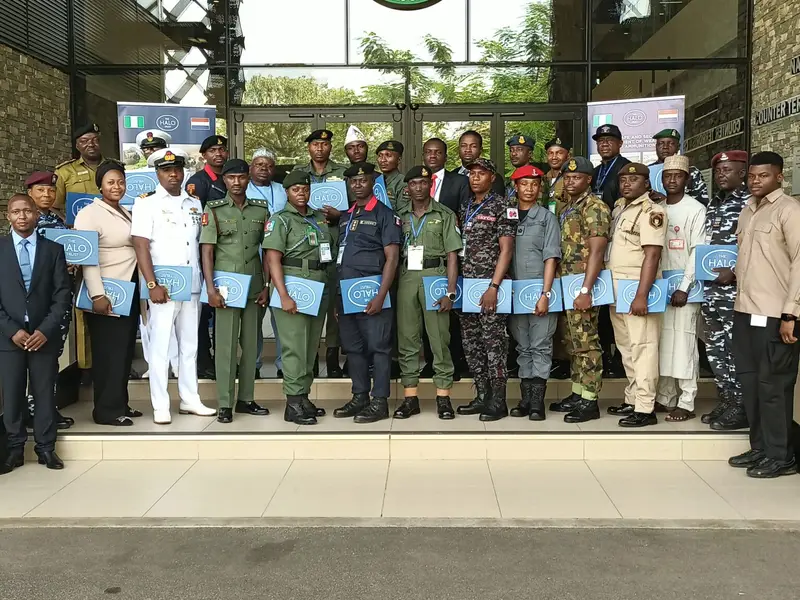
The Director-General of NCCSALW, retired Deputy Inspector-General of Police Johnson Kokumo, disclosed this in Abuja during the graduation ceremony of participants of the Physical Security and Stockpile Management (PSSM) programme.
He explained that a total of 90 personnel from 15 arms-bearing security agencies were trained in two batches to improve weapons handling, storage, and accountability systems nationwide.
According to him, 45 officers completed the first phase between April and May, while another 45 officers concluded the second phase of the programme.
Kokumo said the training was designed to build a skilled workforce capable of ensuring safe management of weapons and ammunition in line with global standards.
He noted that insecurity linked to poor armoury management, border vulnerabilities, and illicit local arms production continues to pose serious national threats.
“The programme equips participants with the capacity to improve accountability and secure armouries within their various organisations,” he said.
He added that preventing theft, diversion, and leakage of arms from government stockpiles remains a top priority for national security agencies.
The NCCSALW boss warned that weapons leaking from official stockpiles contribute significantly to insecurity and criminal activities across Nigeria.
He said efforts are underway to introduce stronger safeguards and monitoring systems to prevent such incidents.
Kokumo also commended the Office of the National Security Adviser (ONSA), led by Mallam Nuhu Ribadu, for its support in strengthening arms control programmes.
Representatives of international partners, including the Kingdom of the Netherlands and The HALO Trust, reaffirmed their commitment to supporting Nigeria’s arms management reforms.
The Dutch Embassy representative, Ronald Sonnemans, said effective weapons control is essential for reducing insecurity and preventing illegal arms circulation.
He noted that improved stockpile management enhances professionalism and accountability across security institutions.
The Country Director of The HALO Trust in Nigeria, Mr Richard Goss, said the training aligns with international standards on ammunition safety and storage.
He added that the programme also aims to prevent accidental explosions and reduce risks associated with poorly managed armories.
Participants were trained in risk assessment, inventory control, surveillance systems, emergency response, and storage safety procedures.
Speaking on behalf of participants, Navy Lieutenant V.A. Fali said the training significantly improved their knowledge of armoury management and international best practices such as IATG and MOSAIC standards.
He assured that participants would apply the knowledge gained to enhance safety, accountability, and operational efficiency within their respective agencies.