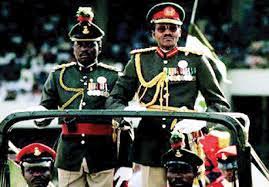
Nigeria continues to deal with the institutional and political consequences of military rule, even after nearly three decades of uninterrupted civilian governance, political scientist Prof. Dhikru Yagboyaju has said.
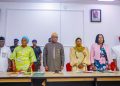
Yagboyaju made the observation while delivering a Foreign Policy Lecture organised by the Nigerian Institute of International Affairs (NIIA) in Lagos.
The lecture, titled “Political Army and Democratisation in Nigeria, 1966-2026,” examined the influence of military intervention on Nigeria’s political development and democratic institutions.
Military rule left lasting institutional effects
Yagboyaju noted that although the military had remained outside direct political governance since the restoration of democracy in 1999, the legacy of military rule could still be seen in Nigeria’s civilian political system.
He said decades of military involvement in politics had created institutional and psychological effects that continued to influence the country’s democratic experience.
According to the political scientist, the military lacked a political mandate and should not take control of government or become directly involved in political administration.
He described a “political army” as a military institution that participates directly or indirectly in governance while maintaining partisan political interests.
Yagboyaju argued that military intervention came at a significant cost to both the country and the military itself.
He identified the erosion of institutional credibility, declining professionalism, human rights abuses and restrictions on political participation among the consequences associated with military rule.
He also noted that the suspension of constitutional government under military administrations made it easier for citizens’ rights to be violated.
Power centralisation remains an issue
The don identified several areas that should be examined when assessing whether elements of military-era governance continue to influence Nigeria’s democracy.
These include the centralisation of political power, the operation of federalism, political financing and adherence to constitutional provisions.
Yagboyaju said the increasing monetisation of politics had made democratic participation more expensive and transactional.
He acknowledged that politics, particularly under a presidential and multiparty system, inevitably involves significant costs but argued that political expenditure should not translate into an unnecessarily expensive system of governance.
Strong institutions essential to democracy
Yagboyaju maintained that successful democratisation depended largely on the strength and effectiveness of national institutions.
He described the military as one of the most important institutions in modern states, with established constitutional and professional responsibilities that should be preserved.
The political scientist said maintaining those traditional military roles while keeping the armed forces outside partisan politics was important to the consolidation of Nigeria’s democratic system.
His lecture examined the relationship between Nigeria’s military history and its current democratic experience, 27 years after the country returned to civilian rule.