The Federal Government is pushing for greater financial participation from state governments as the cost of sustaining immunisation, HIV, tuberculosis and malaria programmes places additional pressure on public health financing.
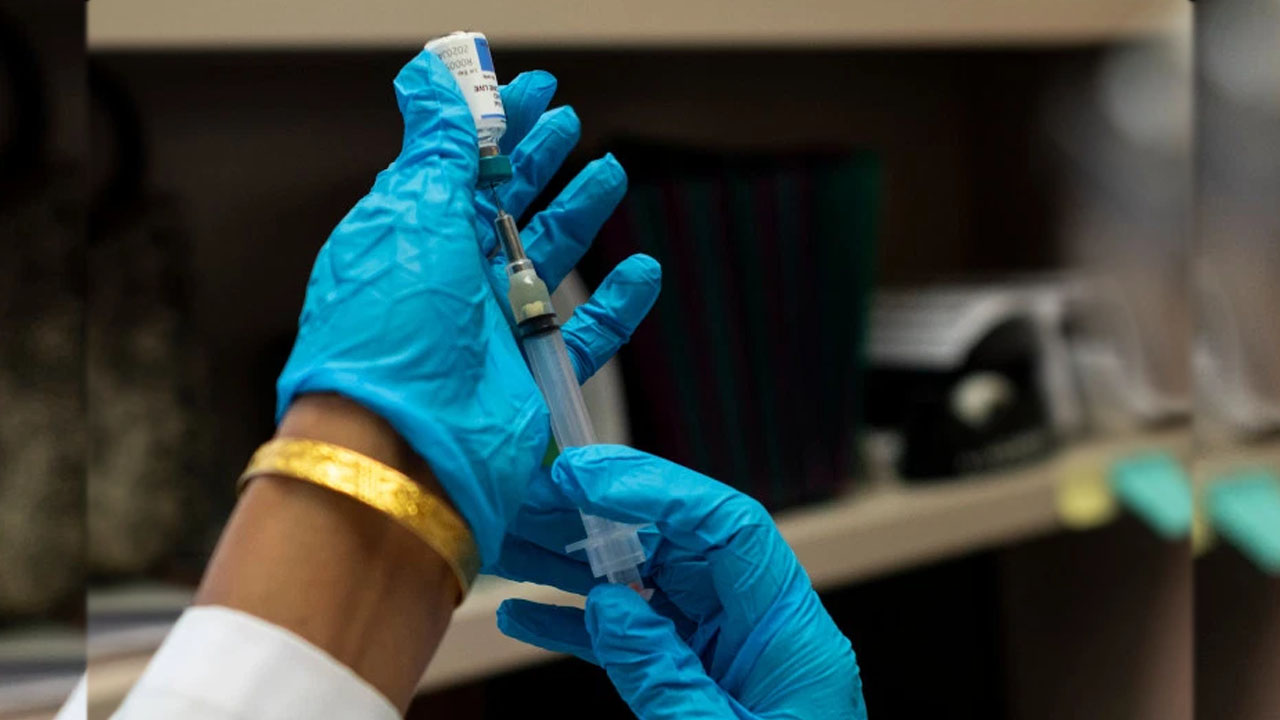
The Federal Government has called on state governments to assume a greater share of Nigeria’s healthcare financing responsibilities as the country commits approximately $280 million to immunisation and prepares to spend another $539 million on tuberculosis, malaria and HIV programmes.
The proposed cost-sharing arrangement is expected to strengthen domestic funding for essential health interventions amid concerns over the sustainability of government expenditure and fluctuations in international development assistance.
Dr Ado Muhammad, Special Assistant to the Director-General of the Budget Office of the Federation, disclosed the financial commitments during a health financing session at the 2026 Joint Annual Review of the health sector in Abuja on Tuesday.
He said the Federal Government was considering a proposal to the National Economic Council (NEC) to encourage state governments to contribute towards financing major public health programmes.
According to Muhammad, the financial demands of immunisation and the three major disease-control programmes make it increasingly necessary for governments at all levels to share funding responsibilities.
He stressed that approving money in annual budgets was insufficient without timely releases, effective utilisation and measurable improvements in healthcare delivery.
The proposed arrangement would require state governments to take greater responsibility for financing health interventions rather than relying predominantly on federal allocations and external assistance.
Muhammad described healthcare as an investment in human capital development, arguing that sustainable financing was essential to improving national productivity and public welfare.
Domestic health financing remains a major challenge
The funding proposal comes against the backdrop of improvements in government health expenditure, although household payments continue to account for a substantial proportion of healthcare financing.
Dr Francis Ayomoh, Head of the Health Financing Division at the Federal Ministry of Health and Social Welfare, presented National Health Accounts figures showing that government expenditure increased from 13.3 per cent of total health expenditure in 2015 to 26.4 per cent in 2024.
Government health expenditure per person also rose from approximately N3,000 in 2015 to N12,000 in 2024.
However, out-of-pocket payments by individuals and households remained a significant source of healthcare funding.
Ayomoh said the proportion of current health expenditure financed directly by households declined from 71.7 per cent in 2022 to 65.7 per cent in 2023 and 62.2 per cent in 2024.
Despite the reduction, he said the country needed to make further progress towards lowering the burden of direct medical payments to between 20 and 30 per cent or less.
He also disclosed that development partners had committed $1.7 billion to Nigeria’s health sector in 2026, compared with $1.3 billion in 2025 and $1.6 billion mapped out in 2024.
He warned that fluctuations in external funding made it necessary for Nigeria to strengthen domestic revenue mobilisation and establish more reliable financing arrangements for essential healthcare programmes.
The figures presented showed that the Federal Government accounted for approximately 67 per cent of government health expenditure in 2024, while state governments contributed 27 per cent and local governments seven per cent.
Ayomoh consequently called for stronger state and local government participation, improved budget implementation and a review of the 2017 National Health Financing Policy and Strategy to reflect current economic realities.
2026 health budget and ongoing reforms
Nigeria’s proposed domestic financing expansion is also taking place alongside broader reforms under the Nigeria Health Sector Renewal Investment Initiative and its Sector-Wide Approach framework.
Under the 2026 Federal Budget presented by President Bola Tinubu, approximately N2.48 trillion was allocated to the health sector.
The government has also been pursuing a financing transition that places greater emphasis on domestic investment and coordinated support from development partners.
In December 2025, Nigeria and the United States signed a five-year health cooperation agreement covering April 2026 to December 2030.
Under the agreement, the United States is expected to provide nearly $2 billion in grant funding, while Nigeria committed to allocating at least six per cent of executed annual federal and state budgets to healthcare. The domestic commitment is projected to mobilise nearly $3 billion over the five-year period.
At the 2026 Joint Annual Review, Coordinating Minister of Health and Social Welfare, Professor Muhammad Ali Pate, also reported that cumulative releases under the Basic Health Care Provision Fund had reached approximately N422.3 billion as of October 2026.
He said 3,526 primary healthcare centres had been revitalised, with work continuing on another 900 facilities.
These investments are intended to improve access to essential healthcare, strengthen primary healthcare delivery and expand financial protection for vulnerable Nigerians.
Kogi, Katsina outline state-level financing initiatives
At the review, Kogi State Commissioner for Health, Dr Abdul-Aziz Adams, described efforts to establish a more sustainable financing arrangement for healthcare in the state.
He said healthcare remained a priority under Kogi’s proposed 32-year development plan.
Adams disclosed that a bill was before the State House of Assembly seeking to establish a health trust fund financed through between two and five per cent of government allocations and internally generated revenue.
The proposed fund is expected to provide additional resources for implementing health projects and improving service delivery.
In Katsina State, the Director-General of the State Contributory Healthcare Management Agency, Dr Mohammed Safana, said the government had increased its health budget allocation in line with the 15 per cent commitment under the Abuja Declaration.
He disclosed that the state allocated N43.3 billion to healthcare in the previous year and increased funding for nutrition programmes from N500 million to N1.2 billion.
The state also invested N750 million in expanding its drug supply agency to improve medicine availability and support the provision of free healthcare services.
Safana said the government had automated its financial processes to ensure that approved funds reached designated accounts within 24 hours.
He added that 50 per cent of capitation funds had been domiciled with the state’s drug supply agency to strengthen the availability of essential medicines in healthcare facilities.
World Bank urges better spending efficiency
The World Bank’s Lead Economist, Owen Smith, said Nigeria needed to increase healthcare expenditure while improving the efficiency with which available resources were utilised.
He identified inadequate primary healthcare staffing, delayed fund releases, fragmented development partner interventions and poor investment sequencing as challenges requiring attention.
Smith argued that providing financing to healthcare facilities would produce limited results without adequate personnel, infrastructure, medicines and other essential resources.
He emphasised the importance of ensuring that investments in primary healthcare were supported by the operational capacity needed to deliver quality services.
Similarly, Juliet Whitley, Head of Health and Demography at the Foreign, Commonwealth and Development Office, called for stronger coordination among development partners and greater state-level participation in sustaining vaccine financing.
She said pooled resources and alignment with national priorities under the Sector-Wide Approach would help reduce fragmentation and improve the effectiveness of development assistance.
The three-day 2026 Joint Annual Review, themed “Together to Higher Grounds: Make the Data Count”, brought together federal and state governments, development partners, civil society organisations and other stakeholders to assess health sector performance and identify priorities for improving healthcare delivery.