


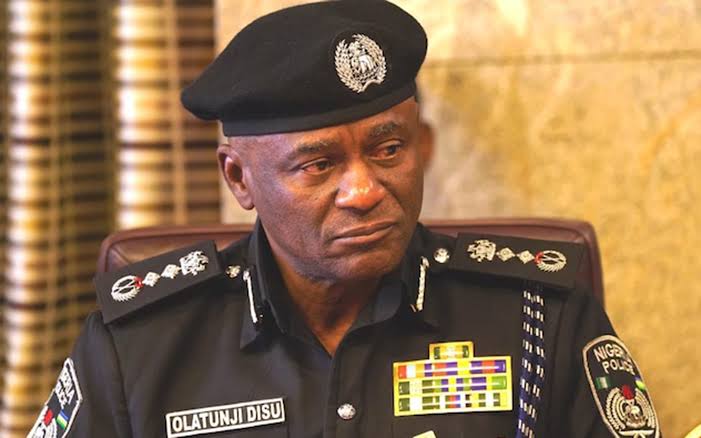
The Inspector-General of Police, Olatunji Disu, has warned officers of the Nigeria Police Force against taking sides in political contests, threatening disciplinary action against personnel who use their positions to favour candidates or political parties ahead of the 2027 general elections.
Disu issued the warning on Wednesday, November 11, during a strategic meeting with senior police commanders, including Commissioners of Police and other top-ranking officers, at the Force Headquarters in Abuja.
He said the police must maintain strict political neutrality and ensure that all candidates, political parties, their supporters and eligible voters receive equal protection under the law.
The police chief stressed that officers would be held accountable for collaborating with politicians, supporting political thugs, intimidating voters or engaging in activities capable of undermining the credibility of elections.
He warned that any officer found compromising the electoral process would face disciplinary measures in accordance with the law.
IGP orders election security preparations nationwide
As part of efforts to strengthen preparations for the forthcoming elections, Disu directed Commissioners of Police across the country to begin comprehensive security planning and maintain operational readiness within their respective commands.
He also ordered the immediate suspension of leave for officers assigned to election security duties.
Senior commanders were instructed to remain within their areas of responsibility until the electoral exercise was completed. Any official journey outside their commands must receive approval from the Force Headquarters.
The IGP further directed police commands to inspect their operational equipment, communication facilities, vehicles and protective materials, with reports on their readiness expected before the end of the week.
He said the police must also strengthen cooperation with the Independent National Electoral Commission (INEC), the Department of State Services (DSS), the Nigeria Security and Civil Defence Corps (NSCDC) and the military.
According to him, effective election security requires cooperation among the various agencies rather than competition or disagreements over operational responsibilities.
Police commands to submit daily election security reports
Disu directed Commissioners of Police to establish a system for submitting daily security situation reports to the Force Headquarters throughout the electoral period.
The Deputy Inspector-General of Police in charge of Operations will coordinate the reports and provide the Inspector-General with daily briefings.
He also emphasised the need for adequate training, effective supervision and appropriate equipment for personnel deployed to election-related duties.
The police chief acknowledged ongoing training programmes across the Force, including nationwide initiatives supported by the Nigeria Police Trust Fund.
He said the training must translate into improved professional conduct, operational efficiency and the ability to respond appropriately to security threats during elections.
Disu maintained that the police must remain firm in enforcing the law without compromising their impartiality or the rights of citizens.
Electoral law requires neutrality from security personnel
The IGP’s warning comes as Nigeria intensifies preparations for the 2027 general elections under the Electoral Act 2026, which replaced the Electoral Act 2022.
Section 26 of the new law requires security officials and other personnel involved in conducting elections to take an oath of loyalty and neutrality.
They are required to discharge their responsibilities impartially and without fear or favour. Violations constitute offences punishable under the Act’s provisions on misconduct or dereliction of duty.
Section 95 also limits the role of the police and other designated security agencies at political rallies and processions to providing adequate security.
These provisions reinforce the expectation that security personnel should protect the electoral process rather than become participants in political competition.
Previous elections highlight concerns over security and impartiality
Concerns about the conduct of security personnel during elections are not new in Nigeria.
The European Union Election Observation Mission, in its final report on the 2023 general elections, identified shortcomings in the response of security agencies to electoral violence.
The report documented instances of inadequate security presence and weak responses to violence during state-level campaigns. It also raised concerns about the deployment of poorly trained and reportedly partisan community vigilantes by some state-level actors.
The observers further noted that although police announced arrests linked to electoral offences, publicly available information about subsequent prosecutions and sanctions was limited.
These findings highlighted the importance of professional conduct, effective coordination and accountability in protecting voters and maintaining confidence in elections.
Disu renews commitment to credible election security
Since assuming office in February 2026, Disu has repeatedly identified professionalism, intelligence gathering and political neutrality as essential elements of the police’s election security strategy.
At the Conference and Retreat for Senior Police Officers held in Owerri, Imo State, in September 2026, he outlined a six-point approach to election security.
The strategy covered intelligence and early-warning systems, personnel training, joint operations, improved communication and technology, community engagement and strict political neutrality.
In May 2026, he also met with INEC Chairman, Professor Joash Amupitan, to strengthen cooperation between the police and the electoral commission ahead of the forthcoming elections.
The latest directive in Abuja reinforces the police leadership’s position that officers must protect voters, electoral officials, political participants and election materials without favouring any political interest.
Disu warned that officers who allow themselves to be used by politicians would be held personally responsible for their actions.
He urged personnel to safeguard the electoral process, protect citizens’ rights and preserve the integrity of their careers.
The Inspector-General maintained that the Nigeria Police Force must serve the Constitution and the Nigerian people, not individual politicians or political parties.