The Federal Government has denied claims that it operates a shadow budget or spends public funds outside the approved legal framework.
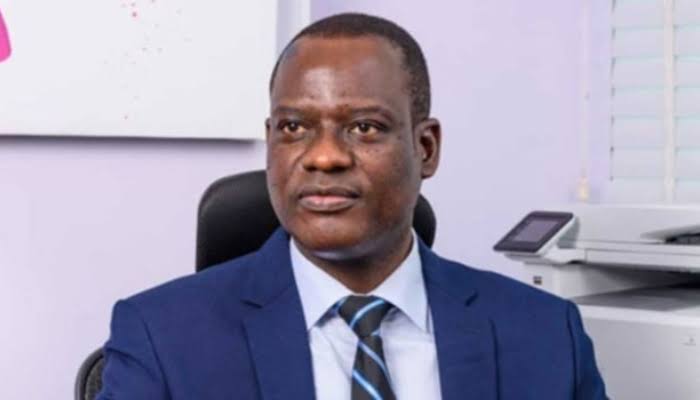
Finance Minister and Coordinating Minister of the Economy, Taiwo Oyedele, made the clarification in a statement issued on Monday in Abuja.
Oyedele said recent claims suggesting that the government spent about two per cent of Nigeria’s Gross Domestic Product outside the approved budget were incorrect.
He said the allegation, estimated in some reports at more than ₦8 trillion, could mislead the public about the government’s financial management.
The clarification followed comments attributed to the International Monetary Fund office in Nigeria.
IMF Resident Representative in Nigeria, Christian Ebeke, had reportedly said public spending worth about two per cent of GDP was not formally recorded in recent official budgets.
Ebeke said the gap involved major infrastructure projects and created a difference between Nigeria’s reported fiscal deficit and its actual financing needs.
He also said such spending raised concerns about fiscal transparency and the completeness of budget reporting.
Responding, Oyedele said the Federal Government does not spend public funds secretly or outside legislative approval.
He said public expenditure in Nigeria is governed by the Constitution and laws passed by the National Assembly.
According to him, Sections 80 to 83 and Section 162 of the 1999 Constitution, as amended, clearly regulate how public funds can be withdrawn and spent.
Oyedele explained that Federal Government expenditure is carried out through Appropriation Acts, Supplementary Appropriation Acts and other statutory approvals enacted by the National Assembly.
He said multi-year capital projects that extend beyond one budget cycle are also implemented in line with existing laws and approved capital rollover provisions.
The minister said such arrangements are normal features of public financial management and should not be wrongly described as illegal off-budget spending.
He said allegations of secret expenditure should identify specific projects allegedly carried out without appropriation or legal authority.
According to him, claims of such magnitude must be backed by verifiable evidence rather than speculation.
Oyedele said it was important to distinguish between appropriation, expenditure authorisation, financing and fiscal reporting.
He explained that Nigeria’s public finance structure includes statutory transfers, first-line charges and intervention mechanisms created by Acts of the National Assembly.
These include allocations and contributions to development commissions and other legally established agencies.
They also include cost of collection and cost of administration retained by designated revenue-generating agencies as provided by law.
The minister added that some agencies and the Federal Capital Territory have capital expenditure approved in separate budgets by the National Assembly.
He said special interventions approved by law, debt service obligations and other statutory transfers also form part of the public finance framework.
Oyedele maintained that these expenditures are not secret, unlawful or outside oversight.
He said they are established by law, disclosed in fiscal reports and subject to audit, monitoring and accountability procedures.
The minister noted that the way some expenditures are presented in fiscal reports may differ from how they appear in the annual Appropriation Act.
He said such differences may arise from international statistical and reporting standards adopted by the Federal Government.
According to him, classification differences in fiscal reporting should not be misrepresented as evidence of illegal spending.
Oyedele said the Federal Government remains committed to improving transparency, strengthening fiscal reporting and ensuring that public finance information is properly understood.
He also said the government would continue to operate within the constitutional and statutory framework governing Nigeria’s public finances.
The statement comes amid renewed debate over Nigeria’s budget transparency, infrastructure financing, fiscal deficit reporting and public expenditure management.