



Under the Tinubu administration, no off-season governorship election has generated as much controversy and tension as the just-concluded election that returned the ebullient Governor Ademola Adeleke for a second term in Osun State.
“Dancing Governor,” as he is also known because of his spontaneous prances at public gatherings, against all permutations, defeated a coalition of heavyweight local political actors and a significant number of APC governors and party stalwarts ranged against him. He coasted home to victory in dramatic fashion, winning convincingly in a tumultuous and nerve-wracking contest.
In a way, this is good for our democratic trajectory, as some analysts have already postulated. In a much broader perspective, Mr Adeleke’s victory is a much-needed humbling experience for the ruling APC, an acknowledged behemoth that is beginning to look like an omnipotent gladiator in Nigeria’s political space.
Mr Adeleke’s victory has punctured the myth of the invincibility of federal might against weaker contestants. This should give some relief to opposition parties, which are justifiably concerned that, with the growing number of defectors to the ruling party, its opponents are already being browbeaten into submission by the intimidating financial war chest of the APC, its formidable structure and organisational ability, and the enormous resources at its disposal.
Nevertheless, no two elections are the same. Let no one be lulled into complacency by the assumption that the Osun State defeat of the APC is a precursor of what to expect in 2027. That is far from the truth. Politics is unpredictable.
Therefore, the Osun scenario should be seen as a unique case that ought to be studied carefully rather than interpreted as the beginning of a new political normal. The circumstances that produced the outcome may not necessarily be replicated elsewhere.
There are other valuable lessons to be learned from this interesting Osun election.
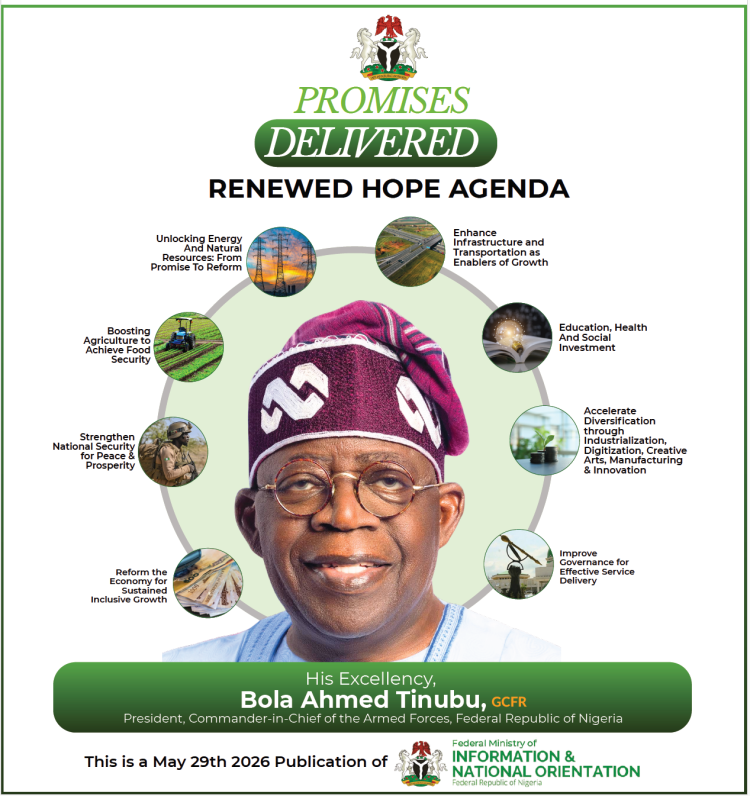
President Tinubu deserves credit for the decision to direct the EFCC to vacate the court-ordered lien placed on the state government’s bank account, following allegations that the funds were being used by Mr Adeleke to launder money, only days before the election.
The President’s intervention was a bold decision because the timing of the EFCC action had generated considerable controversy. Whatever the merits of the investigation, allowing such a contentious action to hang over the election could have created the impression that the federal government was seeking to put the ruling APC candidate at an advantage by portraying his principal opponent as a fraudster.
Mr Tinubu should, therefore, be given due credit for displaying presidential grit in the face of what could have become clear and present damage to the Republic at that auspicious moment.
For what benefit is there in pursuing justice if, in the process, the nation’s peace and stability are jeopardised? Abraham Lincoln once observed that, every so often, a limb is cut off to save a life; but no life is ever taken to save a limb. There are moments in the life of a nation when wisdom requires restraint, even in the pursuit of legitimate objectives.
That said, the bold and efficient manner in which our security operatives handled the situation in Osun State should also be commended. Their intimidating and ubiquitous presence helped to stare down troublemakers whose palpable threat to the peaceful conduct of the election was of grave concern throughout the tense period of the polls.
This, coupled with the generally commendable performance of INEC, must be seen as another step in our democratic evolution. Elections need not always end in violence, intimidation or the predictable manipulation of state institutions. The Osun experience has shown that, when the institutions are allowed to function and the political actors are restrained, democracy can still surprise us.
But perhaps the most important lesson from Osun is for the opposition parties.
They need to up their ante by bracing themselves for the gruelling electoral contests ahead. Instead of persistent whining and shouting on social media, they should focus on building the numbers, structures and alliances that can guarantee favourable electoral outcomes.
Messrs Atiku Abubakar and Peter Obi should not get trapped in the illusion that the wily Mr Tinubu is, in any way, bothered by litigations over his parental origins, academic qualifications or other forms of name-calling. The man has triumphed over all these before and has proven himself to be one of the most formidable and seasoned warriors in Nigeria’s political firmament. His record in this regard speaks for itself.
The opposition should take note. 2027 will not be won on television screens, social media platforms or through endless lamentations about the strength of the ruling party. It will be won at the grassroots, polling unit by polling unit, through painstaking organisation and the ability to translate public discontent into actual votes.
If Adeleke’s victory teaches us anything, it is that political giants can be defeated. But it also teaches us that such victories do not happen by accident. Behind every political upset is a candidate who refuses to surrender, a base that remains engaged, and a political machine capable of converting that engagement into victory.
*Ladi Ayodeji, marriage counsellor, author, media expert and philosopher, can be reached on 09059243004, WhatsApp only.