The Lagos State Government has appealed to residents not to panic over recent media reports on HIV figures in the state, saying the reports misrepresented the meaning of public health data.
The clarification followed public concern over figures contained in the Federal Ministry of Health and Social Welfare’s *State of the Health of the Nation Report 2025*, which listed 10,430 HIV cases in Lagos.
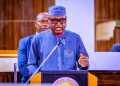
Speaking at a news conference in Lagos on Thursday, Dr Folakemi Animashaun, Chief Executive Officer of the Lagos State AIDS Control Agency, said the figure had been wrongly interpreted in some reports as fresh HIV infections.
Animashaun explained that the reported number did not mean that 10,430 people contracted HIV in Lagos within the year.
According to her, the figure referred to newly diagnosed HIV-positive persons whose status was confirmed during the reporting period.
She said many of those captured in the data may have been living with HIV for years before accessing testing services in Lagos.
The LSACA chief added that the figure also included people referred from other states, individuals who came to Lagos for healthcare, and others identified through expanded HIV testing services.
Animashaun stressed that there is a clear difference between newly diagnosed HIV cases and new HIV infections.
She said newly diagnosed cases refer to people whose HIV status was confirmed within a reporting period, while new infections are estimated through epidemiological surveillance and scientific modelling.
The Lagos health official warned that confusing both indicators could create fear, increase HIV-related stigma, discourage testing, and weaken public health response efforts.
She said the Lagos State Government was already engaging relevant stakeholders to review the methodology, definitions, and assumptions behind the published figures.
According to her, the review is aimed at strengthening public understanding, improving data communication, and ensuring that HIV statistics are reported responsibly.
Animashaun said Lagos must be assessed within its unique population and healthcare realities.
She noted that as Nigeria’s most populous state, commercial centre, and major referral hub, Lagos naturally records high volumes of HIV testing, diagnosis, treatment, and patient movement.
The LSACA chief said stronger health surveillance, wider testing coverage, and better access to care would normally lead to higher case detection.
She added that higher detection should be seen as a sign of an active health system, not proof of a worsening HIV epidemic.
Providing details of the state’s HIV response, Animashaun said Lagos conducted 504,800 HIV tests in 2025 and identified 11,940 HIV-positive persons.
She said the result represented a positivity yield of 2.4 per cent.
In the first quarter of 2026, Lagos carried out 179,229 HIV tests and recorded 3,390 positive diagnoses, with the positivity yield dropping to 1.9 per cent.
Animashaun said the decline in positivity rate, despite increased testing, showed progress in HIV epidemic control across the state.
She also disclosed that 147,904 people were receiving antiretroviral therapy in Lagos as of 2025.
According to her, 97 per cent of those on treatment had achieved viral suppression, which she described as a strong sign of the effectiveness of the state’s HIV treatment programme.
The LSACA chief said Lagos had also made progress in preventing mother-to-child transmission of HIV.
She noted that the Early Infant Diagnosis positivity rate dropped from 5.1 per cent in 2020 to 1.5 per cent in 2025.
Animashaun said the progress reflected sustained investments in health infrastructure, trained personnel, disease surveillance, digital health systems, and community-based HIV services.
She credited the administration of Governor Babajide Sanwo-Olu for supporting public health programmes and strengthening the state’s HIV response.
Looking ahead, Animashaun said Lagos had begun implementing an HIV Response Acceleration Plan covering July to September 2026.
She said the plan would focus on expanding HIV testing, improving linkage to treatment, retaining patients in care, enhancing service quality, and strengthening community prevention.
The plan also targets better data quality, accountability, and sustainability across Local Government Areas and Local Council Development Areas in Lagos State.
Animashaun said the state was scaling up HIV prevention tools, including oral pre-exposure prophylaxis and long-acting injectable PrEP, for people at higher risk of infection.
She also announced that Lagos had become the first sub-national government in Nigeria to independently procure antiretroviral medicines for people living with HIV.
According to her, the first consignment of state-procured antiretroviral drugs is expected to arrive before the end of August 2026.
She said the procurement marked a major step toward reducing dependence on donor support and protecting uninterrupted access to HIV treatment.
Animashaun added that Lagos was building a more sustainable HIV programme through domestic funding, stronger supply chains, and long-term commodity security.
She said the state was exploring partnerships with international organisations, including UNAIDS, while also studying successful health commodity models from countries such as Kenya.
According to her, these efforts could help strengthen local production of HIV commodities and improve supply chain resilience.
Animashaun urged Lagos residents to rely on verified public health information and avoid spreading misleading reports about HIV data.
She encouraged residents to know their HIV status and access available prevention, testing, treatment, and care services.
The LSACA chief said HIV remains preventable and manageable, adding that early diagnosis and consistent treatment allow people living with HIV to live healthy and productive lives.
Also speaking, Dr Temitope Fadiya of UNAIDS commended the Lagos State Government for its investment in HIV/AIDS response.
Fadiya said the data presented by LSACA gave a more accurate picture of HIV epidemic control in Lagos.
He urged the public not to panic, adding that the ART Impact Survey conducted in the state was still being analysed and had not yet been released.