The Lagos State House of Assembly has reaffirmed support for the establishment of State Police. This was the crux of its plenary session on Wednesday, July 8, presided over by Speaker Rt. Hon. Mudashiru Obasa.
The motion, moved by Hon. Stephen Ogundipe and seconded by Hon. Aro Moshood, was aimed at sensitizing other State Assemblies to embrace the initiative and prepare for its implementation as part of ongoing constitutional reforms.
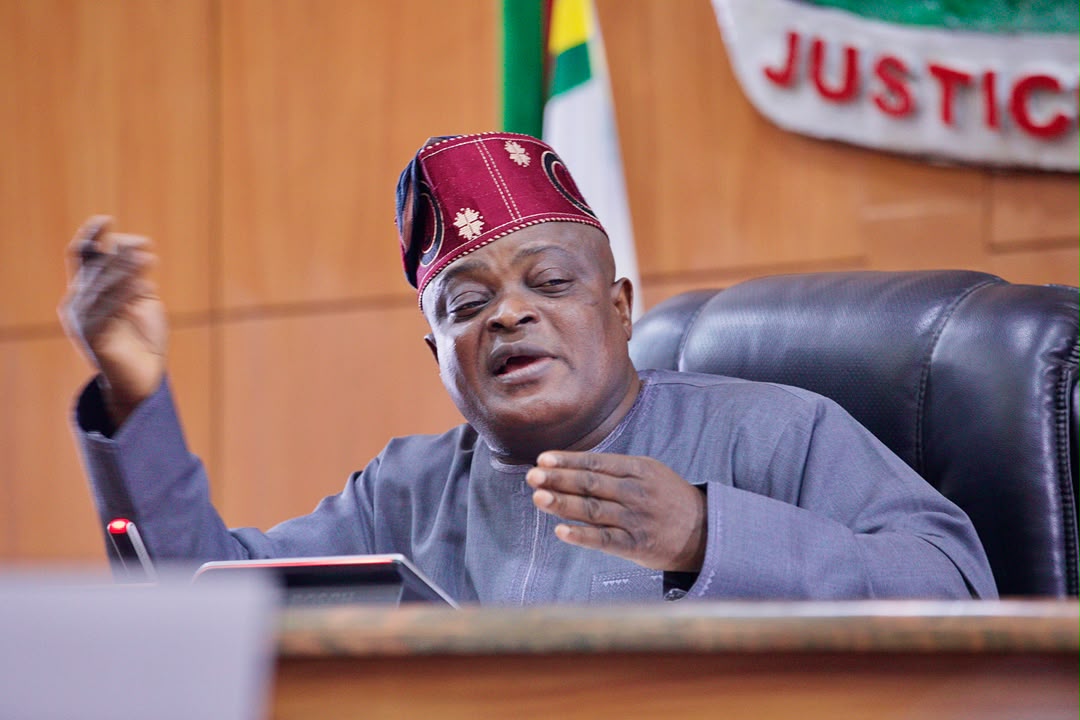
Speaker Obasa, alongside other honourable members, commended President Bola Ahmed Tinubu, the National Assembly, and other stakeholders for their political will and progress in advancing the constitutional amendment.
Obasa described State Police as the most practical solution to Nigeria’s worsening security challenges, including kidnapping and banditry, while stressing that each State must retain genuine operational autonomy. He added that federal intervention should only occur in clearly defined situations threatening national security and must be carried out transparently.
The Speaker further supported provisions in the Constitution alteration bill that empower governors to appoint State Commissioners of Police, subject to confirmation by State Assemblies, and recommended that senior appointments such as Area Commanders and Zonal Commanders should also undergo legislative screening.
Addressing concerns about possible abuse of State Police by governors, he noted that similar fears have long existed regarding the Nigeria Police Force under federal control, yet the institution continues to function. He urged citizens not to let such apprehensions derail reforms aimed at improving safety and protecting lives.
Lawmakers emphasised that Lagos has consistently championed the initiative as a means of strengthening community policing and addressing the nation’s growing security challenges. They called on other State Assemblies to expedite consideration and approval of the Constitution alteration bill, stressing that the reform is a collective effort that requires nationwide readiness.
Following the commendation of President Tinubu, the Assembly turned its attention to a bill seeking to prohibit street begging and hawking across Lagos State. The bill, which went through its second reading, aims to address urban disorder while balancing humanitarian concerns.
Contributing to the debate, Hon. Desmond Elliot emphasised the need for a compassionate approach, particularly towards children found on the streets. He urged the government to remove vulnerable children from the streets while providing them with adequate care and rehabilitation, and also ensure that relevant State agencies effectively fulfill their responsibilities.
Hon. Aro Moshood called for a careful examination of the bill’s provisions to prevent misinterpretation or abuse by law enforcement agencies. Hon. Bonu Solomon noted that many street beggars in Lagos are not natives of the state and recommended that the law should penalize indiscriminate giving while also providing for the apprehension of adult beggars.
Hon. Noheem Adams described the bill as a timely intervention, advocating for the relocation of beggars to rehabilitation centers where they can receive vocational and social support, citing similar measures in States such as Kano, Kaduna, Niger, Anambra, Abia and the Federal Capital Territory.
Presiding over the debate, Speaker Obasa acknowledged that giving to the needy is noble but warned that the rising rate of street begging has become a source of insecurity and public concern. He suggested that government should establish structured channels for charitable donations to genuinely needy persons while ensuring rehabilitation and reintegration of beggars into society. He further advised that the proposed legislation be harmonized with existing laws to ensure effective implementation.
Subsequently, the Speaker committed the bill to the Committee on Youth, Sports and Social Development, directing it to report its findings within two weeks.