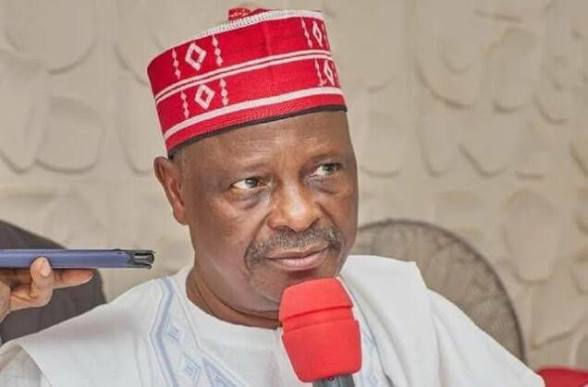
Former Kano State Governor and Vice-Presidential Candidate of the Nigeria Democratic Congress (NDC), Rabiu Kwankwaso, has appealed for greater caution in political and religious discussions following comments attributed to Islamic cleric Sheikh Sani Yahaya-Jingir.
Kwankwaso, in an interview with the News Agency of Nigeria (NAN) in Abuja on Wednesday, urged the Federal Government to address statements that he said could increase religious tension in the country.
The former governor said comments attributed to Yahaya-Jingir did not represent the views of the majority of northern Muslims.
Kwankwaso Warns Against Religious Division
Yahaya-Jingir had reportedly made remarks during an event in Kano while expressing support for a Muslim-Muslim presidential ticket ahead of the 2027 elections.
Reacting to the development, Kwankwaso described the comments as inappropriate and warned that religious statements capable of creating division could harm national unity.
He appealed to relevant authorities, including the Federal Government and First Lady Oluremi Tinubu, who he noted is a Christian pastor, to encourage dialogue and promote peaceful coexistence.
According to him, Christians, Muslims and followers of other faiths are equal citizens with constitutional rights to participate in Nigeria’s political process.
Religious Leaders Urged to Promote Peace
Kwankwaso said religious leaders have an important role in shaping public opinion and should use their influence to promote tolerance and peaceful relationships among Nigerians.
He acknowledged his previous cordial relationship with Yahaya-Jingir, describing him as a respected religious figure.
However, he expressed disappointment that such remarks could come from someone of his standing.
Kwankwaso said political strategies based on religious identity were unlikely to address the real concerns facing Nigerians.
Governance Issues More Important Than Religious Politics
The former governor argued that Nigerians are increasingly focused on practical issues affecting their daily lives, including insecurity, poverty, unemployment, education and economic hardship.
Reflecting on Kano’s political history, Kwankwaso recalled that religious issues featured prominently during the 2003 election period, particularly debates surrounding Sharia implementation.
He said subsequent experiences showed that political promises centred mainly on religious identity could not replace effective governance.
According to him, voters are now more interested in policies that improve education, security, employment opportunities and living standards.
Kano Voters Seeking Development, Not Division
Kwankwaso said Kano was not the appropriate place for campaigns based on religious differences, arguing that residents are more concerned about improving opportunities for their families.
He said northern communities are currently facing serious challenges, including insecurity, banditry, kidnapping, poverty and limited educational opportunities.
The NDC vice-presidential candidate appealed to Christian leaders not to view the comments attributed to Yahaya-Jingir as representing the position of northern Muslims generally.
He stressed that peaceful coexistence remains possible when leaders focus on unity and national development.
Call for Responsible Leadership
Kwankwaso urged political and religious leaders to avoid statements that could inflame tensions, especially as Nigeria approaches the 2027 general elections.
He said leadership responsibility requires addressing citizens’ concerns rather than exploiting religious differences for political purposes.
The former governor maintained that Nigeria belongs equally to Muslims, Christians and people of other faiths, adding that national progress depends on cooperation among all groups.