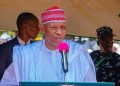
Governor Uba Sani has announced the allocation of alternative residential plots and farmlands to 704 households affected by a decade-long land dispute involving the Nigerian military in Igabi Local Government Area of Kaduna State.
The intervention is intended to provide housing security and restore livelihoods for families whose communities have faced uncertainty over land ownership for approximately 10 years.
Speaking during the distribution of land titles to representatives of seven affected communities on Sunday, October 18, 2026, Sani reaffirmed his administration’s commitment to protecting vulnerable residents and preventing homelessness.
He said the state government considered access to safe housing and sustainable livelihoods essential to protecting human dignity.
Seven Kaduna Communities Benefit From Land Allocation
The beneficiaries are residents of Unguwan Malam Auta, Unguwan Alhassan, Unguwan Lauya, Unguwan Aboki, Unguwan Danjuma, Unguwan Musa and Unguwan Yohana.
According to the governor, the affected families will receive alternative residential plots, while agricultural land will also be provided to help residents continue their farming activities.
Sani explained that approximately 90 per cent of the beneficiaries depend on agriculture, making access to farmland critical to their economic recovery.
The state government will also provide free fertiliser to support agricultural production and reduce the financial burden on affected farmers.
Kaduna Government Moves to Address Longstanding Land Dispute
The governor explained that the disagreement began before he assumed office and had remained unresolved despite previous attempts to reach an agreement.
He acknowledged that the matter was still before the courts but said his administration had taken steps to address the immediate housing and economic difficulties confronting the communities.
The land allocation initiative is expected to offer relief to households that have endured years of uncertainty.
Sani assured residents that his government would continue supporting them as they rebuild their homes and livelihoods.
Vulnerable Families to Receive Economic Support
Beyond residential and agricultural land, the Kaduna State Government plans to assist vulnerable residents who lost their sources of income during the prolonged dispute.
The governor said the intervention would include support for small-scale businesses and other economic activities to help affected families regain financial independence.
He emphasised that providing alternative land alone would not fully address the challenges experienced by residents.
According to him, restoring economic opportunities and ensuring decent living conditions remain important priorities for his administration.
Governor Praises Peaceful Coexistence Among Residents
Sani also commended the affected communities for maintaining peaceful relations throughout the land dispute.
He acknowledged the cooperation among residents from different religious, ethnic and political backgrounds, describing their unity as an important example of community resilience.
The governor particularly praised Muslim and Christian residents for continuing to live and work together despite the difficulties surrounding the disputed land.
He urged the communities to sustain their peaceful relationships as the government’s intervention progresses.
KADGIS Reports Resolution of 5,285 Land Disputes
Earlier, the Director-General of the Kaduna State Geographic Information Service (KADGIS), Dr Bashir Garba, described the intervention as another step in the government’s efforts to address longstanding land conflicts.
Garba said the Sani administration had resolved 5,285 inherited land disputes and provided assistance to more than 2,000 communities affected by displacement, conflicts or land-related challenges.
He explained that the dispute involving the seven Igabi communities and the military had persisted for about a decade, despite efforts by previous administrations to find a lasting solution.
The KADGIS director-general welcomed the provision of alternative residential plots and farmlands, saying the initiative would help families recover from the economic effects of the dispute.
Land Allocation Offers Fresh Hope to Kaduna Families
The latest intervention reflects Kaduna State’s broader efforts to address land-related grievances while protecting residents whose livelihoods depend heavily on agriculture.
For the 704 affected households, the allocation of alternative plots, farmland and agricultural support represents an opportunity to rebuild after years of uncertainty.
However, the legal status of the underlying dispute remains important, as the governor acknowledged that the matter was still before the courts.