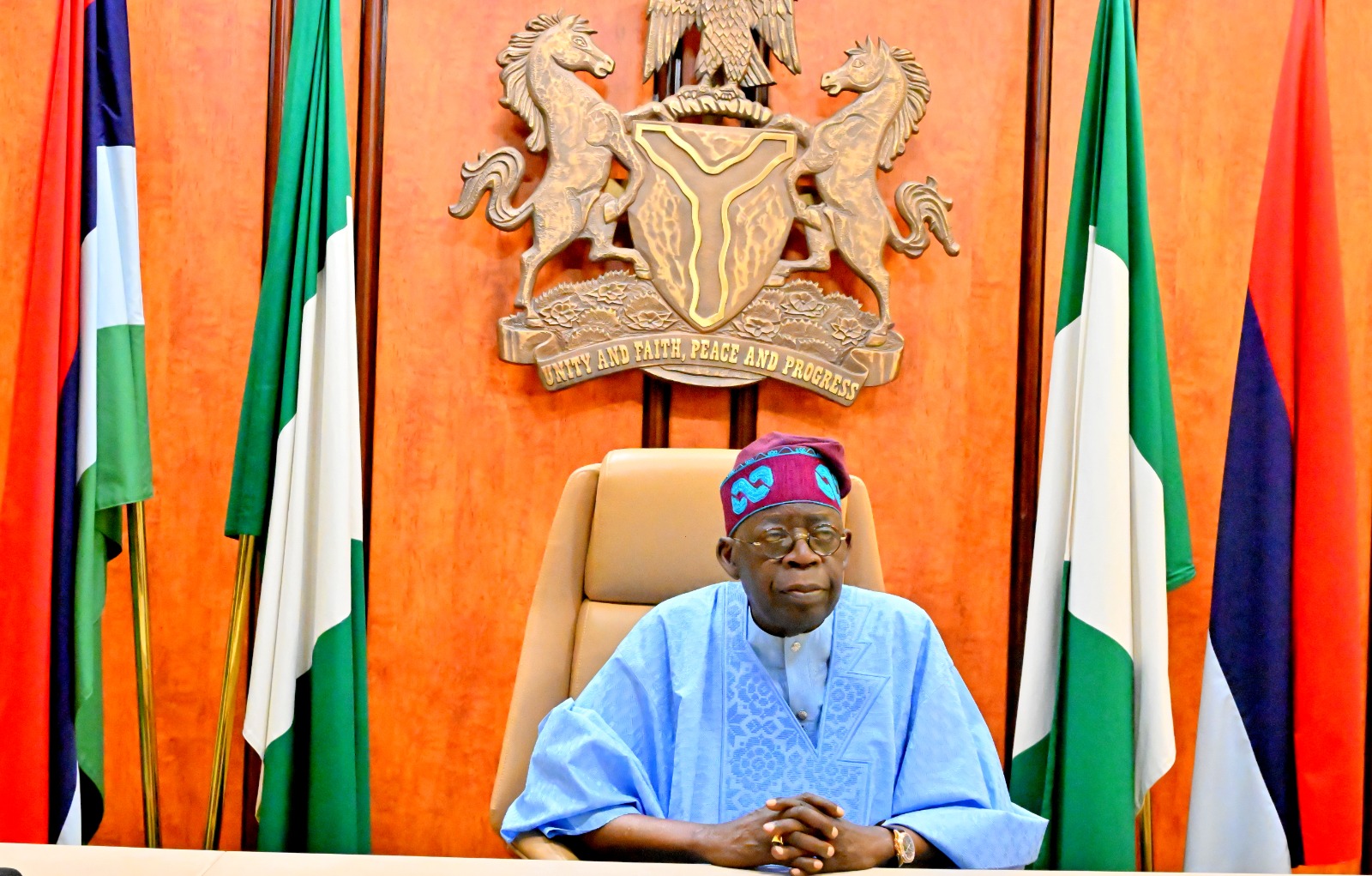
On Democracy Day, the President stood to tell Nigerians the story of 27 unbroken years of democracy. He talked about how we now have ballot papers instead of bullets, and courtrooms instead of coups. He also reminded us of great democratic heroes and martyrs. He said, rightfully, that the heroes of June 12 secured political freedom. He asserted, in a quite compelling manner, that the overarching mandate of the current generation is economic freedom. “Democracy must be felt in the quality of people’s lives,” he declared.
For us in the Omo Oduduwa Collective, that line should have opened up a new chapter of hope and possibilities. But as the speech moved from tribute to statistics, the gap between poetry and reality widened. June 12, we believe, is a day meant to commemorate not just democracy, but also to celebrate good governance and symbolize real hope for teeming Nigerians, beyond rhetoric.
The President spoke about the restoration of fiscal stability and the increase in the federation’s revenues. Sadly, this reality exists only on the government’s spreadsheet, highlighting the significant gulf between growth and inclusive development. The reality on Nigerian streets is that of deepening multidimensional vulnerabilities and erosion of purchasing capacities; an inevitable outcome of dissociative exposures of poor Nigerians to the vagaries of brutal, captive market forces. This is accompanied by the complete eradication of the middle class and a wide income disparity between the poor and the rich. We believe strongly that reforms do not have to disproportionately deform the poor, while the capitalists, politicians, and their hangers-on occupy a vantage loci in the Ponzi scheme seemingly being operated, blithely revelling in ostentatious opulence. Rising revenues without a corresponding enhancement of the people’s welfare are a little more than abstract accounting.
On security, President Tinubu cites Arege, Borno, and “precision targeting” with the US, France, and other European allies. However, precision targeting is difficult to relate to when kidnappers still openly operate in the North-East, in Oyo forests, on the Lagos-Ibadan expressway, and along the Benin-Ore road among numerous other parts of the country. If a retired military General, Rabe Abubakar, who was the chief spokesperson of the Nigerian Army, could be abducted, kept in captivity for about two weeks and then killed in the way he was, it tells us that no Nigerian is safe. The man spoke for the Army at the height of the Boko Haram war. He knew the system, the intelligence, the protocols. Yet, he was taken, held for 14 days, and then killed. When those who guard the gates can no longer guard their own lives, it means the gates have collapsed. The conflicting accounts over how he died, and the absence of any coherent explanation about how his corpse was retrieved from the abductors by the government reinforce justifiable suspicion by the public that powerful people within the government are complicit one way or another, in worsening the security situation across the country. For us in the Omo Oduduwa Collective, the recent killings of two great Generals, one serving, the other, retired, are proofs that Nigeria’s security crisis is no longer about a lack of money or equipment. It is about the failure of command, strategy, and the absence of the needed political will. If the Nigerian State cannot protect its highest-ranking field officers, what hope do ordinary citizens have? This is not just a tragedy, but a national humiliation that exposes the hollowness of “largest ever defence budget” and “precision targeting.” You cannot spend N5.41 trillion and lose a General to the same criminals you claim are on the run.
The Omo Oduduwa Collective commends the ongoing constitutional efforts to create State Police. It is a process that should have started on the first day of this government in office. It is however better late than never. A constitutional framework for State Police is the first real policy step that matches the President’s poetry about improving security. We acknowledge the passage of the constitutional amendment on State Police by the House of Representatives as historic. We call on the Senate to fast-track its concurrence for eventual assent by the president.
Finally, the political space. “Criticise me, disagree with me,” said the President to the press and civil society. We welcome those words. Words however, must match conduct. In the last three years, protesters have been arrested, and progressive individuals demanding good governance have been maltreated. Most recently, the attack on Omoyele Sowore, a journalist and activist, exposes the contradiction at the heart of the speech. You cannot invite criticism on Democracy Day and allow violence against critics on other days. When the state looks away as its agents teargas or beat activists and ordinary citizens rightfully expressing their dissatisfaction with their worsening conditions, it tells every Nigerian that dissent is only tolerated until it becomes inconvenient. That is no longer democracy.
We join the government to honour the heroes of June 12. We also assert that their sacrifices gave citizens the right to speak. And we will speak plainly. Democracy Day celebration is in order, but it must not become a yearly ritual of big numbers and bigger promises. For all Nigerians, democracy must be felt where life happens: in the pocket, at the market, on the farm without fear, in the factory with light, and on the ballot without intimidation. It must also be felt in the safety of those who speak truth to power. If Sowore can be attacked, a General can be killed, and a retired Army spokesman can be abducted and murdered, then none of us is safe.
Let the labours of our heroes past not be in vain; and let the labours and the anguish of our people today not be ignored.
Signed:
Professor Akinyemi Onigbinde (Convener)
Dr Adeolu Oyekan (Group Admin)
Kazeem Olasupo (Honorary Secretary)
Senator Babafemi Ojudu
Dele Farotimi
Dr Olasunkanmi Olapeju
Samuel Arinloye Adebisi
Kayode Ogundamisi