Iran has reiterated its demand for a permanent resolution to ongoing conflicts in the Middle East, dismissing the idea of short-term ceasefires.
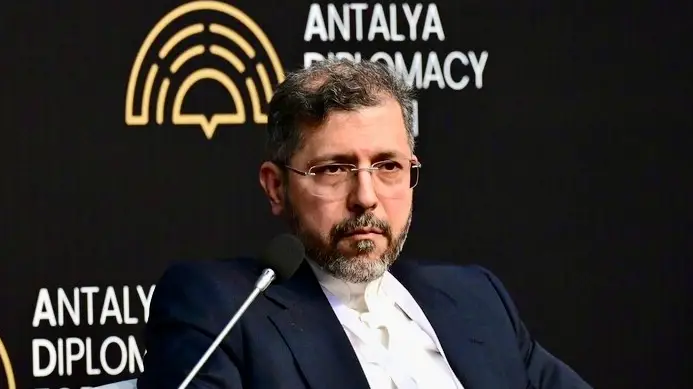
Deputy Foreign Minister Saeed Khatibzadeh made the position clear while speaking to journalists at the Antalya Diplomacy Forum (ADF 2026) in Türkiye, an event hosted under the leadership of President Recep Tayyip Erdoğan.
Khatibzadeh stated that any ceasefire agreement must cover all active conflict zones across the region, stretching from Lebanon to the Red Sea, describing this condition as a non-negotiable priority for Iran.
He emphasized that temporary pauses in hostilities would not address the root causes of the crisis, insisting instead on a comprehensive and lasting peace arrangement.
According to him, ongoing diplomatic efforts, including mediation initiatives involving Pakistan, are aimed at achieving a broader and sustainable resolution.
Addressing concerns over the Strait of Hormuz, a critical global shipping route, Khatibzadeh said the waterway has historically remained open despite tensions, noting that it lies within Iran’s territorial jurisdiction.
He accused the United States and Israel of contributing to regional instability, arguing that their actions have disrupted global trade and heightened economic uncertainty.
Despite rising tensions, Iran maintained that it remains committed to ensuring continued access to the Strait, although it may introduce new measures to address security, environmental, and navigational concerns.
Khatibzadeh noted that a lasting peace agreement, combined with what he described as a reduction in “maximalist” foreign policy approaches, would help preserve stability in key maritime routes.
The Antalya Diplomacy Forum, themed “Mapping Tomorrow, Managing Uncertainties,” has drawn global attention amid ongoing geopolitical crises, including tensions involving Iran, Israel, and the United States, as well as the Russia-Ukraine conflict.
The three-day summit has attracted over 5,000 participants, including heads of state, foreign ministers, diplomats, academics, and policy experts from about 150 countries.
Discussions at the forum are focused on addressing global challenges across political, economic, environmental, and technological sectors in an increasingly uncertain world.