



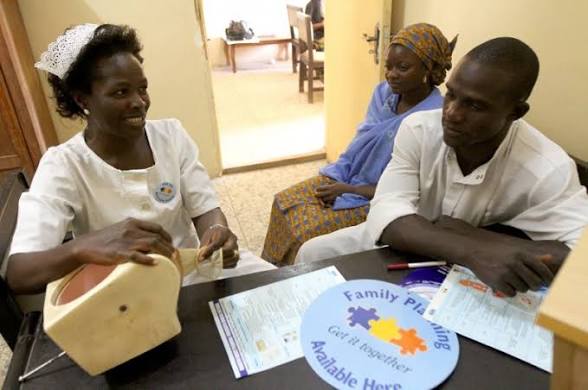
Health authorities have highlighted the significant impact of family planning on reducing maternal mortality, noting a 30 percent global decline linked to improved access and awareness.
The Head of Family Planning at the Federal Ministry of Health (FMOH), Mr Alex Ugochukwu, made this known during an official visit to the Anambra State Primary Healthcare Development Agency (ASPHCDA) in Awka.
The visit involved representatives from the FMOH, the National Primary Healthcare Development Agency (NPHCDA), the Anambra State Ministry of Health, and development partner EngenderHealth.
Ugochukwu stressed that family planning plays a critical role in improving maternal health outcomes and enabling individuals, particularly women, to better manage their reproductive health.
He emphasised the need for stronger grassroots sensitisation to ensure communities have access to accurate information and services.
According to him, expanding awareness at the community level is essential to sustaining progress in maternal health and reducing preventable deaths.
Also speaking, Director of Health Promotion at the FMOH, Mr John Umakpa, called for stronger collaboration among stakeholders to improve service delivery.
He noted that effective engagement with primary healthcare workers would help ensure that family planning services reach rural and underserved populations.
EngenderHealth Project Coordinator, Mr Afolabi Ahmed, urged the Anambra State Government to provide counterpart funding to support the implementation of family planning initiatives.
He explained that the visit was part of efforts to secure support for upcoming training programmes aimed at building the capacity of healthcare providers at primary and secondary levels.
In response, Executive Secretary of ASPHCDA, Mrs Chisom Uchem, reaffirmed the agency’s commitment to supporting the initiative and ensuring successful execution of planned training activities.
She said the state government remains dedicated to promoting responsible parenthood and improving maternal and child health outcomes.
Uchem highlighted ongoing policies in Anambra State designed to support families, including free maternal healthcare services.
She disclosed that since September 2024, pregnant women in the state have access to free antenatal care, delivery services, postnatal care, and immunisation in public health facilities.
She also noted that the government provides free education from early childhood through secondary school in public institutions.
The ASPHCDA boss emphasised the importance of tailoring programmes to local realities, advocating for a bottom-up approach to healthcare implementation.