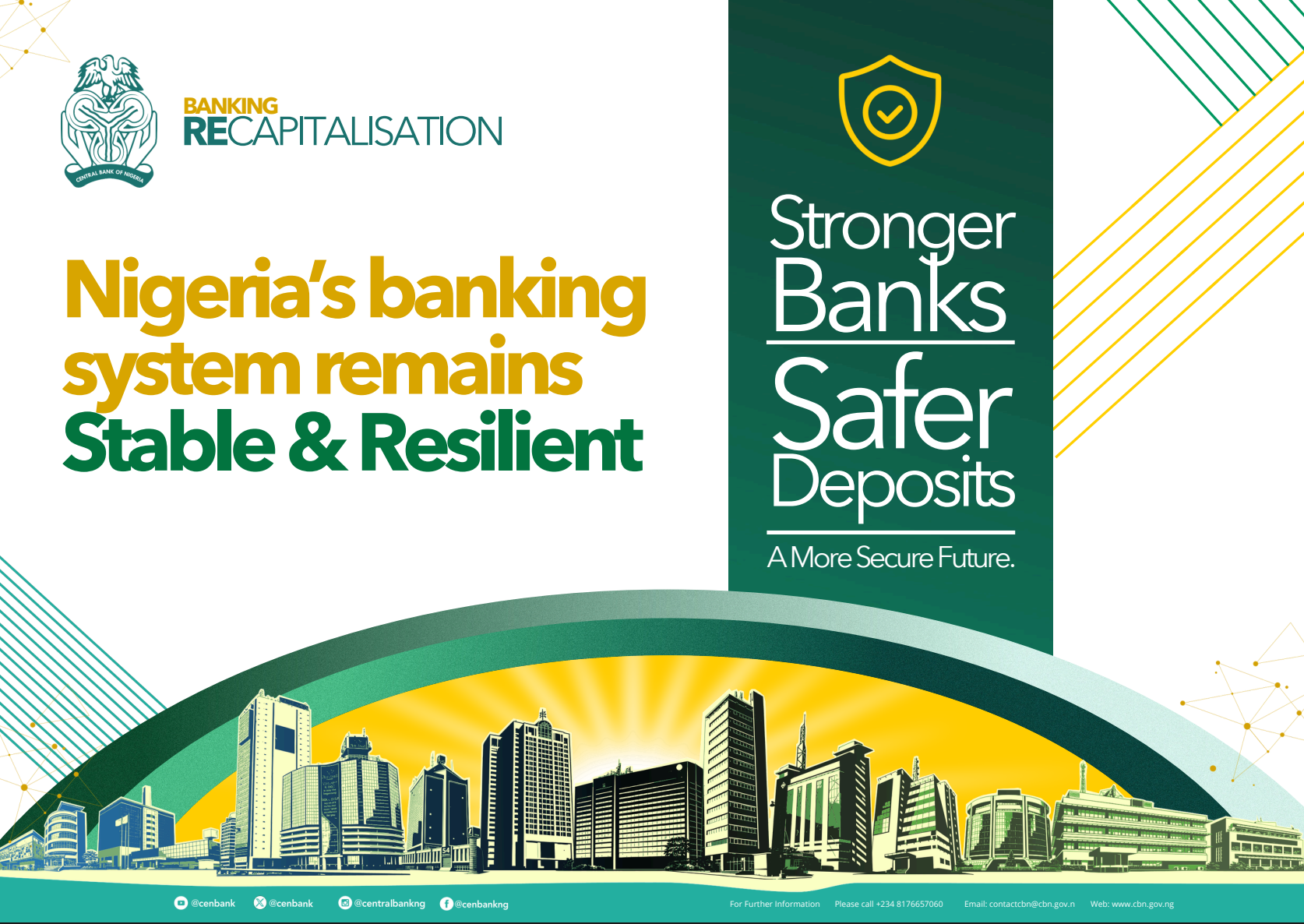
The International Monetary Fund (IMF)has expressed support for Nigeria’s ongoing bank recapitalisation programme, highlighting its role in strengthening the country’s financial system.
The endorsement was given by Tobias Adrian IMF’s Financial Counsellor and Director of the Monetary and Capital Markets Department, during the presentation of the Global Financial Stability Report at the IMF/World Bank Spring Meetings in Washington, D.C.
Adrian noted that increasing capital buffers in the banking sector has improved resilience against global financial shocks and uncertainties.
He explained that well-capitalised banks are better positioned to absorb economic disruptions, maintain lending activities, and support overall economic stability.
According to him, the importance of recapitalisation becomes more evident during periods of financial stress, when strong capital positions help safeguard the banking system.
The IMF also stressed the need for sound fiscal management, particularly for emerging economies like Nigeria.
Adrian said maintaining strong fiscal buffers would help countries manage volatile capital flows and reduce vulnerability to sudden market shifts.
He added that stable fiscal conditions are essential for sustaining macroeconomic growth and investor confidence.
The IMF official further highlighted the impact of global developments on financial markets, noting that ongoing tensions in the Middle East have significantly influenced capital movements.
He observed that capital flow reactions in emerging markets, including those in Sub-Saharan Africa, have been more pronounced than during earlier global crises.
Despite these shifts, Adrian said market price reactions have remained relatively stable, reflecting continued investor confidence.
Also speaking, Jason Wu, Assistant Director in the IMF’s Monetary and Capital Markets Department, pointed out that capital inflows to emerging markets are increasingly driven by debt rather than foreign direct investment.
He warned that this trend could pose risks to long-term financial stability if not properly managed.
Wu emphasised that countries with stronger fiscal frameworks tend to benefit from lower borrowing costs and improved access to international capital markets.
He urged governments to sustain fiscal reforms to mitigate risks associated with capital flow volatility.
The IMF reiterated that maintaining financial discipline and strengthening economic policies remain critical for long-term stability, particularly in developing economies.