


Iceland’s government has criticised a social media post by US President Donald Trump that showed Iceland and several neighbouring territories covered by the United States flag.
Icelandic leaders described the image as inappropriate and warned that national sovereignty should not be treated as a subject of ridicule.
Iceland Calls Image “Unacceptable”
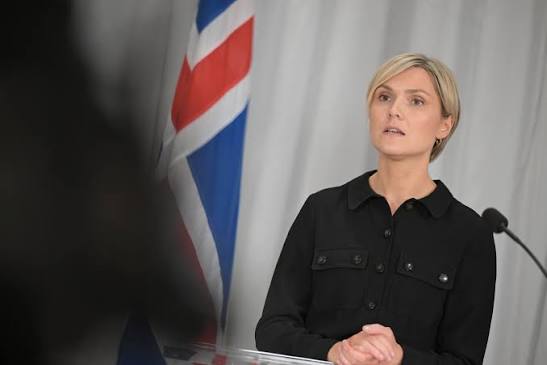
Prime Minister Kristrún Frostadóttir said the message communicated through the image was unacceptable and disrespectful to Icelanders, Canadians and Greenlanders.
Speaking at a press conference on Tuesday, she described the post as “absurd” and said questions involving the independence of nations should always be treated seriously.
“There is nothing funny or normal about making fun of the sovereignty of states,” Frostadóttir said.
Foreign Minister Summons US Ambassador
Iceland’s Foreign Minister Þorgerður Katrín Gunnarsdóttir also criticised the post, saying Iceland had made its position clear to the United States.
She said Iceland remained an independent country responsible for determining its own future.
According to the minister, no foreign government should decide how Iceland’s government manages its sovereignty or national affairs.
“If this is supposed to be a joke, then it is a bad joke,” Gunnarsdóttir said.
Diplomatic Message Delivered to Washington
Following the publication of the image, Gunnarsdóttir summoned US Ambassador to Iceland Billy Long for a meeting.
The minister said Iceland’s concerns were directly communicated to the ambassador.
Long assumed office as US ambassador to Iceland in August.
Trump’s Social Media Post Sparks Reaction
The controversy began after Trump shared a map on his social media platform Truth Social showing the United States, Canada, Greenland, Iceland and Central America covered by the American flag.
The post quickly attracted international attention because of its imagery involving territories that are independent states or self-governing regions.
Background Information
Iceland is a small island nation with a population of about 400,000 people, but it occupies a strategically important position between North America and Europe.
The country is a founding member of NATO and has historically maintained close security cooperation with the United States.
However, cooperation between countries does not remove the importance of national sovereignty.
For Iceland, maintaining control over its political decisions and international identity remains central to its foreign policy.
The controversy highlights a recurring issue in international relations: powerful nations must balance strategic influence with respect for the independence of smaller states.