
The global burden of sexually transmitted infections (STIs) remains one of the most under-addressed challenges in public health. In 2023, an estimated $35 billion was spent on sexual and reproductive health interventions across low- and middle-income countries, falling significantly short of the $52 billion required annually.
At the same time, the global STD diagnostics market is projected to reach $151.3 billion by 2034, driven by increasing demand for faster, more accessible testing solutions.
Against this backdrop, British founder Hana Nur is developing a new category of preventative health technology through her company, Innovare.
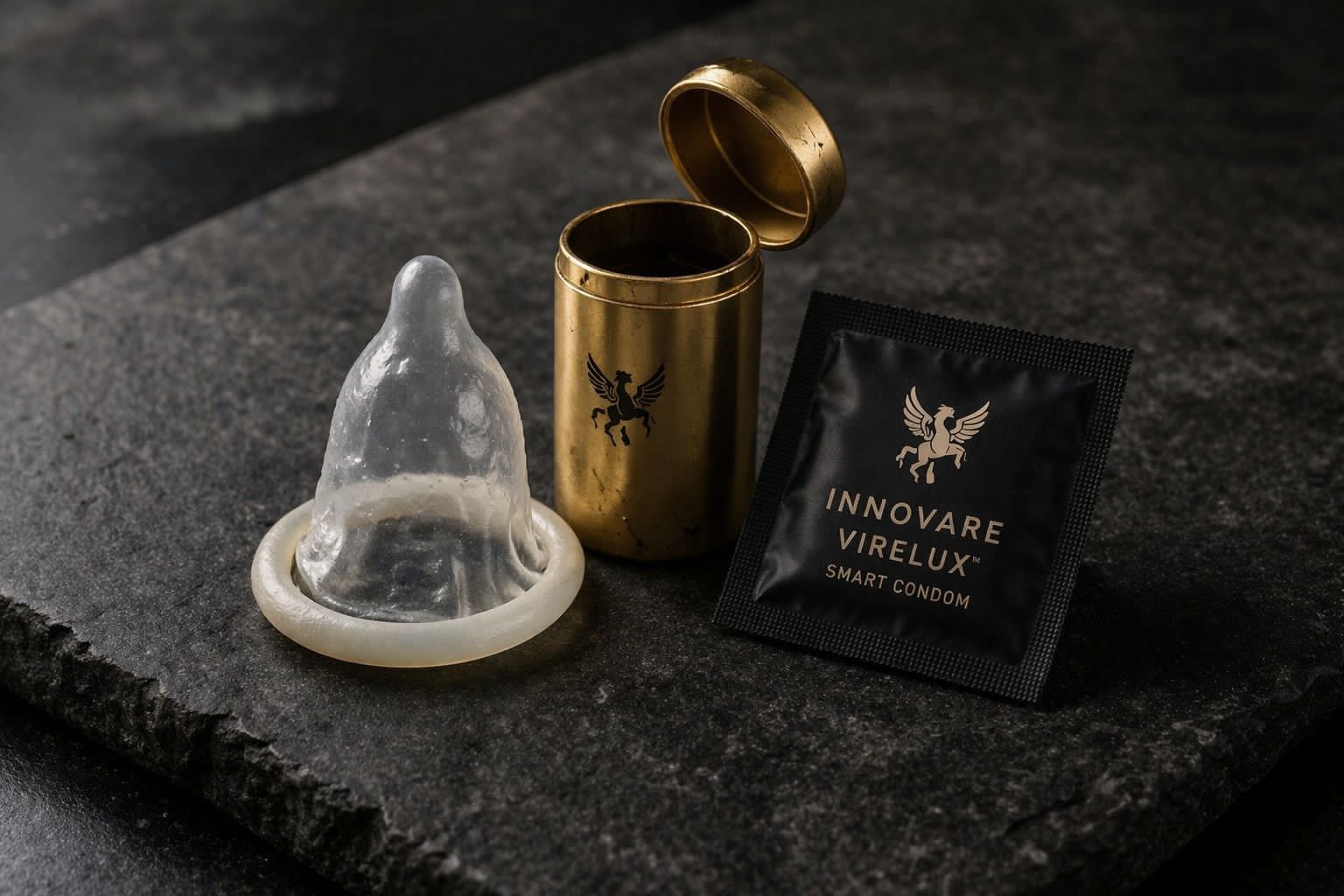
Through its Medical Intelligence division, Innovare is creating a bio-responsive protective system designed to integrate detection capabilities directly into everyday protection. The concept centres around a modular, bio-reactive capsule system engineered to identify biological markers in real time, offering a potential shift from reactive testing to immediate awareness.
Nur, who has spent several years developing the concept, describes the innovation as part of a broader vision to modernise sexual health through discreet, accessible, and intelligent solutions.
While still in development, the technology signals a growing interest in merging preventative care with real-time biological feedback, an area increasingly attracting attention from both healthcare innovators and investors.
As global demand grows for more advanced preventative health solutions, the next frontier may lie in one of the most familiar products: the condom.
Recent reports have highlighted experimental prototypes developed in academic settings, including colour-changing condoms designed to react to infections. However, a more advanced and commercially focused approach is now emerging from the private sector.
Hana Nur, founder of the luxury wellness brand Innovare, has developed what she describes as a “next-generation intelligent protective system” a condom designed not only for protection, but for real-time biological interaction and enhanced user awareness.
Unlike early-stage academic concepts, which rely on basic chemical reactions to trigger visible colour changes, Innovare’s approach is rooted in a more sophisticated framework: bio-reactive integration combined with performance-led design and material innovation.

“This isn’t just about detection,” Nur explains. “It’s about redefining what protection means in a modern world combining safety, awareness, and intelligent design into a single experience.”
The concept sits at the intersection of health technology and consumer product innovation, a space that has seen rapid growth in recent years. However, few products have successfully bridged the gap between clinical concept and real-world usability.
Innovare’s approach focuses on delivering a refined, scalable system that balances material performance, precision bio-reactivity, discreet user signalling, and global manufacturing viability.
This transition from concept to investable product may prove critical. Industry observers note that while academic prototypes often generate headlines, they rarely reach the market due to limitations in scalability, regulation, and user experience design.
Nur’s vision, however, is explicitly commercial.
“We’re not creating a concept piece,” she says. “We’re building something that can exist globally something that elevates safety standards, not just discusses them.”
With increasing global awareness around sexually transmitted infections and a growing demand for smarter health solutions, the timing may be significant. In a recent interview with the Daily Independent, His Excellency Hon. Ebube Ebisike George – SOAD Minister Of Trade emphasized on “how much Hana Nur’s cutting-edge work across her product ranges is redefining a disruptive paradigm for public health, wellness, naturopathy, bio-responsive protective technology and more. Big Pharma and investors who can see the future can discern that her work is worth the impact investment”.
As innovation in personal health continues to accelerate, one thing is becoming clear:
The future of protection is no longer passive.
It is intelligent, responsive and evolving.