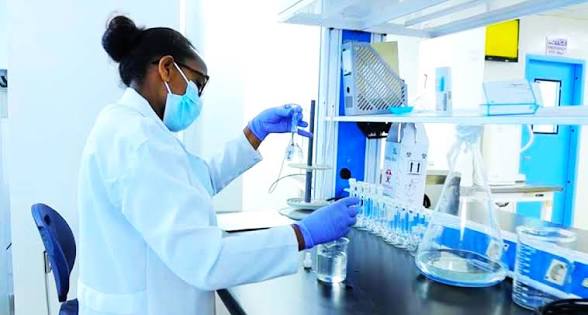
Ethiopia has announced plans to establish itself as a leading pharmaceutical manufacturing centre in Africa, with a strategy focused on expanding local medicine production, strengthening regional supply chains and reducing dependence on imported healthcare products.
The initiative is part of the country’s wider ambition to improve healthcare security, attract investment and increase the availability of essential medicines, vaccines and medical equipment across the continent.
Ethiopia’s State Minister for Health, Muluken Argaw, outlined the plans on Friday, October 30, 2026, according to a report by TV BRICS, a media partner of the News Agency of Nigeria (NAN).
Ethiopia Seeks to Expand Pharmaceutical Manufacturing in Africa
Argaw said Ethiopia was working towards building a pharmaceutical industry capable of meeting domestic healthcare needs and supplying products to other African countries.
The government intends to strengthen manufacturing capacity through regional partnerships, improved regulatory cooperation and coordinated purchasing arrangements.
According to the minister, producing more medical supplies within Africa is essential to ensuring that countries can respond effectively to public health challenges.
He identified medicines, vaccines and medical equipment as priority areas for expanding local production.
The strategy is expected to create opportunities for pharmaceutical companies, healthcare investors and manufacturers interested in developing production facilities and supply networks in Ethiopia.
AfCFTA to Support Ethiopia’s Pharmaceutical Industry
A major component of Ethiopia’s plan involves taking advantage of the African Continental Free Trade Area (AfCFTA).
The trade agreement is designed to improve economic integration among African countries by reducing trade barriers and supporting the movement of goods and services across participating markets.
Argaw said Ethiopia intended to use the agreement to strengthen regional pharmaceutical supply chains and increase market access for medicines and other healthcare products manufactured in Africa.
The country also plans to encourage closer cooperation among regulatory authorities to make it easier for pharmaceutical manufacturers to operate across national borders.
Another priority is the introduction of joint procurement arrangements, under which participating countries or institutions could coordinate purchases of medicines and medical supplies.
Such arrangements could help manufacturers plan production around larger, more predictable orders.
Ethiopia Prioritises Local Vaccine and Medicine Production
The government believes that expanding domestic pharmaceutical manufacturing will play an important role in improving access to essential healthcare products.
Argaw stressed that African countries need stronger local production systems to reduce vulnerabilities associated with dependence on imported medicines and medical equipment.
The approach reflects growing interest across the continent in building pharmaceutical industries that can respond to public health emergencies and routine healthcare demands.
Ethiopia’s proposed strategy includes developing regional value chains, improving manufacturing capabilities and creating stronger links between producers, suppliers and healthcare institutions.
These efforts are intended to support a more reliable supply of medical products and strengthen the continent’s long-term health security.
Ethiopia’s Pharmaceutical Market Projected to Exceed $4 Billion by 2030
Ethiopia’s pharmaceutical market is projected to surpass $4 billion by 2030, according to the forecast cited in the TV BRICS report.
The projection highlights the scale of the market opportunity that Ethiopian authorities hope to support through investment and industrial development.
A growing pharmaceutical sector could attract manufacturers, encourage technology partnerships and create employment opportunities in medicine production, packaging, distribution and related services.
However, achieving the country’s ambitions will depend on factors including investment financing, reliable infrastructure, technical expertise, quality assurance and effective regulation.
The $4 billion figure represents a market forecast rather than confirmed investment or government funding.
Government Also Plans to Develop Medical Tourism
Alongside pharmaceutical manufacturing, Ethiopia is seeking to expand its medical tourism industry.
Argaw said the country intended to pursue opportunities in healthcare services for patients travelling from other countries.
The initiative could complement pharmaceutical development by strengthening healthcare infrastructure and encouraging investment in specialised medical services.
Medical tourism development may also create opportunities for hospitals, healthcare professionals and businesses providing related services.
The government has not disclosed specific investment targets, project locations or implementation deadlines for the medical tourism component of the strategy.
Ethiopia’s Ambition Reflects Africa’s Push for Health Security
Ethiopia’s pharmaceutical manufacturing plans come amid wider efforts by African governments and regional institutions to increase local production of healthcare products.
The COVID-19 pandemic exposed weaknesses in international medical supply chains and reinforced calls for stronger African manufacturing capacity.
Countries seeking to develop pharmaceutical industries face challenges involving financing, technology transfer, workforce development and regulatory compliance.
Ethiopia’s proposed use of AfCFTA, regional partnerships and joint procurement could help address some of these barriers if the measures are successfully implemented.
For the country, the ambition extends beyond supplying its domestic market to participating in a wider African pharmaceutical production and distribution network.
The success of the initiative will ultimately depend on how quickly the announced policies translate into operational manufacturing facilities, reliable supply chains and affordable healthcare products.