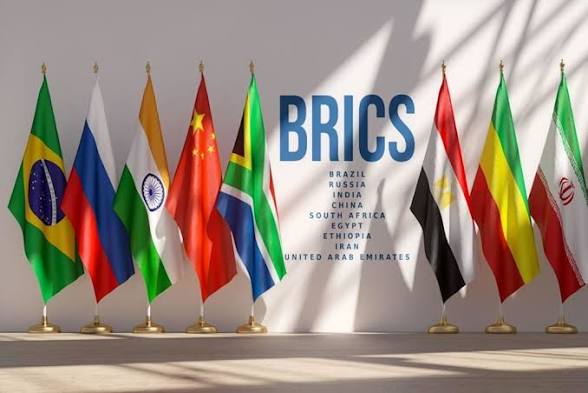
BRICS member countries are exploring ways to connect their national instant payment platforms and central bank digital currencies (CBDCs) as part of efforts to make international transactions faster and less expensive.
Sanjay Malhotra, Governor of the Reserve Bank of India (RBI), disclosed the development as discussions continue among BRICS members on possible financial integration.
His comments were reported by Brazilian media and relayed by TV BRICS, a partner of the News Agency of Nigeria (NAN).
BRICS Seeks Cheaper Cross-Border Payments
Malhotra said improving cross-border payment systems is a priority for BRICS countries because greater integration could reduce the cost of transferring money between member states.
He explained that discussions are currently focused on finding ways to make international payments more efficient while bringing financial systems that currently operate independently closer together.
“Cross-border payments are of interest to all of us, including the BRICS countries, as we believe there is great potential here for reducing costs,” Malhotra said.
No Specific Integration Model Yet
Despite the ongoing discussions, Malhotra said BRICS members have not yet agreed on a specific model for linking their payment systems.
A timetable for implementation has also not been established.
The technical specifications for any potential shared financial infrastructure remain under discussion, meaning that the proposed integration is still at an exploratory stage.
India Pushes Digital Currency Cooperation
The Reserve Bank of India had earlier recommended that the integration of central bank digital currencies be included on the agenda of the 2026 BRICS summit.
India is chairing BRICS this year and is hosting the group’s annual meeting.
The initiative reflects India’s broader interest in expanding the use of digital financial infrastructure and improving international payment arrangements.
India Promotes Rupee Internationalisation
Malhotra also said the Reserve Bank of India would continue working toward greater international use of the Indian rupee.
The central bank is also seeking to expand the use of national currencies in international trade and cross-border payments.
Greater use of national currencies could potentially reduce reliance on traditional payment channels for transactions between BRICS members.
Financial Integration Faces Challenges
BRICS currently consists of 10 countries: Brazil, Russia, India, China, South Africa, Egypt, the United Arab Emirates, Ethiopia, Indonesia and Iran.
Connecting their payment systems would require significant coordination because the countries operate different financial systems, regulatory frameworks and national currencies.
For the proposed integration to become operational, members would need to address technical, regulatory and monetary policy differences.
The discussions nevertheless represent another step in BRICS’ broader efforts to strengthen financial cooperation and facilitate trade among member countries.