Every public leader eventually arrives at a moment when the conversation changes. The debates of the day begin to give way to the judgement of history; power gradually yields to legacy. History, after all, is often kinder to reflection than it is to politics. It is in such moments that achievements acquire context, decisions invite deeper scrutiny and the true measure of leadership begins to emerge.
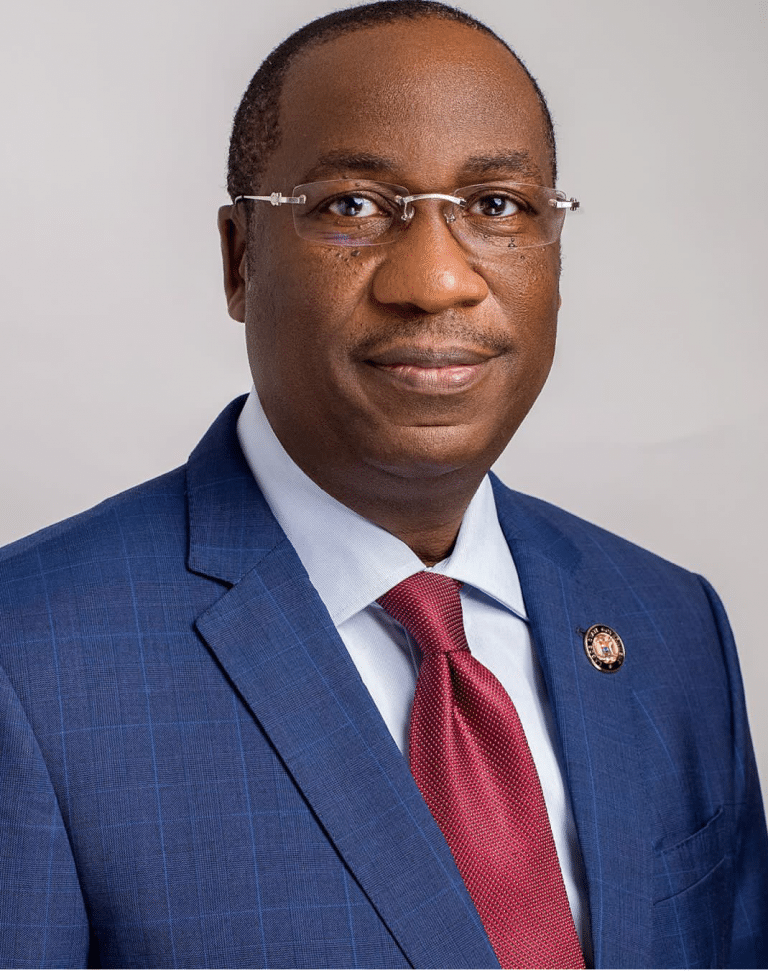
As Governor Babajide Sanwo-Olu marks his 61st birthday on June 25, he arrives at one of those moments. More than a personal milestone, it is his final birthday in office as Governor of Lagos State, offering Lagosians an opportunity to look beyond the daily rhythms of politics and reflect on a period of stewardship that has helped shape the trajectory of Africa’s most dynamic city.
Great cities are rarely transformed by a single administration. From Singapore’s rise as a global financial centre to the reinvention of Seoul and Dubai, history shows that urban success is the product of sustained vision carried across generations. Each administration inherits an unfinished chapter and leaves another for those who follow. Progress becomes meaningful when it survives political cycles and matures into institutions, infrastructure and opportunities that outlive those who initiated them.
The story of Lagos did not begin in 2019, nor will it end when the current administration concludes its assignment. Yet every governor is entrusted with a responsibility that extends beyond daily management. The office demands stewardship, the obligation to preserve momentum, strengthen institutions and prepare the city for opportunities that may not fully materialise until years after one has left office.
Few public offices on the continent carry responsibilities comparable to that of Governor of Lagos State. At least, I know this on first hand having worked closely with the man at the helm of affairs for almost eight years now. With a population larger than many African countries and an economy whose scale influences national outcomes, Lagos demands a delicate balance between managing present realities and preparing for future growth. The challenge is not merely to govern a city, but to sustain the momentum of a constantly evolving megacity whose aspirations continue to expand. It is not about managerial ability, power or control, it takes a lot of toll on emotional strength and maturity, the rare type that I have seen displayed by Mr. Sanwo-Olu on countless occasions.
Public office, at its best, is an act of service. It requires a commitment to improving lives, widening opportunities and ensuring that growth translates into tangible benefits for citizens. For millions of Lagosians, governance is not experienced through policy documents or official pronouncements. It is experienced in the daily realities of movement, healthcare, education, enterprise and the confidence that tomorrow can be better than today. I dare say that my principal understands this very as he passionately discharges on all points of action as encapsulated in his administration’s THEMES+ agenda.
It is against this backdrop that the years since 2019 deserve consideration. The administration of Governor Sanwo-Olu came into office at a time that would soon test governments across the world. The outbreak of the COVID-19 pandemic placed extraordinary pressure on public institutions and exposed vulnerabilities even in some of the world’s most advanced societies. Lagos, as Africa’s largest urban centre, faced unique challenges. Yet amid uncertainty and disruption, governance remained focused on protecting lives, sustaining economic activity and strengthening the systems upon which millions depend.
There’s no better way to describe Governor Sanwo-Olu’s passion about Lagos than the picture I saw of him this week at the ongoing London Climate Summit. He provided not just the right perspective to the questions on the biggest energy, economic or climate-related pressure and how leaders around the world are managing them in their various jurisdiction, he did so with an uncommon degree of patriotism. To this and other topics raised at the summit, Governor Sanwo-Olu’s intervention set Lagos apart and placed her side by side the first world states at the global climate event.
Moments of crisis often define administrations more than moments of comfort. They demand calmness, adaptability and the ability to inspire public confidence under difficult circumstances. In navigating those years, Sanwo-Olu’s government sought not only to manage an emergency but also to build capacities that would outlast the crisis itself, particularly in healthcare infrastructure, emergency response systems and institutional coordination.
As this final gubernatorial birthday beckons, the significance of the occasion lies not in the number being celebrated but in what the moment represents: an opportunity to reflect on service rendered and foundations laid for the future. It invites a broader assessment of how Lagos has evolved and how the lives of its people have been impacted during this period.
History rarely remembers administrations for isolated projects. Rather, it remembers whether they altered the trajectory of a place. In Lagos, future assessments may point to the expansion of transportation infrastructure as one of the defining features of this era. The Blue and Red Rail Lines, investments in water transportation and extensive road development projects reflect more than engineering accomplishments. They represent an understanding that the competitiveness of a modern megacity depends largely on its ability to move people, goods and opportunities efficiently.
For countless workers, traders, entrepreneurs and families, infrastructure is not an abstract policy objective. It shapes productivity, influences opportunity and affects quality of life. Every effort to reduce travel time, improve connectivity and expand transportation options ultimately becomes an investment in people.
The same long-term thinking is evident in the administration’s emphasis on economic development and investment promotion. Through initiatives such as Invest Lagos, Mr. Sanwo-Olu’s administration has continued to position the state as a destination for enterprise, innovation and long-term capital. The attraction of investment commitments worth trillions of naira reflects growing confidence in Lagos as a place where ideas can be transformed into opportunities and opportunities into prosperity.
Similarly, the operationalisation of the Lekki Deep Sea Port, the advancement of the Fourth Mainland Bridge project and the ongoing work towards establishing the Lagos International Financial Centre reveal an ambition that extends beyond the present. These initiatives are not merely projects for today; they are building blocks for the Lagos of tomorrow, a city seeking to strengthen its place as a regional hub for commerce, finance, logistics and innovation.
Perhaps the most enduring legacies, however, are not always the most visible nor brick and mortar. While infrastructure often captures public attention, institutions sustain progress. The continued emphasis on economic reforms, investment promotion, digital governance and regulatory strengthening reflects an understanding that great cities are ultimately built on systems capable of outlasting individual administrations. In this respect, part of the legacy being shaped by Governor Sanwo-Olu is not merely physical but institutional.
Beyond infrastructure and investment, the administration’s interventions in education, technology and innovation, youth development, entrepreneurship and social advancement underscore an important reality: the greatest asset of Lagos is its people. While roads, bridges and rail lines may become visible symbols of progress, the most enduring investments are often those made in human potential.
This philosophy found one of its most visible expressions in the education sector. The recent commissioning of the Tolu Schools Complex in Ajegunle by President Bola Ahmed Tinubu, recognised as one of the largest educational facilities in West Africa, reflected an ambitious vision for public education. Designed to accommodate more than 20,000 learners across multiple levels of study, the complex represented more than a physical structure; it symbolised a belief that every child, regardless of background or location, deserves access to quality learning environments capable of unlocking opportunity and aspiration.
The same commitment is evident in higher education. The establishment of the Lagos State University of Education and the Lagos State University of Science and Technology expanded the state’s tertiary education landscape while creating specialised institutions dedicated to producing the teachers, innovators, scientists and technical professionals required for a rapidly changing economy. Together with investments in school infrastructure, teacher development, digital learning initiatives and curriculum enhancement, these efforts reflected a broader understanding that the future competitiveness of Lagos will depend not only on the strength of its economy but also on the quality of its human capital.
Governor Sanwo-Olu’s administration’s people-centred approach is equally evident in healthcare, youth empowerment and enterprise development. Investments in healthcare infrastructure strengthened service delivery and public health preparedness, while programmes supporting entrepreneurship, innovation and skills development sought to equip a new generation of Lagosians with the tools needed to thrive in an increasingly competitive and technology-driven world.
Perhaps this is where the conversation about legacy becomes most meaningful. Like I mentioned earlier, legacy is not measured in concrete and steel alone. It is measured in the confidence people derive from believing that their city is moving in the right direction. It is measured in opportunities created for young people, support provided to businesses, improvements in public services and the strength of institutions left behind for future generations. It is measured by whether citizens feel that progress, however gradual, remains possible.
Like every public leader, Governor Sanwo-Olu’s years in office have attracted scrutiny, criticism and differing interpretations. As I often say to colleagues or those we hold conversations along this line, such debates are inevitable in a democracy and particularly so in a city as vibrant, complex and demanding as Lagos. No administration satisfies every expectation, nor does any government completely resolve the challenges before it. Yet beyond the daily contest of opinions lies a broader question that history inevitably asks: did the city move forward, and were the lives of its people better served?
For many observers, the answer can be found in Lagos’ continuing transformation. The state remains a work in progress, but it is also a city that continues to expand its infrastructure, build a block at a time, deepen its institutions, attract investment and create new possibilities. In a rapidly changing world, sustaining that momentum is itself a significant achievement.
Great leaders build projects. Enduring leaders build confidence in the future. Their most lasting contributions are not always the structures they leave behind, but the belief they inspire in what is possible. Through periods of challenge and opportunity alike, the defining ambition of the Sanwo-Olu administration has been to position Lagos not merely for the demands of today, but for the opportunities of tomorrow.
Ultimately, leadership finds its highest expression in service. Beyond policies and projects, it is measured by the opportunities created for ordinary citizens, the confidence inspired in communities and the belief that public institutions can improve lives. For many Lagosians, this may prove to be the most enduring measure of the Sanwo-Olu years.
The governor’s convoy will eventually slow. Official portraits will be replaced in a matter of months. New administration will emerge with fresh priorities and different ideas. Such is the rhythm of democratic governance. Yet cities remember. They remember periods that altered their trajectory. They remember leaders who widened the horizon of what seemed possible. They remember public servants who understood that power is temporary, but service endures.
As my boss, Mr. Babajide Sanwo-Olu celebrates his 61st birthday, his last in office as Governor of Lagos State, history has not yet delivered its final verdict. That judgement belongs to time. But even now, a broader picture is beginning to emerge. Beyond the politics of the moment, beyond the debates that accompany every administration, stands a record of service to a city of more than twenty three million people and an enduring belief in its future.
In the end, the most enduring measure of leadership is not the office occupied, but the difference made. And as Lagos continues its journey into the future, that may well become the lasting story of Babajide Sanwo-Olu’s stewardship, a chapter written not merely in policy or politics, but in service.
Happy birthday, dear BOS!
Akosile is the Special Adviser to Governor Babajide Sanwo-Olu.
24th June, 2026.
Babajide Sanwo-Olu at 61: A Legacy of Service to Lagos
By Gboyega Akosile
Every public leader eventually arrives at a moment when the conversation changes. The debates of the day begin to give way to the judgement of history; power gradually yields to legacy. History, after all, is often kinder to reflection than it is to politics. It is in such moments that achievements acquire context, decisions invite deeper scrutiny and the true measure of leadership begins to emerge.
As Governor Babajide Sanwo-Olu marks his 61st birthday on June 25, he arrives at one of those moments. More than a personal milestone, it is his final birthday in office as Governor of Lagos State, offering Lagosians an opportunity to look beyond the daily rhythms of politics and reflect on a period of stewardship that has helped shape the trajectory of Africa’s most dynamic city.
Great cities are rarely transformed by a single administration. From Singapore’s rise as a global financial centre to the reinvention of Seoul and Dubai, history shows that urban success is the product of sustained vision carried across generations. Each administration inherits an unfinished chapter and leaves another for those who follow. Progress becomes meaningful when it survives political cycles and matures into institutions, infrastructure and opportunities that outlive those who initiated them.
The story of Lagos did not begin in 2019, nor will it end when the current administration concludes its assignment. Yet every governor is entrusted with a responsibility that extends beyond daily management. The office demands stewardship, the obligation to preserve momentum, strengthen institutions and prepare the city for opportunities that may not fully materialise until years after one has left office.
Few public offices on the continent carry responsibilities comparable to that of Governor of Lagos State. At least, I know this on first hand having worked closely with the man at the helm of affairs for almost eight years now. With a population larger than many African countries and an economy whose scale influences national outcomes, Lagos demands a delicate balance between managing present realities and preparing for future growth. The challenge is not merely to govern a city, but to sustain the momentum of a constantly evolving megacity whose aspirations continue to expand. It is not about managerial ability, power or control, it takes a lot of toll on emotional strength and maturity, the rare type that I have seen displayed by Mr. Sanwo-Olu on countless occasions.
Public office, at its best, is an act of service. It requires a commitment to improving lives, widening opportunities and ensuring that growth translates into tangible benefits for citizens. For millions of Lagosians, governance is not experienced through policy documents or official pronouncements. It is experienced in the daily realities of movement, healthcare, education, enterprise and the confidence that tomorrow can be better than today. I dare say that my principal understands this very as he passionately discharges on all points of action as encapsulated in his administration’s THEMES+ agenda.
It is against this backdrop that the years since 2019 deserve consideration. The administration of Governor Sanwo-Olu came into office at a time that would soon test governments across the world. The outbreak of the COVID-19 pandemic placed extraordinary pressure on public institutions and exposed vulnerabilities even in some of the world’s most advanced societies. Lagos, as Africa’s largest urban centre, faced unique challenges. Yet amid uncertainty and disruption, governance remained focused on protecting lives, sustaining economic activity and strengthening the systems upon which millions depend.
There’s no better way to describe Governor Sanwo-Olu’s passion about Lagos than the picture I saw of him this week at the ongoing London Climate Summit. He provided not just the right perspective to the questions on the biggest energy, economic or climate-related pressure and how leaders around the world are managing them in their various jurisdiction, he did so with an uncommon degree of patriotism. To this and other topics raised at the summit, Governor Sanwo-Olu’s intervention set Lagos apart and placed her side by side the first world states at the global climate event.
Moments of crisis often define administrations more than moments of comfort. They demand calmness, adaptability and the ability to inspire public confidence under difficult circumstances. In navigating those years, Sanwo-Olu’s government sought not only to manage an emergency but also to build capacities that would outlast the crisis itself, particularly in healthcare infrastructure, emergency response systems and institutional coordination.
As this final gubernatorial birthday beckons, the significance of the occasion lies not in the number being celebrated but in what the moment represents: an opportunity to reflect on service rendered and foundations laid for the future. It invites a broader assessment of how Lagos has evolved and how the lives of its people have been impacted during this period.
History rarely remembers administrations for isolated projects. Rather, it remembers whether they altered the trajectory of a place. In Lagos, future assessments may point to the expansion of transportation infrastructure as one of the defining features of this era. The Blue and Red Rail Lines, investments in water transportation and extensive road development projects reflect more than engineering accomplishments. They represent an understanding that the competitiveness of a modern megacity depends largely on its ability to move people, goods and opportunities efficiently.
For countless workers, traders, entrepreneurs and families, infrastructure is not an abstract policy objective. It shapes productivity, influences opportunity and affects quality of life. Every effort to reduce travel time, improve connectivity and expand transportation options ultimately becomes an investment in people.
The same long-term thinking is evident in the administration’s emphasis on economic development and investment promotion. Through initiatives such as Invest Lagos, Mr. Sanwo-Olu’s administration has continued to position the state as a destination for enterprise, innovation and long-term capital. The attraction of investment commitments worth trillions of naira reflects growing confidence in Lagos as a place where ideas can be transformed into opportunities and opportunities into prosperity.
Similarly, the operationalisation of the Lekki Deep Sea Port, the advancement of the Fourth Mainland Bridge project and the ongoing work towards establishing the Lagos International Financial Centre reveal an ambition that extends beyond the present. These initiatives are not merely projects for today; they are building blocks for the Lagos of tomorrow, a city seeking to strengthen its place as a regional hub for commerce, finance, logistics and innovation.
Perhaps the most enduring legacies, however, are not always the most visible nor brick and mortar. While infrastructure often captures public attention, institutions sustain progress. The continued emphasis on economic reforms, investment promotion, digital governance and regulatory strengthening reflects an understanding that great cities are ultimately built on systems capable of outlasting individual administrations. In this respect, part of the legacy being shaped by Governor Sanwo-Olu is not merely physical but institutional.
Beyond infrastructure and investment, the administration’s interventions in education, technology and innovation, youth development, entrepreneurship and social advancement underscore an important reality: the greatest asset of Lagos is its people. While roads, bridges and rail lines may become visible symbols of progress, the most enduring investments are often those made in human potential.
This philosophy found one of its most visible expressions in the education sector. The recent commissioning of the Tolu Schools Complex in Ajegunle by President Bola Ahmed Tinubu, recognised as one of the largest educational facilities in West Africa, reflected an ambitious vision for public education. Designed to accommodate more than 20,000 learners across multiple levels of study, the complex represented more than a physical structure; it symbolised a belief that every child, regardless of background or location, deserves access to quality learning environments capable of unlocking opportunity and aspiration.
The same commitment is evident in higher education. The establishment of the Lagos State University of Education and the Lagos State University of Science and Technology expanded the state’s tertiary education landscape while creating specialised institutions dedicated to producing the teachers, innovators, scientists and technical professionals required for a rapidly changing economy. Together with investments in school infrastructure, teacher development, digital learning initiatives and curriculum enhancement, these efforts reflected a broader understanding that the future competitiveness of Lagos will depend not only on the strength of its economy but also on the quality of its human capital.
Governor Sanwo-Olu’s administration’s people-centred approach is equally evident in healthcare, youth empowerment and enterprise development. Investments in healthcare infrastructure strengthened service delivery and public health preparedness, while programmes supporting entrepreneurship, innovation and skills development sought to equip a new generation of Lagosians with the tools needed to thrive in an increasingly competitive and technology-driven world.
Perhaps this is where the conversation about legacy becomes most meaningful. Like I mentioned earlier, legacy is not measured in concrete and steel alone. It is measured in the confidence people derive from believing that their city is moving in the right direction. It is measured in opportunities created for young people, support provided to businesses, improvements in public services and the strength of institutions left behind for future generations. It is measured by whether citizens feel that progress, however gradual, remains possible.
Like every public leader, Governor Sanwo-Olu’s years in office have attracted scrutiny, criticism and differing interpretations. As I often say to colleagues or those we hold conversations along this line, such debates are inevitable in a democracy and particularly so in a city as vibrant, complex and demanding as Lagos. No administration satisfies every expectation, nor does any government completely resolve the challenges before it. Yet beyond the daily contest of opinions lies a broader question that history inevitably asks: did the city move forward, and were the lives of its people better served?
For many observers, the answer can be found in Lagos’ continuing transformation. The state remains a work in progress, but it is also a city that continues to expand its infrastructure, build a block at a time, deepen its institutions, attract investment and create new possibilities. In a rapidly changing world, sustaining that momentum is itself a significant achievement.
Great leaders build projects. Enduring leaders build confidence in the future. Their most lasting contributions are not always the structures they leave behind, but the belief they inspire in what is possible. Through periods of challenge and opportunity alike, the defining ambition of the Sanwo-Olu administration has been to position Lagos not merely for the demands of today, but for the opportunities of tomorrow.
Ultimately, leadership finds its highest expression in service. Beyond policies and projects, it is measured by the opportunities created for ordinary citizens, the confidence inspired in communities and the belief that public institutions can improve lives. For many Lagosians, this may prove to be the most enduring measure of the Sanwo-Olu years.
The governor’s convoy will eventually slow. Official portraits will be replaced in a matter of months. New administration will emerge with fresh priorities and different ideas. Such is the rhythm of democratic governance. Yet cities remember. They remember periods that altered their trajectory. They remember leaders who widened the horizon of what seemed possible. They remember public servants who understood that power is temporary, but service endures.
As my boss, Mr. Babajide Sanwo-Olu celebrates his 61st birthday, his last in office as Governor of Lagos State, history has not yet delivered its final verdict. That judgement belongs to time. But even now, a broader picture is beginning to emerge. Beyond the politics of the moment, beyond the debates that accompany every administration, stands a record of service to a city of more than twenty three million people and an enduring belief in its future.
In the end, the most enduring measure of leadership is not the office occupied, but the difference made. And as Lagos continues its journey into the future, that may well become the lasting story of Babajide Sanwo-Olu’s stewardship, a chapter written not merely in policy or politics, but in service.
Happy birthday, dear BOS!
*Akosile is the Special Adviser to Governor Babajide Sanwo-Olu.