 The African Union (AU) is worried over the double standards exhibited by the ICC with regards to requests for deferral of prosecution of some cases.
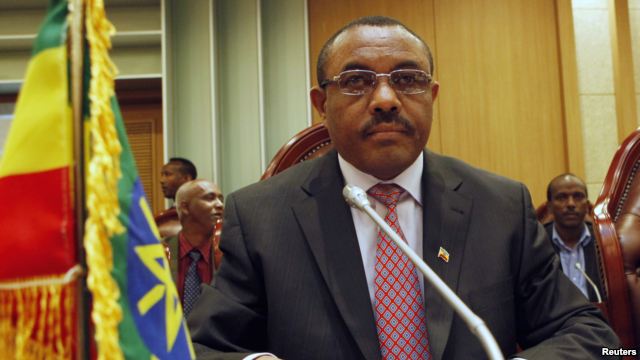
The AU Chairperson, Hailemariam Dessalegn, made the remarks, when he addressed Heads of State and Governments at the 15th Extraordinary Assembly of AU on Saturday in Addis Ababa.
Dessalegn, who is the Prime Minister of Ethiopia, said that this informed the decision to review the continent’s relationship with the The Hague.
“While similar requests by other entities were positively received even under very controversial circumstances, neither the ICC nor the UN Security Council have heeded the repeated requests that we have made on a number of cases relating to Africa over the last seven years.
“It is unfortunate that the court continue to operate in complete disregard for the concerns that we have expressed, which make the trend worrisome and unfair with the kind of treatment we have been subjected to by the ICC.’’
Available data on the ICC cases in Africa show that the court’s Pre-Trial Chambers have 32 Africans, while it had issued arrest warrants for 23 individuals and summons to nine others, including the Sudanese President Omar Al-Bashir.
However, Dessalegn said Africa would never support impunity of leaders, who willfully murder their own people.
Dessalegn expressed regrets that numerous proposals presented within the framework of the Rome Statute to address these issues had been ignored.
“Past experience in our continent and elsewhere amply demonstrate the need to balance justice and reconciliation in the complex conflict situation.
“It is in light of this fact that we have been insisting on the importance of finding home-grown solution to some of the intractable conflicts in our continent,’’ the AU Chair said.
The AU Chairperson, however, said that Kenya had gone a long way in terms of addressing the 2007 post-election violence.
“The adoption of a new constitution, the reform of the judicial system and the holding of legislative and presidential election has certainly opened a new chapter in the country’s political dispensation.
“More importantly, the measures taken to reform the criminal justice system in Kenya were also meant to dispel the fears of some in the international community that they might not be as impartial as ICC would have seen it necessary as required by the principle of complementarities.’’
He said President Uhuru Kenyatta and his Deputy William Ruto, had displayed a critical role in reconciling the different communities, and that had created peaceful condition for the smooth conduct of the elections.
On the case of Sudan, he said, Omar Al-Bashir, had demonstrated necessary leadership and commitment to resolve the Dafur issue and address outstanding issues with South Sudan.
“The AU, through a High Level Panel, has also been assisting Sudan in overcoming its difficulties and notable achievements have been made in this regards.
“The AU Peace and Security Council empowered the panel to engage Sudan on the democratic reforms ahead of the 2015 general elections.
“In this regards it is very important the international community gives a chance to these process and not be seen in any way to undermine them.’’
Earlier, the Chairperson of the AU Commission, Dr Dlamini Zuma, sympathised with the families of the victim of Terror attacks in Nigeria and Kenya.
He urged the session to observe a one minute silence in memory of the victims as well as the Africans, who lost their lives in the Lampedusa Island in Italy.
Nigeria’s President Goodluck Jonathan is among the more than 35 Heads of State and Governments attending the one-day summit.
The session had entered into close door to deliberate and resolve on unified stand on the relationship between the AU and the ICC.