The Ladoke Akintola University of Technology (LAUTECH) Teaching Hospital in Ogbomoso, Oyo State, is making waves and impacting positively on affordable health delivery to
patients, both within and outside the state. Recently, the tertiary health institution’s management took journalists on facility tour. BODE DUROJAIYE was there.
By global practice, teaching hospitals are where medical knowledge continuously evolves and new cures and treatments are found.
They are where critical community services are readily available. They are a vital part of any country’s safety net, providing care to millions of the nation’s uninsured.
In Nigeria, the parlous state of the healthcare sector is
easily measured by citizens’ lack of confidence in it, as those with the wherewithal now prefer to travel overseas for medical treatment of even minor ailments.
The country loses a huge amount of money to western countries and many others in the course of medical tourism.
But while most of Nigerian hospitals’ non-viability can be
contemplated or debated, the rot in the teaching hospitals of the nation’s universities cannot be excused.
Indeed, the least expectation is that they would remain centres of medical excellence where training, research and healthcare delivery would be first class.
However, the Ladoke Akintola University of Technology (LAUTECH) Teaching Hospital, Ogbomoso in Oyo State has, in the last five years, been making considerable congress with improvement in the number and quality of staff, acquisition of modern equipment and provision of international standard training for medical students and resident doctors.
The scope of services being rendered to large number of patients not in Ogbomoso, Oyo and Oke-Ogun areas, but from other neighbouring states such Osun, Kwara and as far as Niger, coupled with surgeries procedure have increased tremendously.
The multi-billion naira hospital has 13 Departments, namely
Medicine, Surgery, Obstetrics and Gynecology, Radiology, Community Medicine and Family Medicine.
Others are Paediatrics, Nursing, Chemical pathology,
Histopathology, Hematology, Orthopaedics and Psychiatry.
It also has adequate number of Consultants and Resident doctors to cater for patients.
The hospital is well-equiped with state of the art facilities
This include a gas plant for the supply of oxygen to the hospital, as well as produce in commercial quantities to both federal and state-owned public health institutions.
The plant is said to be the largest in the South-Western part of the country.
The gas plant can fill 200 cylinders in a day, as it is built
to produce three types of medical gases that can be used in the theatre and for clinical services.
Presently, the tertiary health institution has commenced production of oxygen from the gas plant for the use of the hospital.
All the clinical areas, including the wards, theatres, emergency unit, intensive care unit, and maternity are all being piped and very soon, will be connected to the gas plant, so that the gases will just be flowing from the plant to areas where they are needed.
The gas line also has facilities vacuum functioning [cleaning of secretions].
There is also a Dialysis Centre for patients with kidney failure at the Cardiology unit with state of the art.
It comprises echo cardiogram, mobile x-ray, and electrocardiography, as well as ultra-modern well equipped laboratories and theatres. It is said to be the best in the country.
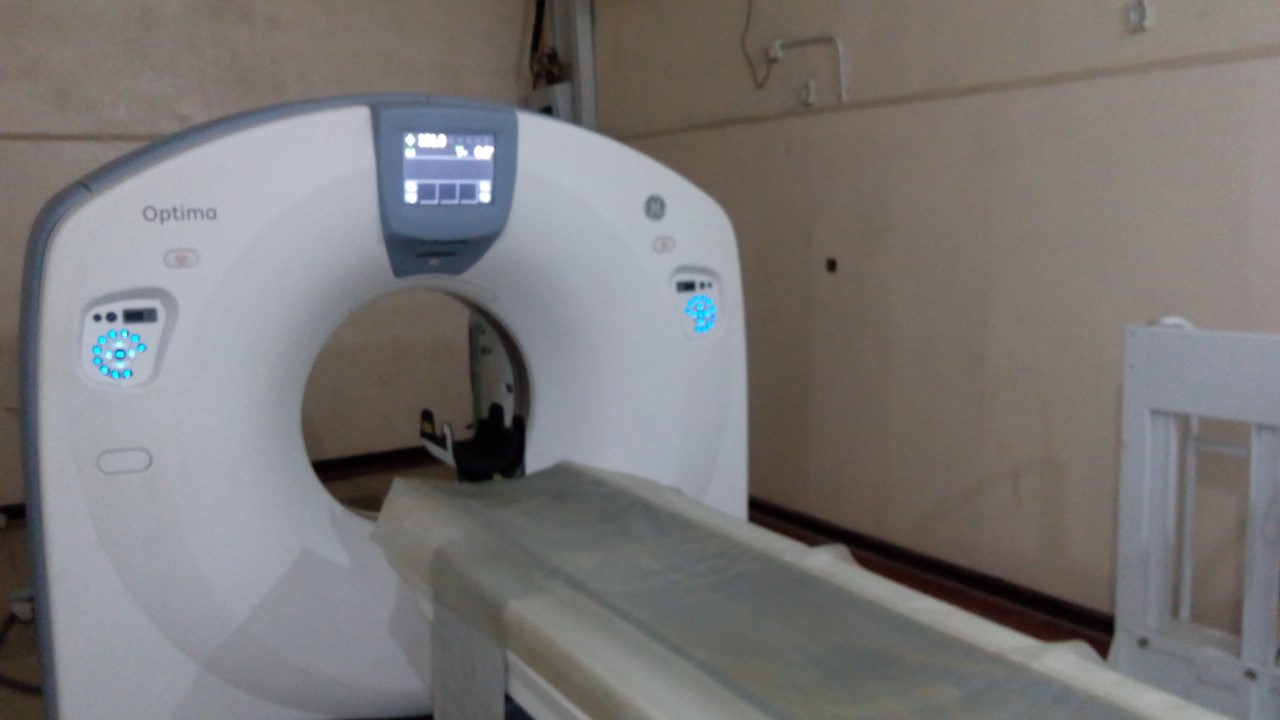
The hospital is also well-equipped with 4D Ultra-sound machine, CT scan and a digital microdose Mammography with digit printer, which is the first in the country to provide early diagnoses of breast cancer with little risk of radiation.
According to Dr. Taofeek Ajadi, Consultant Radiologist of the Department of Microbiology, “there is also BACTEC 9050 which detects and identifies micro-organisms with six hours as opposed to three to seven days method. Another equipment, the laparoscopy and Endoscopy, provide minimally invasive, cosmetically advantaged ‘pin-hole’
diagnoses and therapy for all aspects of medicine. There are other equipment that examine internal parts of the body and vessels. All these equipment have dedicated generators powering them”.
The university is equally acquiring a PACS-picture Archiving and computing system that will allow the Radiology machines to communicate with other computers located in distant places within and outside the hospital. This equipment is the only one in South-West part of the country.
This will further enhance prompt provision of Radiology reports and services to the patients.
If fully installed, telemedicine and teleradiology will be practised.
Other equipment are multi-purpose Laparascopy machine for paeditric, orthopaedic, obstetric gynaecology and general surgery. They are to perform therapeutic and diagnostic purposes.
The teaching hospital also has four specialised equipment
namely Laparoscopy, Anthroscopy, Endoscopy and Urology component for minimal invasive surgery.
Dr. Olawale Olakulehin, a Consultant Orthopaedic,
disclosed that the equipment enable surgeons to carry out their work with reduction in big wounds through visualise joints.
Olakulehin also said the hospital has four orthopaedic surgeons, compared to the Bowen Teaching Hospital also located in the same town which has only one orthopaedic surgeon.
On water supply, a dedicated dam had been constructed and piped to serve the hospital, while another two million litres’ capacity surface tank with 500,000 litres’ capacity overhead tank are already in place.
This is in addition to the completion of water heater home.
Unbelievably, charges for both consultations and other services are very affordable to the patients, most of who are downtrodden, compared to what is obtainable in other tertiary health institutions across the country.
A fee of N200 is charged for consultancy.
Addressing journalists at the end of the facility tour, Chairman of the Medical Advisory Committee (CMAC), Dr. Ademola Aremu, said “the Medical and Dental Council of Nigeria (MDCN) has fully granted approval to our teaching hospital for the training of medical students”.
“ Not only that, both the National Post-Graduate Medical College and the West African College of Surgeons have separately granted full accreditation for the training in Community medicine, Family medicine, Gynecology and obstetrics. Internal medicine, as well as air, nose and throat .’’
Aremu commended the entire staff for their resilience, dedication to duty, commitment and sense of belonging towards ensuring that the teaching hospital not only remains afloat, but becomes a Centre of Excellence in service delivery.
Aremu stressed the need for the government to adequately fund the teaching hospital to sustain the state-of-the-art facilities and equipment, as well as fulfil its corporate social responsibility to the people.
While eulogising the Oyo State Government for being responsive and supportive to the institution, the CMAC appealed to Governor Abiola Ajimobi to ensure the prompt payment of the institution’s workers’ salaries.