The African Democratic Congress has demanded evidence of the allegations, while Kaduna State Government has rejected a controversial ₦2.3 trillion campaign-spending letter.
A political dispute has erupted between the All Progressives Congress (APC) and the African Democratic Congress (ADC) over allegations of a coordinated misinformation campaign surrounding President Bola Tinubu’s presidential campaign launch in Kaduna State.
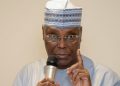
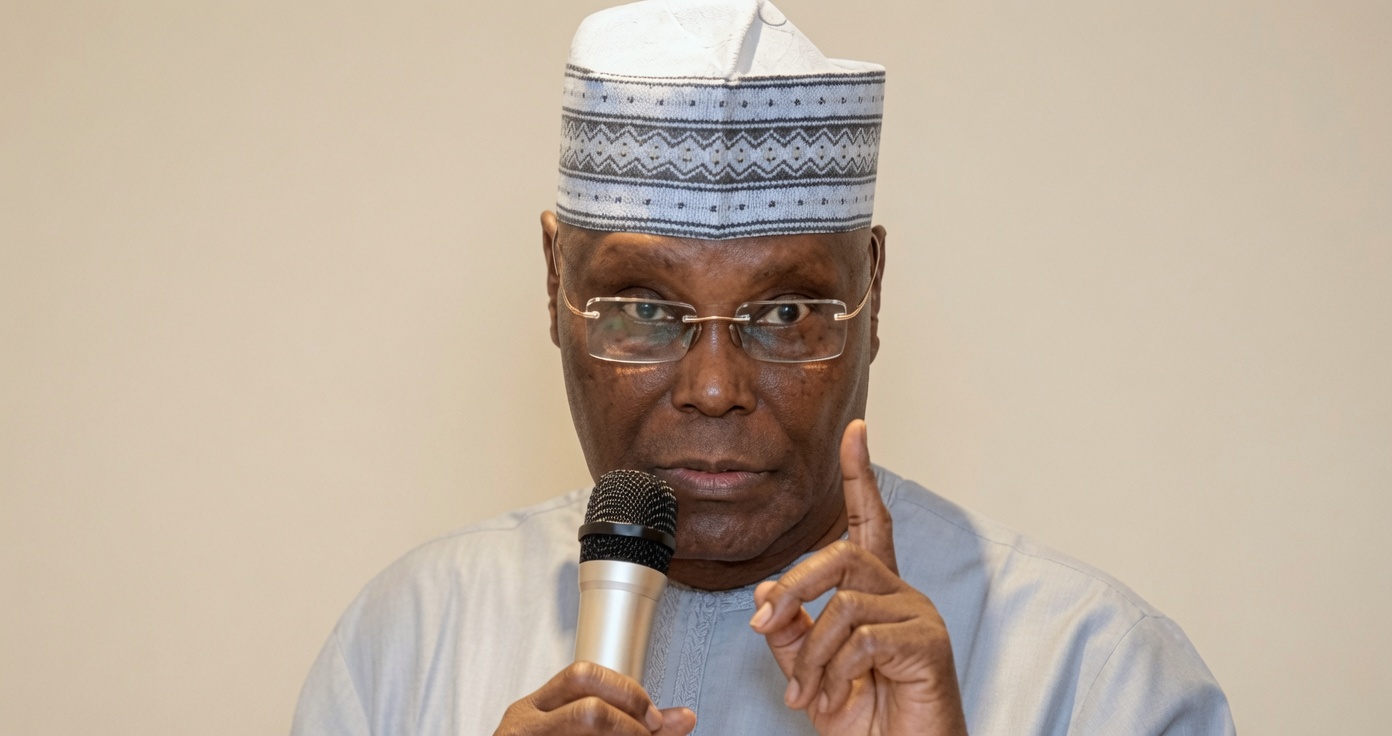
The APC Presidential Campaign Council accused former Vice-President Atiku Abubakar and the ADC of attempting to damage the ruling party’s image through misleading reports, fabricated documents and artificial intelligence-generated content.
The allegation was made in a statement issued on Saturday, October 24, 2026, by Dele Alake, spokesperson for the APC Presidential Campaign Council.
According to Alake, the alleged operation was intended to generate negative publicity for the Kaduna rally and undermine public confidence in President Tinubu, Governor Uba Sani and other prominent APC figures.
How the Kaduna billboard controversy began
The disagreement followed reports that security personnel had been stationed near campaign billboards promoting President Tinubu in Kaduna.
A report published by Daily Trust on October 23 said some security operatives had been assigned to protect the campaign materials from possible vandalism.
Atiku subsequently criticised the reported arrangement, questioning the government’s priorities at a time when communities across Nigeria continued to face security threats.
However, the APC rejected the interpretation of a photograph showing a security vehicle near one of its campaign billboards.
Alake maintained that the vehicle was carrying out a routine patrol and accused opposition figures of presenting the image in a misleading manner.
He also alleged that Atiku amplified the controversy by sharing a newspaper report through his social media accounts.
APC rejects alleged ₦2.3 trillion rally expenditure
The dispute intensified following the circulation of a document suggesting that the Kaduna State Government had released ₦2.3 trillion to organise the APC presidential campaign event.
The purported letter was presented as correspondence from Governor Uba Sani to Senator Abdulaziz Yari, Director-General of the APC Presidential Campaign Council.
Alake dismissed the document as fabricated, arguing that the amount mentioned was inconsistent with Kaduna State’s financial resources.
He cited the state’s approved budgets of approximately ₦458.27 billion in 2024, ₦790.44 billion in 2025 and ₦985.9 billion in 2026.
Together, the three annual budgets amount to approximately ₦2.235 trillion, below the sum allegedly stated in the letter.
The APC spokesperson maintained that the disputed document was part of an effort to influence public opinion against the ruling party ahead of the 2027 general election.
Kaduna government disowns disputed letter
In a separate response, the Kaduna State Government denied authorising or releasing ₦2.3 trillion for the campaign rally.
Commissioner for Information and Culture Ahmed Maiyaki said the document, dated October 18, 2026, contained discrepancies that raised serious questions about its authenticity.
Among the irregularities identified was the incorrect spelling of Governor Uba Sani’s surname. The government also questioned the apparent reproduction of the governor’s signature without authorisation.
Maiyaki maintained that no such expenditure had been approved and called for investigations to establish who produced and circulated the document.
APC warns against manipulated videos
Beyond the disputed letter, Alake alleged that opposition actors were preparing to circulate altered footage, recycled videos and artificial intelligence-generated material during the Kaduna rally.
He claimed the intention was to exaggerate public opposition to the APC and create a misleading impression of the reception given to President Tinubu.
The campaign council advised Nigerians to exercise caution when viewing politically sensitive videos and documents circulating online.
However, its published statement did not include forensic findings establishing that Atiku or the ADC had produced the alleged manipulated materials.
ADC challenges APC to present evidence
The African Democratic Congress rejected the APC’s accusations and challenged the ruling party to substantiate its claims.
Phrank Shaibu, Director of Strategic Communication of the ADC Presidential Campaign Council, questioned the evidence connecting Atiku or his party to the disputed letter and alleged deepfake operation.
Shaibu argued that the APC was attempting to divert attention from public concerns about living costs, economic hardship and the government’s performance.
He insisted that political criticism of the Tinubu administration should not automatically be dismissed as misinformation.
The ADC also questioned the APC’s explanation of the security presence near its Kaduna campaign billboards.
Political rivalry intensifies ahead of 2027 election
The confrontation highlights growing tensions between the APC and ADC as political campaigns gather momentum ahead of Nigeria’s 2027 presidential election.
For the ruling party, the controversy raises concerns about the potential influence of misleading digital content on political campaigns.
For the opposition, the disagreement has become another opportunity to question government priorities, campaign spending and public accountability.
Although Kaduna State has denied the alleged ₦2.3 trillion expenditure, the identity of whoever created and first circulated the disputed document has not been independently established.
Similarly, the APC’s allegations that Atiku and the ADC planned a coordinated deepfake campaign remain unproven in the publicly available evidence reviewed for this report.
The dispute underscores the importance of verifying political claims, digital images and purported government documents before accepting or circulating them as facts.