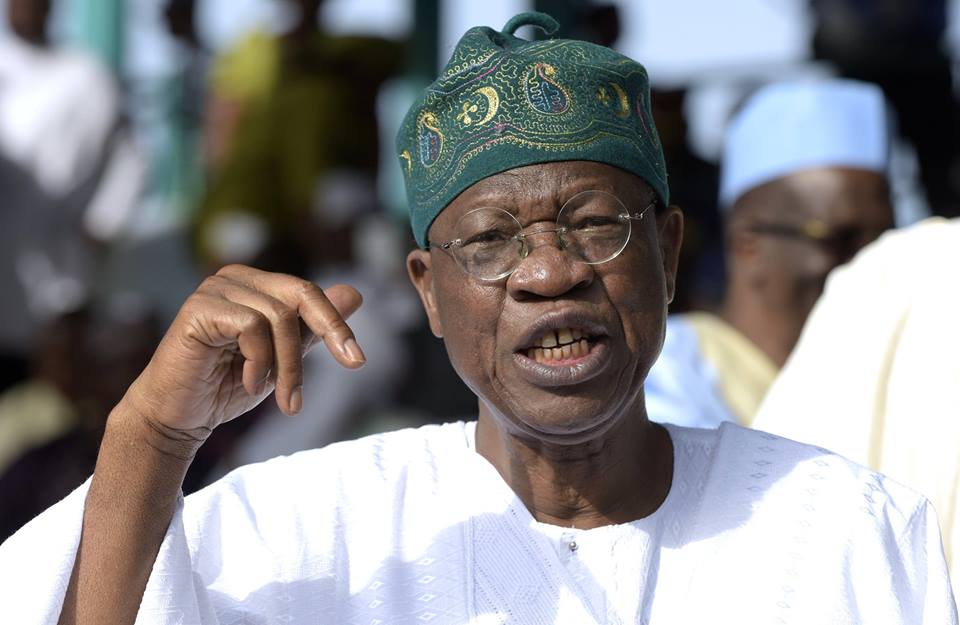
Former Minister of Information and Culture, Alhaji Lai Mohammed, has called on African countries to reposition the Meetings, Incentives, Conferences and Exhibitions (MICE) industry as a major platform for attracting investment, expanding trade and creating jobs.
Mohammed made the call at the 9th Africa Meetings, Incentives, Conferences and Exhibitions (MICE) Summit in Mombasa, Kenya.
A copy of his presentation was made available to journalists in Abuja on Saturday.
Africa captures only 4% of global MICE market
Mohammed said the global MICE industry is estimated at about $1.3 trillion, but Africa currently accounts for only about 4 per cent of the market.
He argued that business events should not be viewed simply as opportunities to fill hotels, restaurants and aircraft.
Instead, he said they should be used to bring investors, buyers, policymakers, businesses and specialists together in ways that generate longer-term economic activity.
“MICE should not be seen simply as people coming to Africa, staying in hotels, eating in restaurants and flying home,” he said.
Business events can generate wider economic activity
According to Mohammed, a major conference or exhibition can create opportunities extending well beyond the event itself.
He identified potential benefits in areas such as: investment, trade, tourism, aviation, hospitality, transport, technology, entertainment, retail, employment.
He described the objective as turning individual events into interconnected economic ecosystems.
“The opportunity is to turn events into ecosystems,” he said.
African countries urged to build on their strengths
Mohammed encouraged African destinations to develop MICE strategies around their existing economic and cultural advantages rather than competing for the same events.
He cited Nigeria’s entertainment industry, Kenya’s athletics and tourism sectors, South Africa’s conference industry and Rwanda’s role as a business gateway as examples of areas countries could leverage.
He also advocated greater cooperation between African countries, including joint bids and shared hosting arrangements for major international events.
World Cup cited as cooperation model
The former minister pointed to the 2026 FIFA World Cup, hosted jointly by Canada, Mexico and the United States, as an example of how countries can collaborate on major international events.
He suggested that African countries could explore similar arrangements when pursuing large international conferences, exhibitions and other events.
Such cooperation, he said, could allow countries to share infrastructure, expertise and economic benefits.
Lagos has major MICE potential
Using Lagos as an example, Mohammed said Nigeria’s commercial capital has substantial cultural and economic assets that could support the MICE sector.
He recalled a study commissioned while he served as minister which, according to him, estimated that approximately 20,000 events took place in Lagos each month.
He also pointed to the growth of “Detty December” as an example of how major events can generate activity across several sectors.
According to him, the economic impact extends beyond entertainment to aviation, hotels, transportation, fashion, media, technology and retail.
Infrastructure remains a major challenge
Mohammed identified infrastructure as one of the major obstacles limiting Africa’s ability to compete for international business events.
He said successful MICE destinations require reliable: airports, hotels, convention centres, transport networks, digital infrastructure, electricity and other utilities.
He also highlighted limited intra-African air connectivity and visa restrictions as barriers to the growth of business tourism.
Easier travel could boost African MICE
Mohammed called for measures that would make it easier for international and African delegates to travel to events across the continent.
His proposals included: improved air connectivity, e-visa systems, visa-on-arrival arrangements where appropriate, expedited processing for accredited conference participants.
He argued that difficulties in moving people between African countries could limit the continent’s ability to build a competitive regional MICE industry.
Africa needs to sell credibility
Mohammed said MICE development was closely linked to the broader investment environment.
He warned that policy uncertainty and weak institutions could undermine efforts to attract international investors and events.
“Africa does not only have to sell its opportunities. It has to sell credibility,” he said.
He also cited Rwanda as an example of how a smaller country could position itself as a regional platform for business and international events.
Measure economic impact, not just attendance
Mohammed urged governments to reconsider how they evaluate the success of conferences and exhibitions.
He said the number of people attending an event or the number of hotel rooms occupied should not be the only measures of success.
Instead, governments should examine: investments attracted, business meetings conducted, trade generated, partnerships established, jobs created.
He argued that these indicators would provide a better picture of the economic value generated by business events.
Call for National Convention Bureaus
Mohammed proposed that every African country establish an empowered National Convention Bureau responsible for coordinating the development of its MICE industry.
Such agencies, he said, should help countries: bid for international events, coordinate government and private-sector efforts, support business visitors, collect MICE industry data, measure economic impact.
He argued that the ultimate test of a successful event should be what happens after delegates return home.
“The true measure of a successful business event is not simply how many people attended, but what happened because they attended,” he said.
19 countries represented at summit
The two-day summit attracted delegates from 19 countries.
The event was formally opened by Mohamed Osman Ali, Mombasa County Executive for Tourism, Culture and Trade.
The discussions focused on how African destinations can use meetings, conferences, exhibitions and business events to strengthen tourism, investment and economic cooperation.