


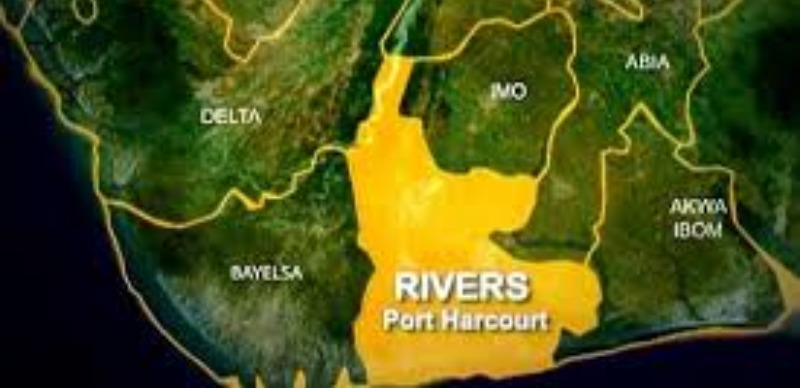
The National Union of Tenants of Nigeria (NUTN) has raised alarm over the skyrocketing cost of rent in Port Harcourt and Obio/Akpor Local Government Areas (LGAs) of Rivers State. The union describes the situation as a growing crisis with severe social and economic implications for residents.
In a letter addressed to Governor Siminalayi Fubara, the union revealed that over 80% of residents in these areas now spend more than 100% of their income on rent, exacerbating poverty and leading to an increase in financial strain. The letter, a copy of which was sent to our correspondence warns of a looming housing crisis if immediate action is not taken.
“The escalating rental costs have pushed many residents into extreme hardship, as the cost of housing continues to outstrip people’s earnings,” said Mr. Ceaser Enwefah, Executive Secretary of NUTN. He emphasized that many residents are now unable to meet other essential needs due to the overwhelming cost of rent.
Enwefah further noted that rental rates in Port Harcourt and Obio/Akpor had reached unprecedented levels, with the prices of self-contained apartments now averaging N800,000 annually, while one-bedroom flats cost around N1.5 million. Two-bedroom apartments are priced between N2 million and N2.5 million, and three-bedroom flats range from N3 million to N4 million. He projected further increases by December 2026, potentially pushing rents beyond the reach of average residents.
“A significant portion of the population is fleeing the city due to the high cost of accommodation and the economic impact of rising rents,” Enwefah said.
The union recently conducted a fact-finding study to understand the causes of the housing crisis and to suggest possible solutions. The study revealed a sharp increase in rental prices between 2023 and 2025. For instance, a single room rose from N60,000 in 2022 to N180,000 in 2026, while the price of self-contained apartments surged from N150,000 to N800,000.
Enwefah attributed the sharp increase in rents to several factors, including a significant housing deficit, the demolition of properties for the N200 billion Port Harcourt Ring Road and Bridges project, and unregulated estate agents. Additionally, the conversion of residential buildings into commercial properties and violations of urban planning regulations have reduced the available housing stock, further driving up rent prices.
“These factors have significantly inflated rental costs and reduced the number of available housing units in the city,” he said. “If this trend continues unchecked, Port Harcourt and Obio/Akpor risk becoming economically unwelcoming and socially unstable.”
The union warns that the situation could lead to widespread homelessness, the growth of slums, and increased social tension by 2030 if no urgent action is taken. Enwefah called on the governor to prioritize the housing sector, suggesting the issuance of executive orders to regulate estate agents, prevent illegal housing conversions, and impose sanctions on violators.
The NUTN also recommended the establishment of a housing data system to monitor rent levels, increased land allocation for low-income housing, and the construction of student hostels near tertiary institutions to ease the pressure on the housing market.
“These measures are essential to addressing the housing deficit and making accommodation more affordable for residents,” Enwefah concluded.