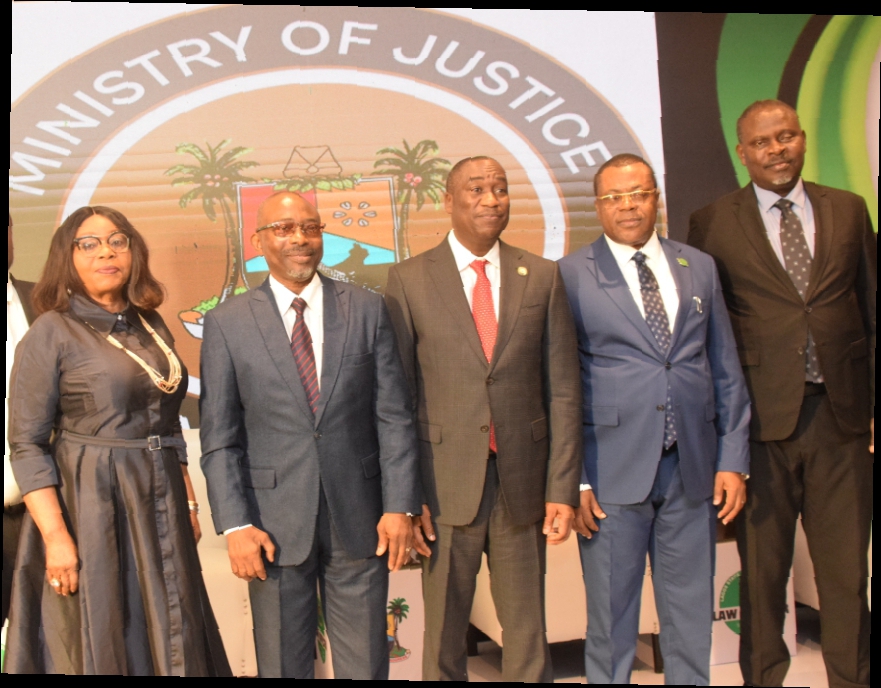
The law enforcement agencies and state prosecutors from the Ministry of Justice have been urged to come together and address the challenges facing the integrity of the officials by finding lasting solutions that restore public confidence and justice for the people they serve.
This call was made by Justice Cecilia Mojisola Olatoregun, Chairman, Lagos State Public Complaints and Anti corruption Commission, who was a keynote speaker at the Lagos state Strategic Management Meeting with MDAs and stakeholders in Justice delivery in Lagos State.
The call was coming as the Lagos state Attorney General and Commissioner for Justice, Mr Lawal Pedro, SAN, submitted that there was no reasons for the federal and state agencies clashing over prosecutorial powers.
According to Pedro, the laws , most especially the Constitutional provisions are clear over the roles and duties of both the federal and State prosecution under a presidential government like that of Nigeria.
In her presentation, Justice Olatoregun who spoke on: “Enforcement and Administration of Criminal Justice: Enhancing Coordination Between Law Enforcement Agencies and Ministry of Justice, Particularly in Criminal Prosecution and Anti-Corruption Efforts,” said there are so many government agencies that supposed to put check to criminal incidences in Lagos but there are still prevalent of crimes that are abound.
The Judge said corruption are part of the bane of dispensation of justice, stating, “Corruption, in particular, financial crime often regarded as white-collar crime is extremely dangerous to the fabric of the society despite its often understated perception in reality.
“We have all read in the newspapers about incidents of buildings collapsing, despite claims that they have the necessary structural permits, allegations of budget padding, the diversion of funds by public officials into personal coffers, and so on.
“To address these issues, stronger regulatory oversight and transparency are crucial. Regular audits of public projects, stricter enforcement of building codes, and real-time monitoring of funds allocation can help curb corruption and prevent negligence.
She said, “Our criminal justice system is a reflection of our society’s commitment to fairness, equity, and accountability. If we get it right, we can ensure that those who break the law are held accountable, victims receive justice, and public trust in our institutions is restored.
“In closing, let us commit today to fostering a culture of collaboration, accountability, and innovation within our criminal justice system. By working together, law enforcement agencies and the Ministry of Justice can create a synergy that delivers timely, effective justice and upholds the rule of law for all Nigerians.”
Justice Olatoregun highlighted some of the challenges that may be faced by law enforcement agencies and officers from the Ministry of Justice during prosecution which include; Fragmentation and duplication of efforts, Inadequate training of stakeholders, Inadequate resources and inaccessibility to technology and Organisational structure of the law enforcement agencies.”
She also suggested methods for achieving synergy and collaboration in criminal prosecution and anti-corruption efforts.
According to her, adopting an integrated approach from investigation to prosecution, Capacity building and training, accountability for outcomes, Investigation infrastructure, digitalisation and technology and restoring the public’s confidence will go a long way to in addressing the problems and challenges.
Pedro who was making contribution to the topic of discussion noted that Lagos State need not argue or have any tough time with prosecutorial agency like Economic and Financial Crimes Commission, EFCC, “when the law is clear on what offences that Commission can prosecute and the one the state has prosecutorial power over.”
The Attorney General also urged all prosecuting officers to know and determine when there is prima facie case or not. He argued that there were instances where he disobeyed the superior officers when it was clear that the instructions given to him to prosecute cases by all means was not in tandem with the provisions of the law.
He admonished all the prosecuting agencies including the police, EFCC and ICPC to see their jobs in prosecution as what ought to be done not by mere appearing in court when there is no case to be prosecuted.
The program organized by the ministry of Justice was aimed at bringing all stakeholders together to discuss how they can work together for the betterment of advancing justice system.